



One of the most important features of a lubricant is the reduction of friction between two surfaces. Besides the base oil, additives like friction modifiers are added to perform this function.
What is a friction modifier?
Friction is the force of resistance to motion that is present between two bodies in contact. To modify an entity is to make a partial or minor change to it, so friction modifier additives modify or partially alter the coefficient of friction between metal surfaces. The development of friction modifier additives traces its origins back to the early 1900s, but it was only from mid-century, thanks to advancements in chemistry and materials science, that the use of this additive became more common in lubricant formulations.
Friction modifiers were originally used to formulate limited slip-gear oils and automatic transmission and multipurpose tractor fluids. Their use escalated in the late 1970s due to the oil embargo, which thrust fuel economy into the limelight and led to the introduction of friction modifiers in engine oils. Friction modifier additives can be classified into different categories based on their chemical composition and mechanism of action, but are generally grouped into two categories: organic and inorganic friction modifiers.
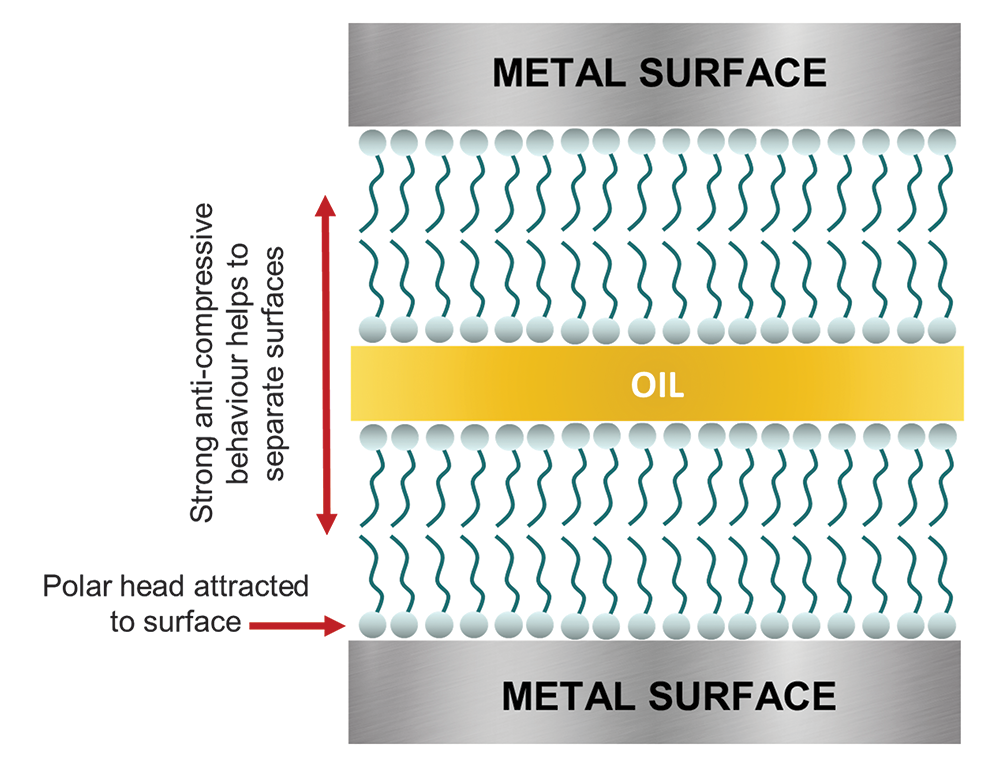
Organic friction modifiers (OFMs) are compounds that contain carbon-hydrogen bonds that are often derived from organic molecules such as fatty acids, esters or amides. OFMs typically have a polar head-group which enables the OFM to adsorb onto the metal surface, and a non-polar hydrocarbon backbone which maintains oil solubility and to enable film formation between contacting surfaces.
Inorganic friction modifiers are typically derived from minerals or metals and may include solid lubricants like molybdenum disulfide, graphite or other metallic compounds. These modifiers undergo chemical reactions with the metal surfaces with which they come into contact, leading to the formation of chemical bonds between the modifier and the metal. This process, known as chemisorption, can result in the formation of films with low shear strength that provide effective lubrication and reduce friction between the surfaces. OFMs are widely used in lubricant formulations primarily due to their versatility, compatibility with various base oils and additives, and effectiveness in reducing friction and wear. Additionally, because they are based primarily on hydrogen, carbon, nitrogen and oxygen, they present a more environmentally friendly alternative, especially in the face of rising emission-control standards.
OFM molecules consist of two parts: a polar end (head) and an oil-soluble end (tail). The head attaches itself to the metal surface to create a cushion for the metal surface against another metal surface; the tail part of the modifier stands up like carpet strands vertically stacked besides each other in a nano-sized sheet covering the metal surface. These molecules hold up when cushioned surfaces come into light contact with each other. This forms a thick boundary film that is softer than metal surfaces. These films are difficult to compress, easy to shear and are good for smooth, easy startup from static to dynamic conditions. They are also good for boundary and mixed lubrication regimes
While their primary function is to reduce friction between moving surfaces, they can also contribute to the anti-wear properties of lubricating oils as these protective layers act as barriers, reducing direct metal-to-metal contact and minimising wear, specifically in boundary lubrication conditions. This ultimately helps extend the lifespan of mechanical components and it is for this reason that they are often referred to as boundary lubrication additives.
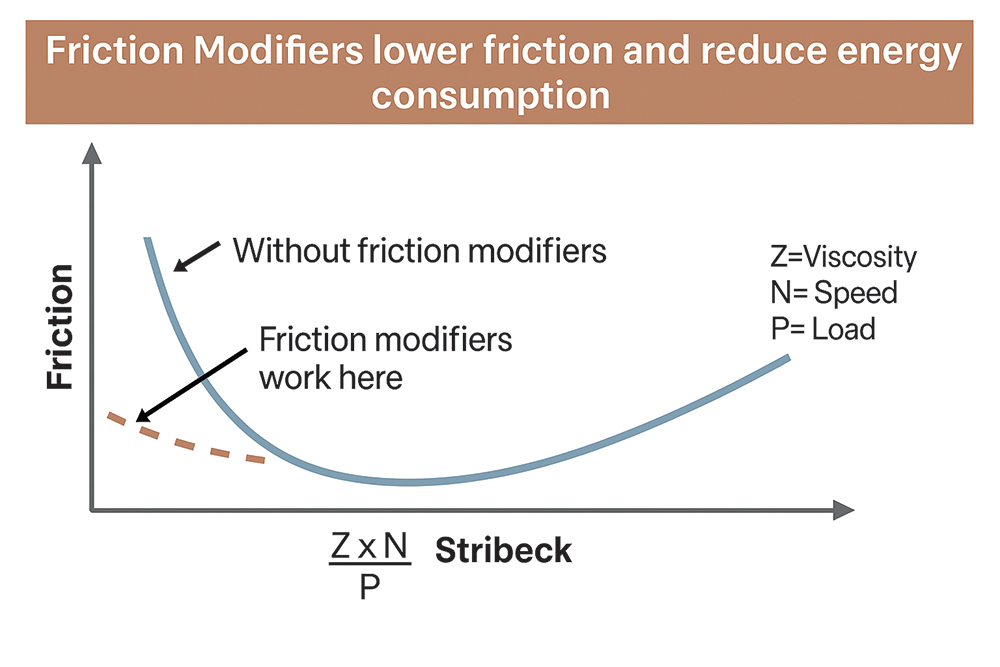
These days, friction modifiers are commonly found in automotive engine oils, transmission fluids and industrial lubricants. In transmission fluids, friction modifiers are used to improve engagement on clutches. In engine oils, friction modifiers are used to improve fuel economy by reducing friction, which is crucial for increased efficiency and durability.
The need for energy efficiency is leading to the growing use of additives that reduce friction in thin film boundary and mixed lubrication conditions. Friction modifier additives play a crucial role in the development of lubricating oils as they they offer improved performance, efficiency and durability for a wide range of automotive and industrial applications. As technology continues to advance, these additives will evolve to meet the changing needs of the industry.
| Tel: | +27 31 700 5460 |
| Email: | [email protected] |
| www: | www.wearcheck.co.za |
| Articles: | More information and articles about Wearcheck |






© Technews Publishing (Pty) Ltd | All Rights Reserved
 printer friendly version