



The water treatment industry has evolved over the last 20 years. In the past, water and wastewater operations relied on large teams of maintenance and operations staff to carry out time-consuming manual measurement activities to ensure that plant and networks were operating safely.
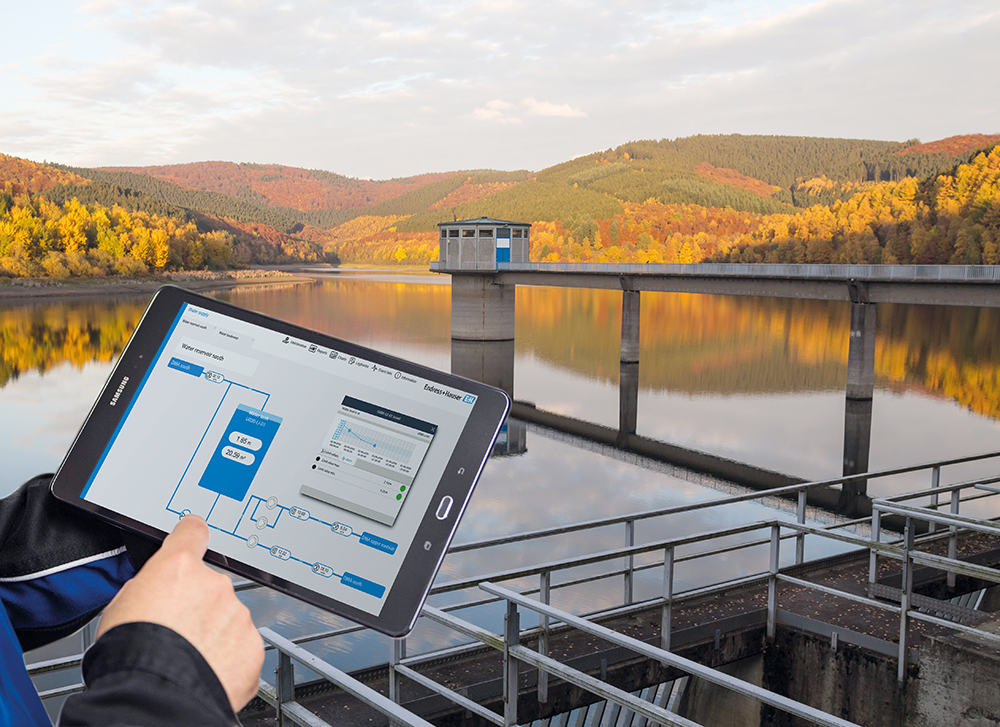
Technological innovation has introduced a variety of connected devices and systems that provide plant owners with the ability to modernise their water treatment plants for remote operation in order to help meet market demands and increase operational productivity, accuracy and efficiency.
Population growth, industrialisation and climate change intensify water scarcity. Communities across the world have an urgent requirement for safe, reliable and affordable water and wastewater services. The demand for these services is non-cyclical – governments, municipalities and the private sector will continue to invest in new and existing infrastructure to meet the increase in population and demand. Investment in proven best-practice solutions is crucial for successful operations improvement and capital expenditure justification.
A country that cannot afford to waste water
Per a 2020 research report from GreenCape, South Africa is ranked as the 30th driest country in the world. Behind unemployment, which was then at a rate of 29% (according to the World Economic Forum), the country’s water crisis was ranked as the second highest risk for doing business here. SA is a water-scarce country characterised by uneven rainfall distribution, and extreme climate and evaporation rates that often exceed precipitation.
The country has a reliable yield (i.e. supply from current infrastructure) of around
A more recent model of future water balance for South Africa indicates that if planned additional water supply is taken into account and if realistic water efficiency is achieved, the gap between supply and demand can be narrowed significantly by 2035. These new supply sources are mainly groundwater, desalinated seawater in coastal areas and wastewater reuse.
While total demand is projected to increase despite higher efficiency, and planned augmentation schemes can narrow the supply gap, it is important to note that the augmentation sources are diversified. Climate change models predict that SA will receive less rainfall, exacerbated by a growing incidence of extreme climate events.
The GreenCape report forecast that by 2050, many parts of South Africa (including major industrial zones) are expected to be vulnerable to water supply risks. An estimated 40% of South Africa’s wastewater was untreated as of 2018, and of the 824 wastewater treatment works in the country, roughly 30% were in a critical state and a further 20% were in a poor state. The resulting raw water pollution presents a significant environmental challenge, as well as a health and socio-economic risk to poor communities that access water directly from rivers.
It is estimated that around R90 billion per year of investment is needed in water and sanitation infrastructure over the 2020-2030 period in order to ensure reliable water supply and wastewater treatment. This includes refurbishing and upgrading existing infrastructure, and new infrastructure to support population and economic growth.
Budgeted funding of R50,1 billion in 2018/19 fell well short of what is required, but estimated medium-term budgets indicate that the national government has plans in place to reduce the shortfall. Public funding gaps provide an opportunity for private sector financing of water and sanitation projects.
Implementing practical solutions
Endress+Hauser believes that the water and wastewater industrial community should look to the Internet-of-Things (IoT) for technologies and solutions tailored for the improvement of their operations. The IoT landscape connects digital objects such as sensors and flowmeters to the Internet, turning them into ‘smart’ assets that can communicate with users and application systems. This allows for more efficient process control and optimised network management. General water monitoring operations that were previously manual and inefficient can now be automated, continuously reporting on their own status in real-time.
Endress+Hauser is a partner that understands the needs and demands of the water industry, and has prioritised the creation of practical solutions to meet customer’s needs while supporting optimal operations. Netilion Water Network Insights is one of the company’s cloud-based solutions that is a certified and vendor-independent IIoT ecosystem. This solution helps users to continuously monitor and improve their processes and procedures, whether in the field or in the control centre.
Netilion Water Network Insights enables customers to optimise their processes across the entire water cycle while collecting all important measuring variables and displaying the data in a customisable visualisation. This facilitates rapid reaction to incidents and savings on operating and energy costs.
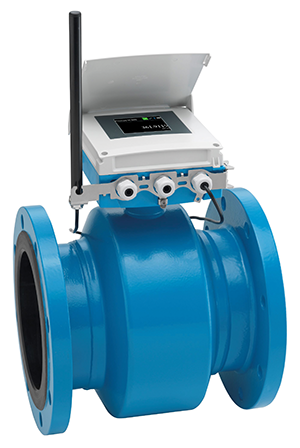
Water’s journey is endless. It often travels long distances through huge pipelines in remote areas without any other infrastructure. To guarantee sufficient water quantity and quality, active management is needed. This is where Endress+Hauser’s battery-powered
Whether in urban or remote areas, in a desert or in the tropics, the accurate measurement and billing of drinking and process water consumption is becoming increasingly important. Endress+Hauser developed the new
Water quality monitoring is also an important aspect for water and wastewater plant managers. It consists of several key parameters (pH, turbidity, free chlorine, etc.) to ensure that drinking water is safe or that treated wastewater meets environmental guidelines. These parameters are measured either online by process instrumentation or by manual grab-sampling, which may examine a composite sample over a weekly period. Most modern treatment plants will have automated online monitoring systems at their outlet, while the distribution network may be largely untouched. With ad hoc or manual measurement, it’s easy to miss a pollution event which may cause environmental damage or harmful effects on the local population’s health.
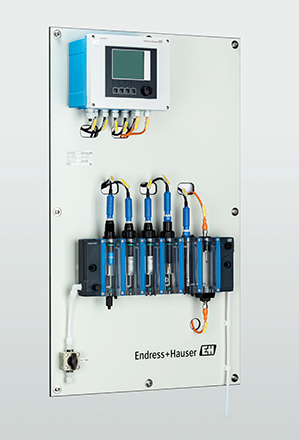
Online monitoring in the distribution network ensures that water quality is continuously measured. Real-time warning of pollution events is possible to ensure that they are quickly resolved and that downstream operations are not adversely affected. Furthermore, online monitoring parameters can be used as inputs for network asset condition assessment, for example pH and conductivity levels in wastewater pump stations. This can allow for further improvement to network operations.
Ready to transform your water network with IoT?
IoT technology solutions like Netilion can provide enormous benefits that were previously not possible. The volume of information that can now be transmitted is truly astounding, as are the advanced data visualisation solutions that decrypt this information and turn it into valuable outcomes for numerous stakeholders.
Whether in densely populated or remote regions, Netilion Water Network Insights ensures full transparency in water networks around the clock, and can be used for reliable monitoring of water quantity as well as other parameters like pressure, temperature and level. The solution connects all levels of a water supply system and offers service providers and water associations a tailormade solution from a single source. These include everything from field devices and components, to data transfer, recording, archiving and evaluation, as well as unique forecasting functions.
In these testing times of declining water security, IoT technology has been proven to boost operational efficiency and inform smart investment decisions. As utilities make strides in their use of IoT technology, they are encouraged to partner with Endress+Hauser so as not be left behind.
| Tel: | +27 11 262 8000 |
| Email: | [email protected] |
| www: | www.endress.com |
| Articles: | More information and articles about Endress+Hauser South Africa |






© Technews Publishing (Pty) Ltd | All Rights Reserved
 printer friendly version