



Mining sites comprise exposed workers, large operating areas, explosives, mobile plant and remote infrastructure. Effective lightning warning must identify a developing local risk early enough to trigger a controlled, site-specific response.
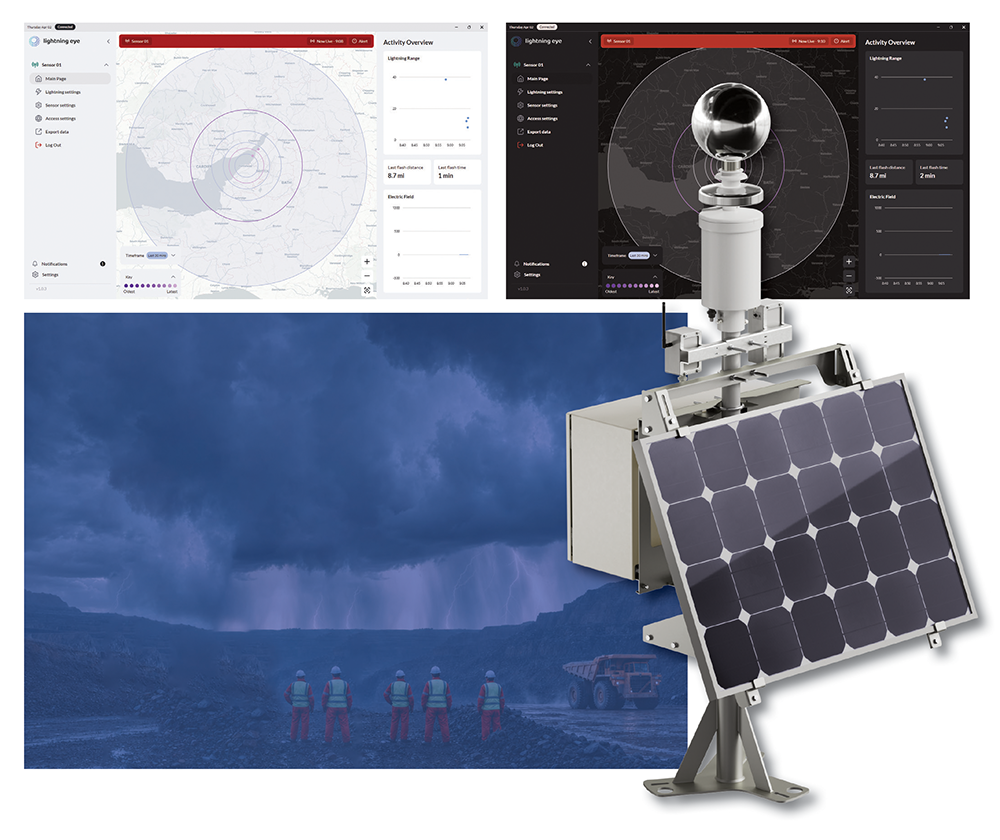
Thunderstorms create a complex risk for mining. Surface operations may extend over many square kilometres with people working on blast patterns, drills, haul roads, conveyors and elevated structures. Underground mines also depend on exposed surface infrastructure. The real question is not whether lightning has occurred, but whether local conditions are becoming dangerous, and whether there is still time to act.
This distinction separates detection from early warning. Detection confirms that a lightning flash has occurred; early warning seeks to identify developing storm risk soon enough to stop a task, suspend charging activities, withdraw personnel or restrict access. Where a safe shutdown or evacuation takes time, the difference is operationally significant.
Why the first local flash matters in mining
Lightning is not an abstract weather hazard for mine operators. The United States of America’s Mine Safety and Health Administration has reported lightning-related damage through boreholes reaching underground mines, and premature detonations of loaded blast holes at surface mines. It advises mines to discontinue charging a blast round with electric detonators as an electrical storm approaches and to withdraw personnel to a safe location. NSW Resources has also highlighted lightning-related tyre explosions and recommends defined escalation and safe re-entry processes as part of a mine storm emergency and safety planning process.
These examples show why waiting for the first nearby flash can be problematic. A crew may need time to make a blast area safe, leave a drill, reach shelter or account for people dispersed across the site. If the first local strike is also the first actionable warning, response time may already be too short.
Broad-area lightning networks remain valuable for regional surveillance, but their information is based on discharges that have already occurred. Local monitoring adds direct observation of electrical conditions at the mine, including those developing overhead before the first local flash.
Lead time should be defined by the operation rather than the sensor alone. How long does it take to stop charging, clear a blast pattern or confirm that remote crews have reached shelter? Those times should shape warning thresholds and escalation.
Seeing more of the electrical life of a storm
The atmosphere becomes electrically active before lightning. Inside a developing thundercloud, collisions among ice particles, water droplets and graupel separate charge. These regions influence the electric field between cloud and ground, while charged precipitation carries part of that structure downwards. Lightning then produces a rapid electric-field change.
Lightning is also more varied than the highly visible cloud-to-ground strike. Around 80% of lightning activity occurs within clouds, including intra-cloud and cloud-to-cloud discharges. These events reveal the electrification and evolution of the storm, and intra-cloud activity may intensify before cloud-to-ground lightning becomes prominent.
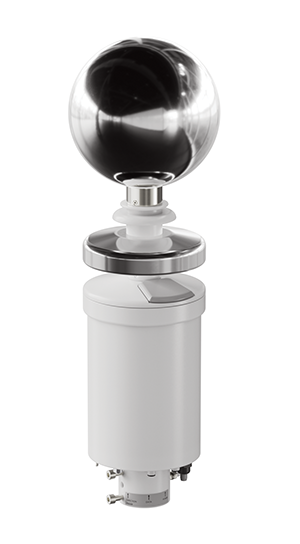
The BTD-1 Thunderstorm Warning System takes a local, quasi-electrostatic approach. It analyses slow variations in the atmospheric electric field in the 1-50 Hz band where electrical noise is comparatively low. This enables the system to detect cloud-to-ground, intra-cloud and cloud-to-cloud lightning, including weaker discharges, while also recognising charged precipitation and strong electric-field conditions associated with overhead storm development.
This approach supports two mining needs. First, it provides visibility beyond the fraction of lightning that reaches the ground. Second, it can provide overhead pre-warning before the first local flash. The BTD-1 has a 95% detection efficiency for a single flash and 99% for a storm producing at least two flashes, with a false alarm rate below 2%. The standard range is 35 km and can be extended to 83 km, with data updates every two seconds.
From pre-warning to a mining trigger action response plan
A storm warning must be interpreted as a risk signal, not as a prediction that lightning will strike a particular location. Whilst the approach of distant lightning is the most common indicator of increased risk to the mine, approximately one in five developing storms will produce their first flash uncomfortably close to your site. This makes the combined lightning and strong electric field warning capability of the BTD-1 an important component of staged escalation.
The BTD-1 displays four risk states: All Clear, Caution, Warning, and Alert, and routes pre-warning information to different outputs. These states can be aligned with a mine’s trigger action response plan (TARP) and its site-specific risk assessment. The instrument supplies the information, and the mine defines the actions, responsibilities and thresholds in accordance with its procedures and applicable regulations.
At an early stage, a site might notify supervisors, verify communications and prepare to stop weather-sensitive tasks. A higher state might trigger withdrawal from blast patterns, surface drills, high structures or isolated locations. The most critical state can activate sirens, access controls or automated notifications. The exact response depends on the mine, task, firing system, geography and acceptable risk.
This structure prevents decisions from being improvised during a storm. Every state should have an owner, communication channel and pre-determined response. Personnel and contractors need to know who can suspend operations, how remote crews will be contacted, and who can authorise re-entry. Alerts should be logged so the TARP can be reviewed after an event.
Connecting a large and remote operation
Mining sites often combine a central control room with work areas spread across pits, haul roads, processing plants and remote infrastructure. A warning is useful only if it reaches the people and systems that must act. The BTD-1 provides three assignable relay outputs for local alarms and control systems, together with an ASCII interface over RS-422.
An optional Power-over-Ethernet module combines power and data in a single cable, while the software supports map-based visualisation, lightning history, diagnostics, configuration and automatic data logging.GPS/GNSS supports accurate flash timing and instrument location.
This enables lightning risk to enter existing site systems: a relay can trigger a beacon or siren; a control platform can display the risk state; and logged data can support incident review. An optional direction finder adds bearing information, helping operators interpret storm movement rather than distance alone.
For remote areas, optional solar power and a radio link of up to 200 metres line-of-sight support flexible installation while keeping warning information available to the control point. Installation should follow site assessment and the manufacturer’s technical requirements.
Lightning rarely arrives as an isolated hazard
Electrical activity is often one element of a wider severe-weather event. The BTD-1 identifies severe storm conditions when more than 10 flashes per minute are recorded within the local area. High flash rates can accompany intense convection and an increased likelihood of hazards such as large hail, strong downdrafts and damaging wind gusts.
For a mine, these conditions can compound other risks: loss of power or communications; water on haul roads; instability around highwalls or stockpiles; and restricted access. Lightning warning should therefore form part of a broader weather-risk system, supported where appropriate by rainfall, wind and water-level measurements.
Confidence, verification and safe re-entry
Warning equipment must remain dependable in dust, heat, rain and remote operating conditions. A sensor such as the BTD-1 with no moving parts, self-test capability and IP66 protection reduces routine intervention. An internal flash signal generator enables functional checks without waiting for a natural storm, while diagnostics help operators confirm that the system is powered, communicating and behaving as expected.
Regular inspection, cleaning, alarm tests and response drills should still form part of the mine’s safety plan. The same discipline is required for the all-clear. Restarting too soon can expose personnel to the later stages of a storm, while excessive delays create avoidable disruption. Continued monitoring of local electric-field conditions, intra-cloud activity and lightning distance supports a more informed re-entry decision within the mine’s established rules.
Turning electrical conditions into time for action
No instrument can eliminate lightning risk or guarantee the next strike location. Local early-warning technology can, however, improve the timing and quality of information. Regional networks show the wider storm picture, and local monitoring adds immediate knowledge of conditions near the mine. When this information is connected to a well-designed TARP, clear responsibilities and rehearsed communications, mine personnel do not have to invent a response under pressure. They can act earlier, apply the same rules across shifts, and return to work on the basis of defined procedures and measured conditions.
This is the purpose of lightning early warning in mining: converting storm electrification into time to protect people, explosives and equipment before the first local flash.
| Tel: | +27 11 902 0158 |
| Email: | [email protected] |
| www: | www.senseca.com |
| Articles: | More information and articles about Senseca |






© Technews Publishing (Pty) Ltd | All Rights Reserved
 printer friendly version