



South African engineers and researchers are preparing to put a small piece of the country’s space technology capability on the Moon. The Africa2Moon mission, scheduled to travel aboard China’s Chang’e-8 lunar mission in 2029, will carry three locally developed spherical probes designed to demonstrate a new approach to low-frequency radio astronomy.
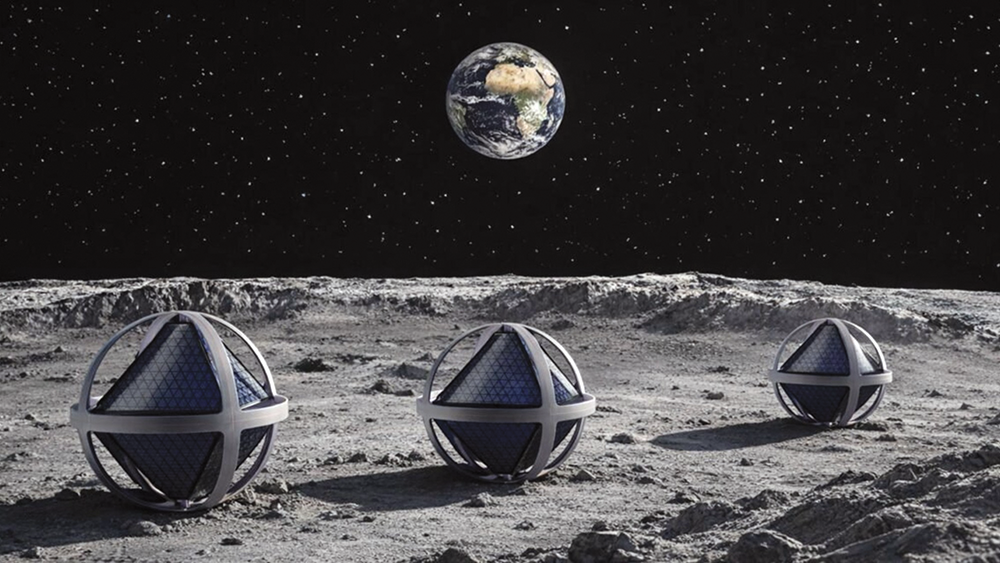
Known as Bounced African Low Lunar Spheres or B.A.L.L.S, the spheres will form a small radio astronomy array on the lunar surface. Their purpose is to detect low-frequency radio signals from space that cannot be observed effectively from Earth. If the technology demonstrator succeeds, the longer-term ambition is to deploy 55 antennas on the lunar surface, one for each African nation.
The Africa2Moon project is led by the Foundation for Space Development Africa in collaboration with the South African Radio Astronomy Observatory (SARAO), the South African National Space Agency (SANSA), Stellenbosch University, Rhodes University, and the University of KwaZulu-Natal (UKZN).
Listening below 20 MHz
The engineering challenge is driven by an unusual gap in radio astronomy. The Earth’s ionosphere blocks and distorts radio waves below about 20 MHz, preventing ground-based observatories from accessing an important part of the radio spectrum. This includes signals associated with some of the earliest periods in the history of the universe.
The Moon offers a solution. It has no ionosphere, and particularly on its far side, provides a radio-quiet environment compared with Earth. The three B.A.L.L.S. will test whether a network of small, self-contained antennas can make useful low-frequency observations from the lunar surface.
The Africa2Moon concept uses several relatively small spherical units that can operate as an array. The initial mission is intended to demonstrate the technology before a much larger deployment is attempted.
Engineering for the lunar environment
Getting the concept to the Moon presents challenges beyond the antenna design. The equipment has to survive launch, integrate with the Chang’e-8 lander and operate in the lunar environment. The demonstrator is being prepared for assessment by the Chinese space agency. If it passes the required testing, a flight model using space-grade components will be produced for the mission.
South African institutions have divided the engineering work according to their areas of expertise. SARAO engineers are responsible for the physical structure of the spheres, working with UKZN’s Aerospace Systems Research Institute. Stellenbosch University’s Electronic Systems Laboratory has developed the electronics and communication systems required to operate the spheres and communicate with the lander.
Four master’s students were involved in producing working electronics systems for the demonstrator. During testing, the electronics functional model exchanged data between a B.A.L.L.S. model and a simulated lander unit.
Building on decades of capability
Africa2Moon represents another stage in South Africa’s development of space engineering capability. Stellenbosch University’s Electronic Systems Laboratory traces its involvement in space technology back to SUNSAT, South Africa’s first satellite, launched in 1999, and later work on SumbandilaSat.
Africa2Moon therefore has significance beyond the scientific observations that the B.A.L.L.S. may eventually make. It gives South African engineers and students experience in designing, testing and integrating hardware for a lunar mission.
A technology demonstrator with a larger objective
The three spheres going to the Moon in 2029 are only the first step. Their immediate task is to demonstrate that low-frequency radio astronomy below 20 MHz can be performed from the lunar surface. A successful demonstration could provide the technical foundation for a much larger array. The eventual objective is 55 B.A.L.L.S. operating from the lunar surface, creating an African lunar radio astronomy array.
Chang’e-8 forms part of China’s longer-term lunar exploration plans and is intended to lay groundwork for the International Lunar Research Station. South Africa’s contribution therefore places its developing space engineering capability within a broader international programme of lunar exploration.
For South African engineering, the significance of Africa2Moon lies as much in the technology being developed as in the destination. From satellite electronics and communications to aerospace structures and low-frequency radio systems, the project brings several specialised engineering disciplines together around an unusually demanding application.
If the three B.A.L.L.S. perform as intended in 2029, they will do more than listen to a part of the universe that is inaccessible from Earth. They will also demonstrate that South African engineering can design and deliver systems capable of operating at the lunar frontier.
For more information visit www.stellenboschmonitor.com/2026/07/21/su-balls-reaching-for-moon/






© Technews Publishing (Pty) Ltd | All Rights Reserved
 printer friendly version