



In March 2025, Chapter 16 of the Mine Health and Safety Regulations was replaced in full with no transition period. For the first time, the law prescribes what an underground mine’s emergency control room must contain, and who must be standing in it. Most of the industry has not yet read it.

On 28 March 2025, Notice 6052 in Government Gazette No. 52388 substituted Chapter 16 of the Mine Health and Safety Regulations in its entirety. It commenced on the day it was gazetted. There was no phase-in, grace period or grandfathering of existing arrangements. For anyone who operates, designs or specifies a control room, regulation 16.5(1)(j) is significant. For the first time, South African law sets out minimum requirements for an underground mine’s emergency control room and names the holder of the Mine Manager’s certificate as the person who must be in control at all times.
Regulation 16.5(1) opens with the words “The employer at every underground mine must.” This is not guidance or a code of practice, it is an obligation on the employer with nine specified elements.
The nine requirements
The first requirement is documentary. The room must hold an up-to-date copy of the mine ventilation and rescue plan, per regulation 17.19, for any area that could be affected by a possible emergency. A plan might exist, but it needs to be current and physically in the room. A plan on a server that nobody can reach during a power event is not in the room.

The next three requirements concern communication, and they are more demanding than they first appear. The room needs a communication system enabling effective communication from the control room to a potential fresh air base. It also needs a second system, independent of the one used to the emergency or fresh air base, from which the mine can communicate with outside parties. A third requirement is an emergency communication system with a ring tone different from any other system in the room, so that the operator immediately identifies an emergency call.
The important word in the second of these requirements is ‘independent’. Two handsets on the same PABX are not independent, neither are two systems on the same uninterruptible power supply, or two radio paths through the same mast. Independence has to survive the single event that caused the emergency, and this is a design question, not a procurement question.
The ring tone requirement looks trivial, but is not. It exists, because in the first half-second of a call, the operator answering has to know whether this is the call that requires immediate action. If every call sounds the same, the regulation is not met, regardless of how much equipment is installed.
The fifth requirement is the one with the sharpest teeth. The room must at all times be under the control of a competent person holding the Mine Manager’s certificate as contemplated in regulation 2.5(2)(1), and trained by a mines rescue service provider. The question to ask is who this person is at 02:00 on a Sunday, and whether their control room management certificate is current, because it expires every three years.
The sixth requires an appointed competent person who records all sequences of events and all instructions given by the person in control. A logbook written up afterwards from memory is a summary, not a record of a sequence. The practical test is what the room can produce at 04:00 that an inspector could rely on at an inquiry.
The seventh requires all relevant mine personnel for the area in which the emergency exists to be available for consultation if required. The eighth requires a written list of all known and anticipated hazards and risks in and around the emergency area, together with ways of addressing them, given to everyone assisting before operations commence. The emphasis is on ‘before’. A hazard list compiled during an emergency is an activity rather than a control. The ninth restricts the room to persons authorised by the person in control and directly involved with the emergency. This addresses the common problem of senior people filling the room, with every right to be concerned, but no operational role.
Where rooms actually fail
Requirements i, ii, v, vii and viii are usually in reasonable shape because they are documentary or procedural and they map onto things mines already do well. The gaps cluster around iii, iv and vi: communication independence, the distinguishable ring tone, and the event log. All three are engineering and human-factors problems rather than paperwork problems, which is why they survive audits that look only at documents.
Requirement vi deserves particular attention. Most rooms can tell you what happened. Far fewer can tell you, to the minute, in what order it happened and who instructed what. This distinction is invisible on a normal day and decisive at an inquiry.
Three more that catch people out
Regulation 16.7 introduces a missing person locator system. No person may go underground without an intrinsically safe device giving their last known location. The system must have a data logging facility, and the device must be worn on the body at all times. Locators are required where a risk assessment identifies engulfment, slope failure, or uncontrolled flow of water, mud or slimes.
Regulation 16.5(2)(i) and (j) require a mines rescue service provider to run a control room management course and issue a certificate, renewable every three years. Certification cycles are easy to lose track of. It is worth knowing whose certificate expires first and whether a successor has been trained.
Finally, regulation 16.5(7)(iii) applies to every works, mine or surface mining operation other than underground mining. Surface and open-pit operations must contract a mines rescue service provider to run a control room management course and issue a certificate, also renewable every three years. The nine requirements above do not apply to open-pit operations, but this one does. Being outside 16.5(1)(j) is not the same as being outside Chapter 16.
What to do
Score your own room honestly against the nine, based on what is physically in it right now rather than what the code of practice says. Then validate the three that usually fail, and check the certificate dates.
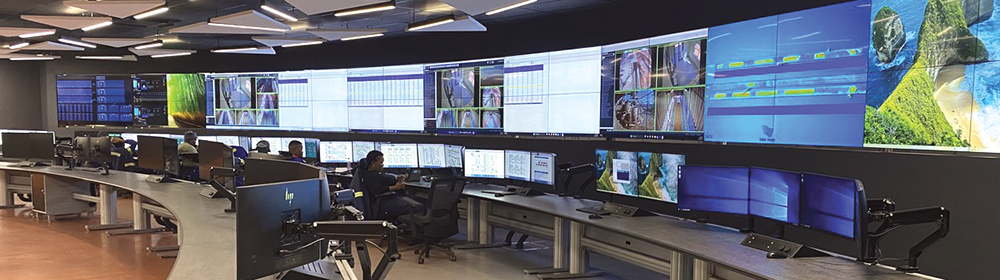
Nothing in Chapter 16 obliges you to buy a screen. It obliges you to be able to run a rescue from a room, under a certificated manager, with two genuinely independent communication paths, and a defensible log. A mine can be fully compliant with modest equipment and well-designed procedures, and it can be non-compliant with a spectacular video wall.
The regulation is short and worth reading in the original: Notice 6052, Government Gazette No. 52388, 28 March 2025. Reghardt Rautenbach is managing director of Oculus Operational Innovations, which designs, engineers and delivers mission-critical control rooms. This article is a summary for discussion and is not legal advice.
| Tel: | +27 21 385 0387 |
| Email: | [email protected] |
| www: | www.oculusinnovations.co.za |
| Articles: | More information and articles about Oculus Operational Innovations |






© Technews Publishing (Pty) Ltd | All Rights Reserved
 printer friendly version