



As South Africa expands its renewable energy capacity, attention is increasingly turning to battery energy storage. While batteries are essential for balancing electricity supply and demand, they also represent a significant industrial opportunity. According to a recent feasibility study commissioned by the Localisation Support Fund (LSF), South Africa has the potential not only to deploy battery technology, but also to manufacture it competitively. This could create a new high-value industry aligned with the principles of sustainable manufacturing.
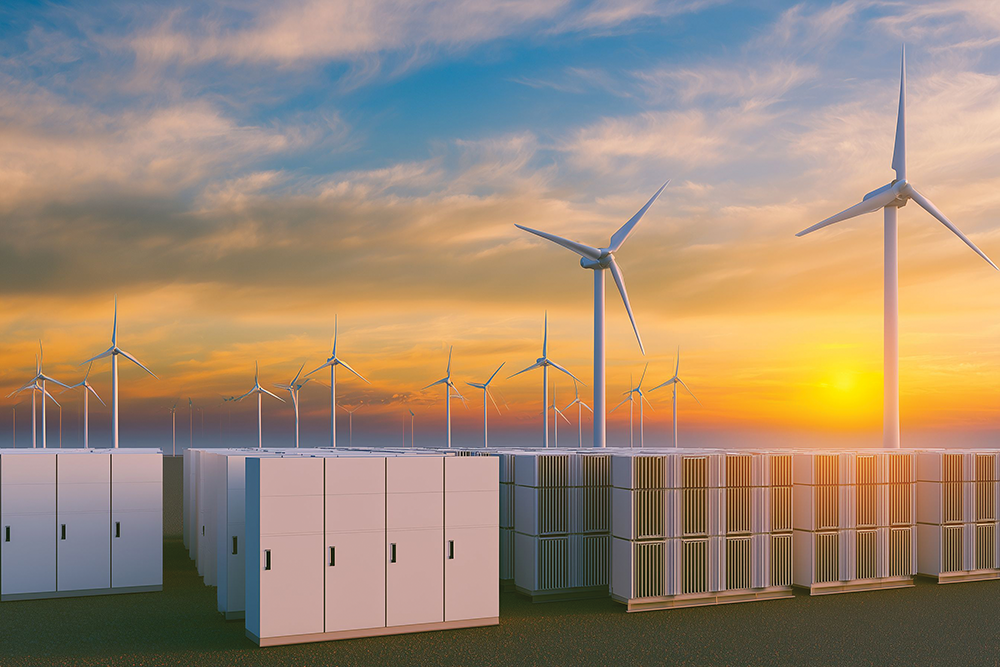
The study focuses on lithium iron phosphate (LFP) battery cells, a chemistry that has become the preferred choice for stationary battery energy storage systems because of its safety, long service life and comparatively low cost. These batteries are expected to play an increasingly important role as utilities, municipalities, mines and industrial users integrate larger volumes of renewable energy into their electricity supply.
Demand will provide the commercial foundation
A sustainable manufacturing industry can only succeed if there is sufficient long-term demand. The LSF study concludes that this condition already exists.
Southern Africa is projected to require approximately 55 GWh of battery capacity by 2034, representing annual growth of around 30%, driven primarily by the rapid deployment of battery energy storage systems. At the same time, South Africa’s Integrated Resource Plan envisages a significant expansion of renewable generation, making large-scale energy storage an essential component of the future electricity system.
The analysis suggests that domestic demand alone could sustain two to three battery manufacturers operating at commercial scale. Interviews with prospective customers indicate growing interest in locally manufactured batteries, provided pricing and quality are internationally competitive. Local production offers greater supply security, shorter lead times and reduced exposure to increasingly volatile global logistics networks.
Local manufacturing supports sustainability goals
While batteries are often discussed in terms of enabling renewable energy, their manufacture also forms part of the broader sustainability agenda. Local production reduces reliance on long international supply chains, lowering transport-related emissions while improving resilience. More importantly, it creates opportunities to build domestic industrial capability rather than simply importing finished products.
This aligns closely with South Africa’s industrial policy objectives, including the South African Renewable Energy Masterplan, which aims to increase localisation across renewable energy supply chains. Developing local battery manufacturing would allow a far greater proportion of investment in renewable infrastructure to remain within the domestic economy, supporting local suppliers, engineering companies and technology developers.
Competitive advantages extend beyond minerals
South Africa’s abundant mineral resources have long been recognised as a strategic advantage, but the study argues that the country’s opportunity extends well beyond mining. Iron ore, phosphate and copper, critical materials used in LFP batteries, are all available locally. Instead of exporting these resources with relatively little value added, South Africa could progressively develop refining and beneficiation capacity to supply battery manufacturers directly. Local processing could significantly reduce production costs while strengthening domestic supply chains.
The competitiveness assessment also found encouraging results. When labour productivity, energy costs, water costs and incentives available through Special Economic Zones are considered together, locally produced LFP cells could compete effectively with imported products under appropriate policy conditions. Rather than competing solely on low wages, South Africa’s proposition is based on productivity, industrial infrastructure, proximity to regional markets and increasing access to renewable electricity that can support lower-carbon manufacturing.
Building an industrial ecosystem
The report makes it clear that a battery gigafactory should not be viewed as an isolated investment. Instead, it has the potential to anchor an integrated battery value chain spanning raw material processing, component manufacture, battery assembly, systems integration and eventually recycling.
The preferred locations identified by the study, Atlantis in the Western Cape and the Coega Industrial Development Zone in the Eastern Cape, already possess many of the industrial characteristics required to support advanced manufacturing, including established infrastructure, access to ports, renewable energy resources, tax incentives and proximity to existing manufacturing clusters. Over time, such an ecosystem could also support electric commercial vehicles, grid equipment manufacturing and energy management technologies.
Skills development will be essential
Advanced battery manufacturing requires specialised technical expertise. The study estimates that a 5 GWh facility would directly employ more than 560 people while creating substantial indirect employment across mining, logistics, component manufacture and engineering services.
The LSF study concludes that a
To view the full report visit www.instrumentation.co.za/ex/battery_sa.pdf






© Technews Publishing (Pty) Ltd | All Rights Reserved
 printer friendly version