DCS vs ACS: power utilities seek improved productivity
July 2008
PLCs, DCSs & Controllers
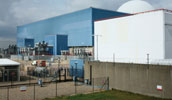
Power generation utilities in southern Africa are expected to increasingly adopt automation and control solutions (ACS) to counter the effects of the current power shortage. Automation will help them improve process efficiency and productivity through the elimination of redundant operations and the reduction of human error in some operations.
New analysis from growth consulting company Frost & Sullivan finds that distributed control systems (DCS) are the most widely used solution in power generation. However, DCS faces increasing competition from inexpensive solutions such as supervisory control and data acquisition (scada) and programmable logic controllers (PLCs), which are eating into DCS’ shares due to technological advances.
Utilities’ increased investments in both rehabilitation and green field projects have given a much-needed boost to the South African power generation ACS market. ACS suppliers will be looking to tap into the lucrative South African market, where an estimated investment of $43,0 billion for new power plants and rehabilitation projects is likely to throw up many opportunities.
Even though several utilities admitted to not employing remote access operations in their plants, the majority recognise that automating operations such as auto start up and shut down is vital.
“In the short term, retrofit projects are expected to be a major revenue driver, with new projects expected to boost revenues from 2010 onwards,” says Frost & Sullivan research analyst Litiya Matakala. “Services such as engineering, maintenance, programming, and upgrades are anticipated to account for the bulk of the sales revenue. This is because customers depend on their suppliers to fill the gap caused by the shortage of technical skills at the end-user level.”
To cater for the growing demand, ACS suppliers will have to develop robust and streamlined distribution channels as well as initiate direct sales efforts. Since direct sales appears to be the most influential factor shaping end users’ purchase decision, it is vital that suppliers ensure they have an effective sales team that can demonstrate the suitability of their solutions and the way they can meet end-user specifications.
Another important purchase factor is the system cost. Although numerous projects have been identified in several countries, projects do not always get underway due to funding constraints. As most power stations are government owned, they have limited opportunities to raise funds from the financial markets.
“Faced with funding constraints, end-users are more likely to place emphasis on the cost of ACS,” notes Matakala. “Suppliers that can come up with innovative pricing of products and services that will reduce the total cost of ownership of ACS systems will be in a position to gain significant market share.”
Although innovative pricing will open up opportunities for market entrants, particularly outside South Africa, ACS suppliers can neutralise the importance of pricing by offering efficient customer service.
For more information contact Patrick Cairns, Frost & Sullivan, +27 (0)21 680 3274, [email protected], www.frost.com
Further reading:
Network-capable remote relay system with flexible channel assignment
Phoenix Contact
PLCs, DCSs & Controllers
Phoenix Contact has launched a modular PLC-Interface Ethernet Gateway remote relay system with up to 56 configurable I/O channels, multi-protocol support including Profinet Class C and S2 redundancy, and compatibility with established controller software for straightforward network integration.
Read more...
Seven checks before replacing an obsolete industrial control component
PLCs, DCSs & Controllers
An obsolete control component rarely fails in isolation. Before ordering an exact spare, manufacturer successor or engineered alternative, maintenance and procurement teams should work through seven checks to define the problem properly and avoid a costly mismatch.
Read more...
Loop signature Part 2-6
PLCs, DCSs & Controllers
This instalment of the Loop Signature series introduces frequency plot theory as a foundation for understanding process dynamics, explaining Bode plots, dynamic gain, phase lag and their relationship to control loop tuning.
Read more...
The rise of software-defined brownfield automation
Schneider Electric South Africa
PLCs, DCSs & Controllers
Schneider Electric’s EcoStruxure Automation Expert is enabling brownfield operators to modernise incrementally, decoupling control logic from hardware to bridge legacy equipment and future-ready operations without disrupting production.
Read more...
Upgrading alarm systems for critical industries
Omniflex Remote Monitoring Specialists
PLCs, DCSs & Controllers
Omniflex’s OMNI16R alarm annunciator platform provides a direct replacement for legacy CSA systems such as MPAS 90 and SA9100, enabling operators in oil and gas, nuclear and power generation to modernise alarm infrastructure without sacrificing the clarity required for safe operations.
Read more...
How DCS can step off the hardware obsolescence treadmill
Schneider Electric South Africa
PLCs, DCSs & Controllers
Schneider Electric argues that virtualising DCS environments breaks the cycle of hardware obsolescence, giving plant operators a smarter path to lifecycle modernisation without production disruption.
Read more...
Loop signature Part 2-6
PLCs, DCSs & Controllers
The Loop Signature series turns to frequency plot theory, explaining Bode open-loop plots and how dynamic gain, phase lag and crossover frequency can be extracted from test data to inform more accurate control loop tuning.
Read more...
PC-based control in surgery
Beckhoff Automation
Editor's Choice PLCs, DCSs & Controllers
Researchers at the University of Basel are using Beckhoff PC-based control technology to develop a miniature laser robot for minimally invasive bone surgery.
Read more...
IIoT controller for the field and control cabinet
ifm - South Africa
PLCs, DCSs & Controllers
The IIoT controller from ifm is a powerful, communicative and flexible PLC solution in machine and plant digitalisation.
Read more...
How the DCS can step off the hardware obsolescence treadmill
Schneider Electric South Africa
PLCs, DCSs & Controllers
Ageing servers and unsupported operating systems are quietly eroding the stability of process plants that rely on distributed control systems. Kobus Vermeulen of Schneider Electric explains how virtualising the DCS environment can break the hardware obsolescence cycle without disrupting operations.
Read more...









 printer friendly version