



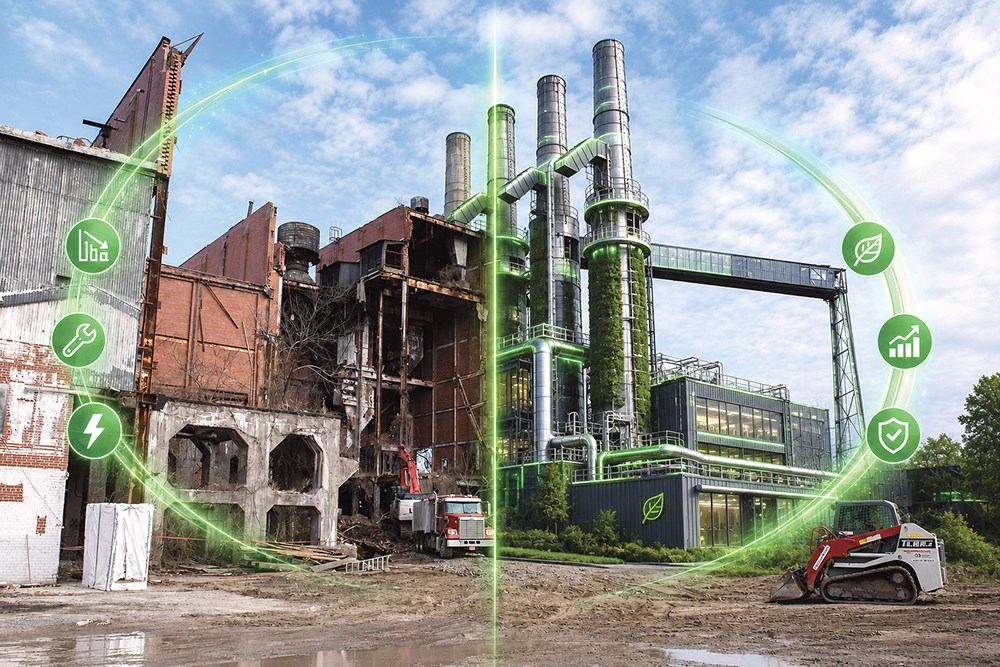
Brownfield industrial sites have for decades relied on hardware-centric automation architectures built for stability rather than adaptability. While these systems have served industry well, the pressures facing operators today, including ageing infrastructure, rising performance expectations and accelerating digital transformation, are exposing their limitations.
Modernisation is no longer a question of how to evolve without disrupting production or discarding valuable assets. Increasingly, the answer lies in reimagining brownfield automation through flexible, software-defined platforms that bridge the gap between legacy equipment and future-ready operations.
The changing nature of industrial work is a major driver behind this shift. A new generation of engineers is entering the field with very different expectations from those who built and maintained traditional systems. They are accustomed to intuitive interfaces, drag-and-drop engineering environments and seamless interoperability between devices. They expect automation platforms to behave more like modern software ecosystems than isolated hardware islands. With powerful digital tools at their disposal, they want to spend less time navigating manuals and more time solving operational problems, optimising processes and extracting value from data.
Reshaping modernisation strategies
This changing workforce dynamic is reshaping modernisation strategies. Instead of large-scale rip-and-replace projects, operators are increasingly favouring incremental transformation, upgrading what is necessary, integrating what already works and layering new capabilities over existing systems. Software-defined automation platforms are enabling this shift by decoupling hardware from software, allowing engineers to innovate without being constrained by proprietary controllers or vendor-locked architectures.
Schneider Electric’s EcoStruxure Automation Expert (EAE) exemplifies this new approach. Designed as a flexible, interoperable environment, it allows operators to modernise at their own pace. It separates the control logic from the underlying hardware, ensuring that automation applications can run on multiple devices, multiple vendors and within multiple plant areas. This hardware-agnostic model protects existing investments and opens the door to faster innovation cycles and more agile engineering practices.
One of the most powerful aspects of this approach is its ability to function as an interoperability layer alongside established systems such as Foxboro distributed control systems (DCS). Rather than forcing operators to abandon proven infrastructure, EAE integrates with it, communicating across controllers, consolidating data flows and creating a unified automation environment. Legacy systems continue performing their core functions, while new digital capabilities are introduced through a modern, software-driven layer. The result is a smoother, lower-risk transition that avoids unnecessary downtime and disruption.
Cost benefits of incremental modernisation
The operational and cost benefits of this incremental modernisation model are significant. With controllers and digital tools now more widely available and competitively priced, automation is no longer the exclusive domain of large, capital-intensive operations. Smaller plants and previously manual environments can now adopt modern control strategies, gain real-time visibility into processes and make better-informed decisions based on accurate, accessible data. By modernising selectively rather than wholesale, operators reduce project complexity, shorten implementation timelines and maintain continuity of production, critical advantages in industries where downtime directly affects revenue.
Looking ahead, the future of brownfield automation will be defined by software-centric, interoperable ecosystems that evolve continuously rather than in disruptive cycles. Open standards, APIs and IT/OT convergence will play central roles, enabling automation platforms to integrate with enterprise systems, cloud environments and advanced analytics tools.
Broader skill sets required
As plants become more connected, automation partners will need broader skill sets that combine process knowledge with software engineering, networking, cybersecurity and data fluency. The traditional boundaries between roles such as PLC programmer, SCADA engineer and network specialist are blurring into unified, software-driven disciplines.
The next generation of brownfield transformation will be shaped by three principles: flexibility, interoperability, and future-readiness. Operators want solutions that adapt to their environments, not the other way around. They want platforms that protect existing assets while enabling new capabilities, architectures that scale across sites, support continuous improvement, and remain open to emerging technologies.
| Tel: | +27 11 254 6400 |
| Email: | [email protected] |
| www: | www.se.com/za/en/ |
| Articles: | More information and articles about Schneider Electric South Africa |






© Technews Publishing (Pty) Ltd | All Rights Reserved
 printer friendly version