



The rapid growth of cloud computing, AI and digital services is accelerating investment in data centre infrastructure across the Middle East and Africa (MEA) region. As demand for resilient, scalable facilities grows, successful projects require multidisciplinary engineering expertise, regional insight and an understanding of local regulatory, environmental and infrastructure realities.
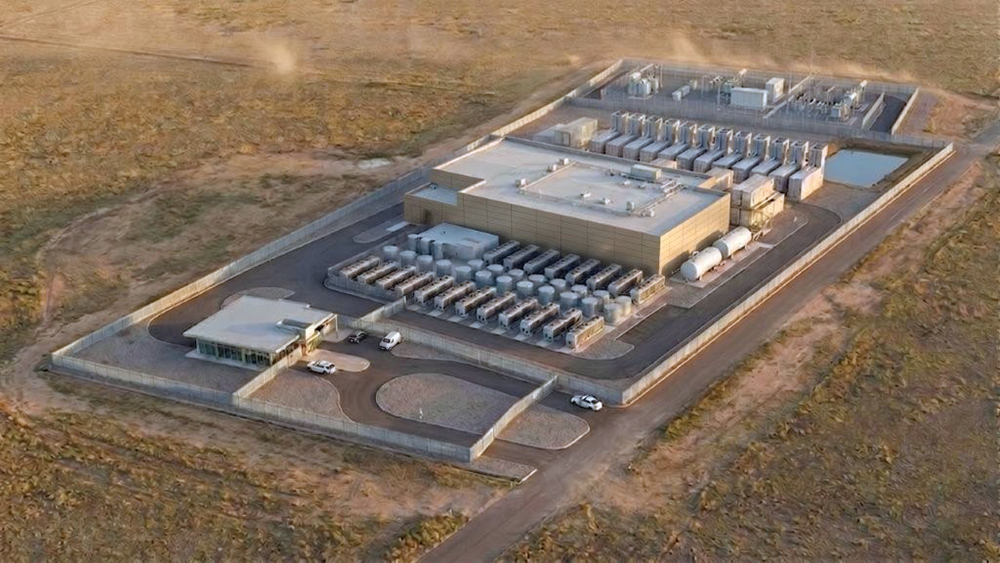
“Data centres are among the most complex infrastructure projects being delivered today,” says Christo Reeder, lead: data centres at Zutari. “Success depends on understanding the entire project lifecycle, from identifying suitable sites and securing power and fibre connectivity through to engineering design, commissioning and future expansion. Bringing all those capabilities together under one multidisciplinary team enables us to reduce project risk while delivering facilities built for long-term resilience.”
Although Zutari has been delivering data centre projects for many years, the company is placing greater emphasis on showcasing a specialist capability that has evolved alongside its broader engineering business. “The reality is that we have simply never been very vocal about it,” says Riaan de Leeu, business development lead: data centres at Zutari. “Today, we have a dedicated data centre team serving clients across the MEA region, and we are focused on making the market aware of the depth of experience and capability that already exists within Zutari.”
A regional footprint with local understanding
While many engineering consultancies operate internationally, data centre projects are delivered within local regulatory, environmental and infrastructure environments. Every jurisdiction presents its own approval processes, utility constraints and construction challenges. With an established multinational presence across MEA, Zutari combines regional resources with local expertise, enabling specialist teams to be deployed wherever projects require them while maintaining an understanding of country-specific requirements.
“We do not simply export a design philosophy from one region to another,” explains de Leeu. “Every market has its own regulatory environment, cultural context and infrastructure realities. Understanding these differences allows us to deliver solutions that are technically robust while remaining practical to build and operate.” This regional capability also enables Zutari to support international developers entering MEA markets by translating global standards into solutions suited to local conditions.

Supporting projects from concept to operation
According to Reeder, one of Zutari’s key differentiators is its ability to support clients throughout the entire project lifecycle. From site identification and feasibility assessments to permitting, detailed engineering, construction oversight, commissioning and future expansion, the company offers an integrated multidisciplinary service that reduces complexity and improves delivery certainty.
“Our involvement can begin with identifying suitable sites by assessing power availability, fibre connectivity and other critical infrastructure,” says Reeder. “From there, we support permitting, engineering design, procurement, construction oversight, commissioning and future expansion.” Zutari offers advisory, environmental, civil, structural, mechanical, electrical and specialist engineering services under one roof, which means clients benefit from a co-ordinated approach that reduces project risk.
As organisations place increasing reliance on digital infrastructure, resilience has become a defining characteristic of modern data centre design. Rather than focusing solely on technical specifications, Zutari evaluates projects more broadly through long-term operational resilience, considering power security, fibre connectivity, water availability, climate conditions and future scalability from the earliest planning stages. The consultancy also applies modular design principles that enable clients to expand facilities as demand grows, reducing upfront capital expenditure while accelerating time to market.
Different markets, different demands
While the African data centre market continues to be driven largely by hyperscale cloud infrastructure, the Middle East is already seeing greater demand for high-performance computing and AI-ready facilities. Zutari is involved in some of the region’s largest AI developments, giving its teams direct experience of the technologies shaping the next generation of data centre infrastructure.
“The Middle East market is far more mature,” says de Leeu. “We see significant investment continuing, particularly in Saudi Arabia where Vision 2030 is driving ambitions to establish the country as a global hub for high-performance computing.” AI continues to dominate global discussions around digital infrastructure. “However, much of Africa’s current demand is still being driven by hyperscale cloud infrastructure. Our responsibility is to design facilities that meet today’s requirements while remaining flexible enough to support tomorrow’s technologies,” he says.
“We are fortunate to be involved in major AI developments in the Middle East, which keeps us at the forefront of emerging technologies. At the same time, conventional data centre infrastructure will continue to play a significant role across Africa for many years,” adds Reeder.
Building confidence across the MEA region
“The technology continues to evolve,” concludes de Leeu. “What does not change is the importance of understanding the environment in which you are building. When you combine international experience with genuine local knowledge, you create infrastructure built not only for today, but for the future.”
For more information contact Cambridge Mokanyane, Zutari, +27 12 427 2000, [email protected], www.zutari.com






© Technews Publishing (Pty) Ltd | All Rights Reserved
 printer friendly version