



With Africa’s digital economy stretching far beyond its metros, the traditional model of sprawling data centre campuses is no longer adequate. The continent needs infrastructure capable of spanning the distance. Modular edge data centres, compact, fast to deploy and easy to scale, are emerging as the practical way to deliver compute power to remote and underserved regions where demand is rising fastest.
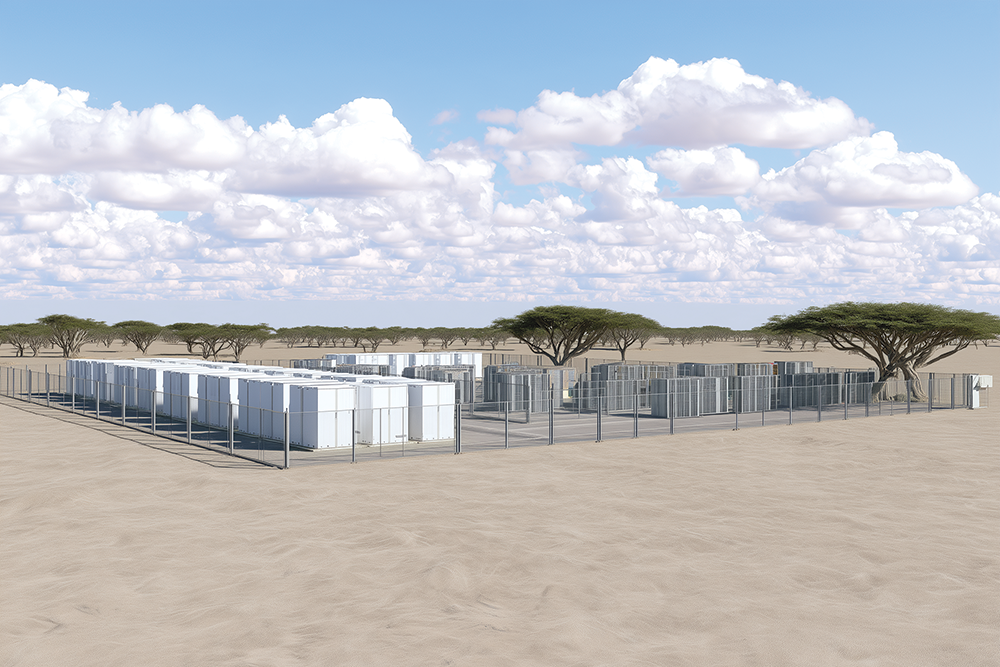
As digital demand spreads beyond major urban centres, the economics of infrastructure are shifting. Content and compute must sit close to users to cut latency, lower transport costs and avoid hauling traffic back to overseas hubs, making local caching and processing essential. At the same time, the rapid rollout of Low Earth Orbit (LEO) and Medium Earth Orbit (MEO) satellite networks is pushing more infrastructure to the edge, as ground stations require a clear line of sight outside dense metros, effectively turning these sites into wireless cable landing stations. With the next generation of LEO constellations set to host AI-enabled edge data centres in orbit, demand for terrestrial edge facilities will only intensify. Modular edge data centres are becoming foundational to Africa’s next phase of digital growth.

Shrinking technology
The underlying technology is also shrinking. Racks that once drew two or three kilowatts now run at 14 to 20 kW, packing far more compute into a fraction of the footprint. What previously required a large hall can now fit inside a 12 m ISO modified container, complete with power, cooling and supporting infrastructure. This densification makes modular edge facilities ideal for AI workloads, IoT ecosystems and latency-sensitive applications. Whether it is a smart vehicle making a split-second decision or an industrial sensor network requiring real-time processing, these systems cannot tolerate long delays. They need local compute, storage and connectivity, exactly what modular edge data centres deliver.
Geographical realities
Africa’s geography is also driving the shift to modular. Many edge sites sit in remote areas with no local suppliers or specialist contractors, so onsite construction is simply not practical. With a modular approach, the full data centre environment is assembled and tested in the factory, then shipped for fast plug-and-play deployment. This is why Master Power Technologies can roll out ground stations and edge facilities for a major LEO provider in just two and a half months, far quicker than the six-to-nine-month timelines of traditional builds. Running fabrication, procurement and civil works in parallel dramatically accelerates time to market. Because these sites are remote, onsite staffing is intentionally minimal. A small team handles basic checks and security, but they are not mechanical, electrical or data centre specialists.
The importance of remote monitoring
Remote monitoring is therefore becoming indispensable. Every critical system, including power, cooling, fuel, batteries and environmental conditions, is tracked around the clock, with thresholds triggering alerts long before issues escalate. Specialists can diagnose and adjust systems remotely, while local technicians are dispatched only when needed. Even slow-burn failures such as battery degradation are detected weeks in advance, allowing replacements to be ordered and installed before performance is affected. In remote environments where every site visit is costly and time-sensitive, this proactive oversight keeps modular edge facilities running reliably year-round.
Selecting the right partner
All of this underscores why choosing the right partner is so important. Africa’s edge build-out demands teams with a proven track record, resilient mechanical, electrical and plumbing designs that guarantee concurrently maintainable uptime, and monitoring platforms that deliver true remote visibility. The right partner will have delivered multiple modular data centres on the continent, with reliability and monitoring maturity to match. These are the foundations operators need as modular edge data centres become central to Africa’s digital growth and connectivity ambitions.
Looking ahead, the case for modular edge data centres becomes even stronger considering where the world’s next billion internet users will come from. They will not be in Europe, the United States of America or Asia, they will be in Africa, and many live far from fibre routes and dense mobile networks. Edge infrastructure will finally connect these communities. By placing compute close to rural users and pairing it with LEO satellite backhaul, a single modular edge site can cover hundreds of kilometres, far beyond the reach of a traditional cell tower. With just a few strategically placed nodes, an entire country can achieve near-universal reach.
This opens a vast and untapped market, with farmers gaining real-time access to AI tools, remote villages accessing digital services, and rural businesses competing globally for the first time. Modular edge data centres, combined with satellite connectivity, will be the catalyst that brings Africa’s most remote regions into the digital economy.






© Technews Publishing (Pty) Ltd | All Rights Reserved
 printer friendly version