



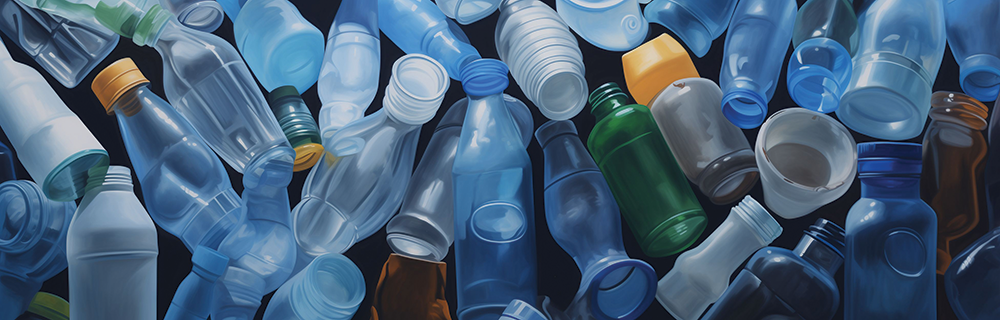
Researchers have developed a solar-powered process that converts plastic waste into hydrogen and useful industrial chemicals while using spent acid from vehicle batteries. The approach could help create a circular system for dealing with several challenging waste streams at the same time.
Global plastic production and disposal continue to grow. More than 400 million tons of plastic waste were generated in 2025, yet less than 10% was recycled.
Plastics such as polyethylene terephthalate or PET, polyurethane and nylon are known as condensation polymers. PET is widely used in beverage bottles and food packaging, while polyurethane is found in insulation, bedding and foam products. Nylon is used in textiles, engineering components and numerous consumer products. These materials are formed when smaller chemical units, known as monomers, react to create long polymer chains. Water is released during the reaction that joins the monomers. By reversing this process through hydrolysis, water can be used to break the polymer bonds and recover the original chemical building blocks.
Scientists at the University of Cambridge have expanded this principle by combining plastic depolymerisation with solar-driven hydrogen generation in one reactor. Their work, published in the journal Joule, focuses on converting PET waste into chemical products while producing hydrogen from one of the recovered monomers.
The first stage involves breaking down PET. Plastic bottles are shredded and milled into a fine powder before being added to concentrated sulphuric acid. Heating the mixture to approximately 140°C causes the PET to separate into ethylene glycol and terephthalic acid. Both substances have established industrial uses and can serve as feedstocks for new products.
Rather than relying on newly manufactured sulphuric acid, the researchers used acid recovered from discarded lead-acid vehicle batteries. During conventional battery recycling, lead is normally recovered, while the acid component may receive less attention. Using this waste acid as a reagent could improve material recovery and reduce the need for new chemicals.
During PET breakdown, terephthalic acid separates from the reaction mixture as a solid. The remaining liquid contains ethylene glycol in an acidic environment. This presented a technical challenge because hydrogen production from ethylene glycol has generally required alkaline conditions.
To overcome this limitation, the team developed a catalyst capable of operating in the acidic battery-derived solution. The catalyst contains molybdenum and is added directly to the ethylene glycol mixture. When exposed to light, it initiates a photochemical reaction that forms hydrogen gas. At the same time, ethylene glycol is converted into acetic acid. This is an important commodity chemical used in the production of adhesives, coatings, solvents, textiles and polymers.
Hydrogen is increasingly important in industrial decarbonisation. It can be used as a feedstock in chemical manufacturing, refining, metals processing and fertiliser production. However, much of today’s hydrogen is still produced from fossil fuels, particularly natural gas, through processes that generate significant carbon emissions.
The new system offers a possible alternative route by using waste plastic as the source of hydrogen-containing molecules and sunlight as the energy input. It also demonstrates how chemical recycling could be linked to renewable-energy technologies, rather than treated as a separate waste-management activity.
The researchers have also explored hydrogenation as another application for the same chemistry. This is a widely used industrial process in which hydrogen is added to chemical compounds, often across carbon-carbon double bonds. It is essential in the production of fuels, fine chemicals, pharmaceuticals and many other materials.
Hydrogenation frequently depends on hydrogen generated from fossil resources. In a follow-up study, the Cambridge team used the plastic-derived reaction system to hydrogenate nitrogen-containing compounds into chemical intermediates relevant to pharmaceutical manufacturing.
For industrial adoption, the next stage will be scale-up. The researchers are investigating how the process can be adapted for continuous flow reactors. Unlike batch systems, flow reactors continuously feed reactants into a system and remove products, making them better suited to larger-scale manufacturing.
A continuous design could improve productivity, control and integration with existing chemical plants. It may also help address the practical challenge of delivering sufficient light exposure throughout larger reaction volumes.
The process remains at an early stage, but it illustrates how circular manufacturing can connect waste management, chemical production and renewable energy. By recovering value from plastic bottles and spent battery acid while producing hydrogen and industrial chemicals, the technology offers a possible pathway towards more resource-efficient chemical engineering.
Further development will determine whether the approach can operate economically at commercial scale. If successful, it could support a future in which difficult waste materials are treated as feedstocks for cleaner industrial processes, rather than as materials destined for landfill or incineration.
For more information visit www.doi.org/10.1016/j.joule.2026.102347






© Technews Publishing (Pty) Ltd | All Rights Reserved
 printer friendly version