



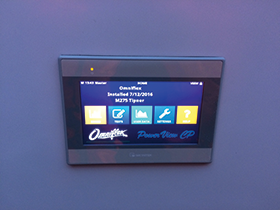
Corrosion protection plays a critical role in preserving industrial assets, particularly in process plants where equipment is routinely exposed to aggressive chemicals and demanding operating conditions. Ian Loudon, international sales and marketing manager at Omniflex, explains why advances in remote monitoring are changing the way cathodic protection and anodic protection systems are managed, helping operators gain greater visibility of asset condition and make more informed maintenance decisions.
Across industries such as pulp and paper, mining, and fertiliser production, operators are under pressure to extend existing infrastructure service lives. Many process plants have been operating for decades, making wholesale replacement difficult to justify from both a financial and operational perspective. As a result, maintaining critical equipment and preventing premature degradation has become a growing priority.
While cathodic and anodic protection technologies have been used successfully for many years, the environments in which they operate vary considerably. In pulp and paper production, bleaching processes can expose equipment to highly corrosive concentrated alkali bases such as chlorine dioxide. Fertiliser manufacturing may involve acid coolers and associated pipework, while mining operations often rely on acidic or alkaline chemicals to separate valuable minerals from ore. The objective is the same: protecting assets from corrosion and extending service life, but the protection requirements are often specific to the process and operating environment.
A new way of managing corrosion control systems
Historically, many corrosion protection systems have relied on periodic inspections and manual intervention to assess performance. While effective, this approach can leave maintenance teams with limited visibility between inspections. Advances in remote monitoring and control technologies address this challenge by integrating monitoring equipment, controllers and transformer rectifiers into connected systems that provide continuous oversight of protection performance.
This visibility is further enhanced through human machine interfaces and cloud-based monitoring platforms that can be accessed from anywhere, 24 hours a day, seven days a week. These give maintenance teams direct access to system information and performance data. Rather than waiting for corrosion-related issues to become apparent during inspections or maintenance activities, operators can identify potential problems earlier and adopt a preventative maintenance approach, helping to improve planning, reduce uncertainty and downtime, supporting a more proactive approach to asset management.
The benefits extend beyond corrosion protection alone. Access to real-time performance data enables operators to make better-informed maintenance decisions, helping maximise asset life and reduce the risk of unexpected degradation. For facilities under pressure to achieve more with existing infrastructure, understanding the condition of critical assets is increasingly important.
This approach is already being applied in demanding process environments where equipment is exposed to highly corrosive chemicals, extreme pH conditions and continuous industrial operation. In fertiliser production, for example, acidic coolers must withstand prolonged exposure to acidic process streams. Pulp and paper facilities often use chlorine dioxide during bleaching processes, while mining operations frequently rely on acidic or alkaline chemicals to extract valuable minerals from ore.
By combining proven protection techniques with remote monitoring and control, operators can maintain oversight of system performance while minimising disruption to ongoing operations. Similar opportunities exist across pulp and paper, mining and other process industries where corrosive environments present ongoing maintenance challenges.
Cathodic and anodic protection technologies have a long history of safeguarding industrial assets. As operators seek to improve reliability, extend asset life and make more efficient use of resources, the future of corrosion protection will increasingly depend on how these systems are monitored, managed and integrated into wider maintenance strategies.
| Tel: | +27 31 207 7466 |
| Email: | sales@omniflex.com |
| www: | www.omniflex.com |
| Articles: | More information and articles about Omniflex Remote Monitoring Specialists |






© Technews Publishing (Pty) Ltd | All Rights Reserved
 printer friendly version