



Access to safe drinking water remains one of the most important public health priorities worldwide. Across Africa, and particularly in South Africa, municipalities and water utilities continue to face increasing pressure to maintain water quality amid aging infrastructure, rapid urban growth, climate-related challenges and rising public concern over potable water safety.
In recent years, water quality incidents and infrastructure failures have frequently made headlines, highlighting the importance of reliable monitoring systems that can help utilities detect issues early and maintain consistent disinfection performance throughout the treatment and distribution process.
One of the key factors in ensuring safe drinking water is the accurate monitoring of free chlorine residuals. Free chlorine plays a critical role in water disinfection by eliminating harmful microorganisms and protecting water quality as it travels through distribution networks. However, maintaining the right chlorine balance is not always straightforward. Too little chlorine may compromise public health, while excessive chlorine can impact taste, odour, operational efficiency and chemical costs.
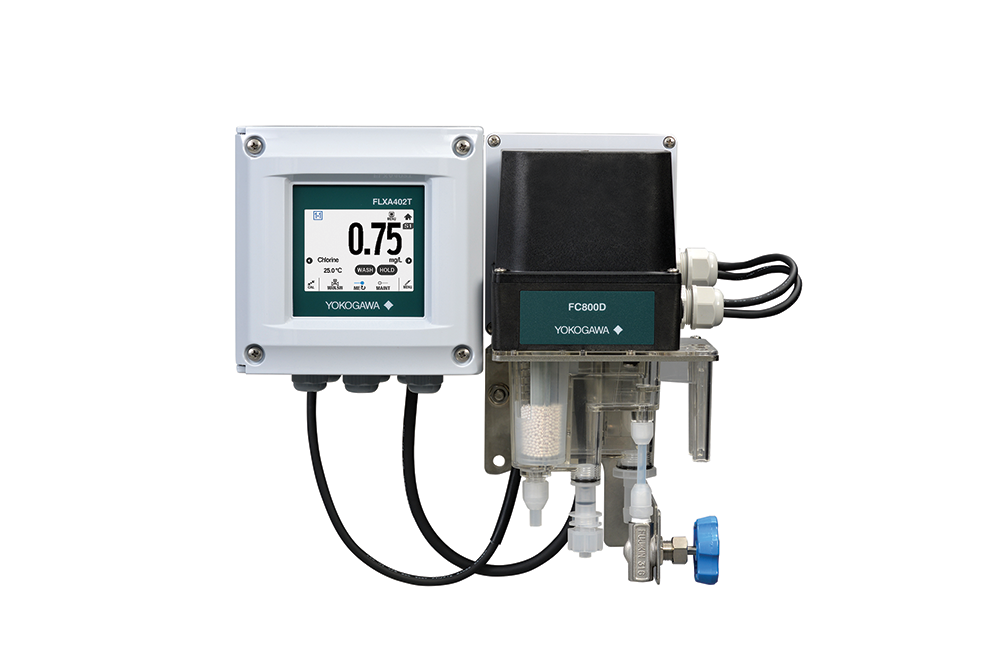
This is where advanced online analysers, such as Yokogawa’s FC800 free chlorine analyser are becoming increasingly valuable for water treatment operators and municipal utilities.
The FC800 was developed specifically for continuous free chlorine monitoring in potable water applications. Unlike traditional systems that rely on reagents, the FC800 uses a non-reagent measurement method, helping utilities reduce maintenance requirements, operating costs and chemical handling challenges.
For many utilities, maintenance simplicity is a necessity. Water treatment facilities often operate with limited manpower and growing operational demands. Equipment that requires frequent servicing or calibration can place additional pressure on already stretched teams. The FC800 addresses this challenge through a rotating electrode design combined with continuous self-cleaning technology which helps maintain stable measurement performance while minimising contamination buildup on the sensor surface.
Reliable chlorine measurement can be particularly challenging because free chlorine itself is highly unstable and easily affected by environmental conditions and contaminants present in the water. Iron, manganese and other impurities can influence measurement stability. Yokogawa’s design approach focuses on achieving continuous and stable monitoring, even under demanding conditions commonly experienced in municipal water systems.
The importance of accurate free chlorine monitoring extends beyond treatment plants alone. Chlorine residuals must also be maintained throughout water distribution networks to ensure water remains safe by the time it reaches homes, schools, hospitals and businesses. Distribution systems are often vulnerable to leaks, contamination risks and fluctuating water demand, making continuous monitoring essential.
Yokogawa has already seen successful implementation of its chlorine monitoring solutions in municipal and water-related applications across several regions. These applications include drinking water treatment facilities, water distribution points, packaged water systems, and other potable water monitoring environments. As utilities modernise their operations, there is growing demand for analyser technologies that not only deliver accurate measurements, but also support long-term reliability, lower maintenance requirements and easier integration into digital monitoring systems.
The FC800 supports this need through Yokogawa’s modular analyser platform, enabling flexibility for utilities that require multiple water quality measurements within a single system architecture. The analyser can be integrated alongside other water quality parameters such as turbidity, pH and conductivity monitoring, providing operators with a more comprehensive view of treatment performance and water quality conditions.
Another important consideration for utilities is lifecycle cost. While initial equipment investment remains important, many municipalities are increasingly evaluating the total cost of ownership over time. Frequent maintenance visits, replacement consumables, chemical reagents, and unexpected downtime can significantly increase operating expenses. Yokogawa’s non-reagent approach helps reduce many of these ongoing operational costs while supporting long-term analyser stability.
Water treatment is about protecting communities. Reliable water quality monitoring is directly linked to public health, environmental responsibility and public confidence. As South Africa and the broader African region continue to invest in water infrastructure modernisation, technologies that enhance reliability, operational efficiency and water safety will play an increasingly important role. Solutions such as the FC800 free chlorine analyser offer utilities a practical and reliable approach to maintaining safe potable water standards while helping operators meet the growing challenges facing modern water networks. In a world where water quality concerns are increasingly visible and impactful, continuous and dependable chlorine monitoring is essential.
| Tel: | +27 11 831 6300 |
| Email: | [email protected] |
| www: | www.yokogawa.com/za |
| Articles: | More information and articles about Yokogawa South Africa |






© Technews Publishing (Pty) Ltd | All Rights Reserved
 printer friendly version