



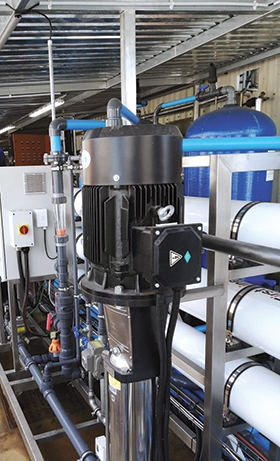
In South Africa, reverse osmosis (RO) is used to treat borehole water, desalinate seawater, produce ultra-pure water for food and beverage processing, cosmetic and pharmaceutical production, and to improve water quality in demanding industrial applications. While the technology can remove up to 99% of contaminants and minerals, it has traditionally been seen as something requiring significant budget, or a solution reserved for extreme circumstances.
Rising water costs, increasing pressure on water infrastructure and growing demands for operational efficiency are changing the way industries view RO. Experienced local water treatment specialist, G-Chem Aquacare is developing tailored RO solutions, including containerised plants which make this technology more accessible.
Chief executive officer, Shaun Golding explains that RO is a membrane-based process in which water under pressure is pushed through semi-permeable membranes, allowing water molecules to pass through while rejecting dissolved salts, minerals, metals, organics and other impurities.
“RO is best suited to clients requiring a significant reduction in dissolved solids or specific contaminants. Typical applications include boiler make-up water, process water, ingredient water, reuse water polishing, borehole treatment and applications where scale, corrosion, product quality or high blow-down rates are causing operational or cost challenges,” Golding explains.
Heavy lifting
Golding emphasises that RO is not a simple ‘plug-and-play’ solution. “RO works best when it forms part of a broader water treatment approach and plan, considering feedwater quality, pre-treatment, chemical conditioning, operating conditions, storage, post-treatment and the final application,” he points out.
Although RO has in the past only made headlines during droughts and around desalination, Golding notes that this technology has been used successfully in South African industry for some time. The key, he says, is ensuring the economics and technical requirements justify its use, and that effective pre-treatment protects expensive membranes.
“Membranes can foul quickly without the correct pre-treatment protection. We evaluate the water source and determine whether specialised pre-treatment is required to protect the membranes, whether iron or silica is present, whether the water is high in suspended solids, and what the microbiological loading is. Pre-treatment does the heavy lifting so RO can perform efficiently and reliably.”
Polishing water for reuse
One of the most promising applications for RO is water reuse. Many manufacturers discharge large volumes of effluent every hour, paying for incoming water and sewage discharge. Reusing treated water can significantly reduce both costs. By passing pre-treated wastewater through specialised RO membranes designed to handle contaminants, such as grease and fats, companies can dramatically reduce the volume of water discarded, and in some cases, move closer to zero liquid discharge (ZLD).
Beyond installation
While the technology itself tends to be the key focus during installation, Golding believes the long-term success of any RO installation depends on what happens after commissioning.
“A system can perform exceptionally well during start-up, but feedwater quality changes, production requirements evolve and operating conditions fluctuate. Without ongoing monitoring and optimisation, performance can deteriorate over time,” he observes.
Through routine service visits, water analysis, chemical treatment programmes, system audits and increasingly through online monitoring technologies, G-Chem Aquacare works with clients to ensure RO systems continue delivering the expected water quality, efficiency and return on investment throughout their operational life.
Refining RO solutions
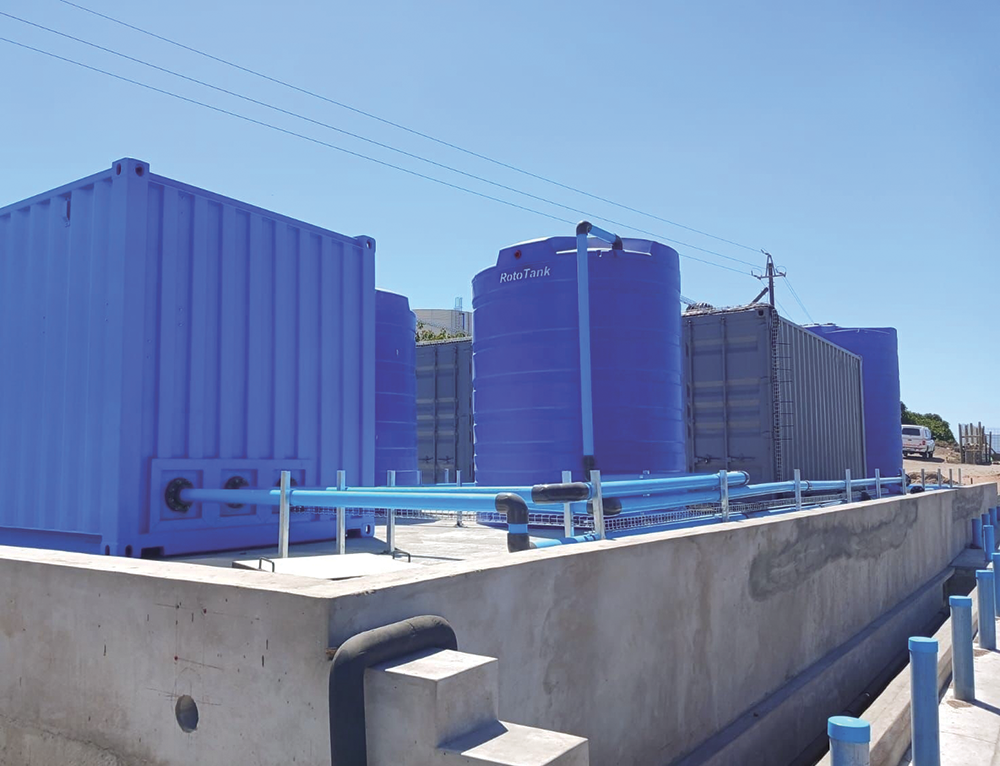
Recognising growing demand for modular and rapidly deployable systems, G-Chem Aquacare works closely with Aquatreat Technologies to refine containerised RO offerings for local industry. These systems integrate pre-filtration, dosing systems, pumps, RO skids, control panels and monitoring equipment into a single package, creating a flexible and scalable solution.
“Traditional RO plants are often built into existing plants and may require significant civil works and longer installation periods. Containerised RO plants, by comparison, allow much of the system to be assembled and factory-tested off-site before delivery, reducing installation time and site disruption,” Golding explains.
“From G-Chem Aquacare’s perspective, the value lies in selecting the correct solution for the application, whether containerised or custom-built, and combining Aquatreat Technologies’ engineering capability with G-Chem Aquacare’s chemical, technical and operational expertise to provide a complete water treatment solution,” Golding advises.
The benefits are already evident in numerous client project successes. A West Coast industrial client operating its boiler plant on softened make-up water commissioned G-Chem Aquacare to conduct a return on investment study for a 36 m³/hr reverse osmosis plant. Following implementation, boiler cycles were increased dramatically, reducing blow-down volumes and lowering water, chemical and fuel use. The fuel savings alone delivered a return on investment in under 16 months.
A second project at a specialised tanker washing facility aimed to replace municipal water with borehole water. G-Chem Aquacare installed a 12 m³/hr RO plant with pre-treatment to treat the borehole supply to the required quality, significantly lessening municipal water consumption and operating costs. The client achieved a return on investment in just nine months.
Containing the benefits
Managing director, Kevin Naidoo believes containerised plants offer strong benefits. “If clients are working in a rural area, it is much easier to supply a containerised RO plant, building this in a warehouse environment where all the pipe work, pressure and functionality tests can be done before the unit actually goes to site,” he says.
Containerisation also protects equipment from harsh industrial environments, extending plant lifespan while ensuring all components are located within a well-planned and engineered footprint. “On arrival, you also know the container will fit into the allocated area. If you are trying to build on site, it can be a bit tricky to find the right amount of space,” he says.
RO-ing into the future
Golding sees significant growth potential for containerised RO systems in South Africa and believes there is an exciting future for RO in this country. He also believes RO can play an increasingly important role across many sectors, from boiler houses, food and beverage production to manufacturing and mining.
“The future of industrial water treatment is not about individual technologies. It is about combining the right technologies, chemistry, monitoring and technical expertise to deliver measurable outcomes,” Golding points out.
“Reverse osmosis is an incredibly powerful tool, but its true value is realised when it forms part of a broader strategy focused on reducing water consumption, lowering operating costs, improving energy efficiency, and protecting critical assets. Whether we are implementing an RO plant, optimising a boiler house, improving cooling water performance or supporting water reuse initiatives, our objective is the same: partnering with our clients to deliver superior results.”
For more information contact G-Chem Aquacare,






© Technews Publishing (Pty) Ltd | All Rights Reserved
 printer friendly version