



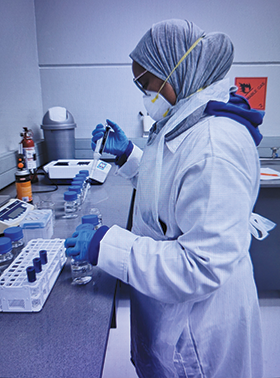
WearCheck Water, a division of leading condition monitoring specialist, WearCheck, has expanded its expertise in water analysis with the introduction of Legionella pneumophila detection and enumeration. This latest development positions the company at the forefront of water and surface safety monitoring, ensuring businesses, industries and public institutions can proactively manage legionella contamination risks.
Understanding Legionella: a hidden danger
Legionella bacteria, particularly Legionella pneumophila, are known to cause Legionnaires’ disease, a severe form of pneumonia. The bacteria thrive in warm water systems, such as cooling towers, industrial water tanks, air conditioning systems and plumbing networks. Inhalation of contaminated water droplets – often dispersed through mist or vapour – can lead to respiratory infections, posing serious health risks.
The disease primarily affects individuals with weakened immune systems, the elderly and those with underlying lung conditions. In severe cases, pneumonia can result in hospitalisation or fatal complications, making stringent testing and monitoring essential in mitigating public health risks.
Sources of Legionella contamination
Legionella bacteria can develop and spread in stagnant water systems, especially when conditions allow bacterial growth between 20 and 45°C. Factors that contribute to contamination include:
• Poor water circulation and stagnant water, allowing bacteria to multiply in biofilms.
• Sediment and organic matter accumulation, providing nutrients for bacterial growth.
• Inadequate temperature control, encouraging optimal conditions for Legionella proliferation.
• Aerosol dispersion through showers, cooling systems, air conditioning, ventilation, pools, spas, irrigation systems and fountains, increasing the likelihood of human exposure.
Without regular scientific analysis, Legionella outbreaks can occur unnoticed, posing major health and legal liabilities for facility managers, healthcare institutions and businesses.
WearCheck’s scientific approach to Legionella testing
Recognising the growing need for comprehensive water monitoring, WearCheck Water has established cutting-edge laboratory testing tailored to identifying and assessing Legionella pneumophila contamination in various water systems.
WearCheck Water’s laboratories can:
• Analyse water samples to detect the presence and concentration of Legionella pneumophila bacteria.
• Provide information for risk assessments based on bacterial levels and environmental conditions as per South African National Standards (SANS) 893.
• Recommend corrective measures, including disinfection protocols and water system maintenance strategies.
• Ensure compliance with regulatory standards for water safety and public health protection based on the Occupational Health and Safety Act (OHS Act), No. 85 of 1993 and HBA Regulations (R1390 of 2001).
WearCheck Water’s testing services cater to industrial sectors, healthcare facilities, hospitality businesses and public institutions, offering tailored solutions that ensure water safety and reduce potential outbreaks.
Neutralising Legionella contamination
Preventive action is key to controlling legionella risks. WearCheck Water advocates proactive measures that include:
• Regular water system maintenance, ensuring pipes, tanks and cooling towers remain clean and free from biofilms.
• Temperature regulation, keeping hot water above 60°C and cold water below 20°C to discourage bacterial growth.
• Chemical treatments such as chlorination and biocide applications to eliminate bacteriological colonies.
• Routine laboratory testing, ensuring early detection and intervention before outbreaks escalate.
Setting the standard in water safety
With decades of expertise in condition monitoring, WearCheck has established itself as a trusted leader in condition monitoring and the scientific analysis of used oil and other fluids, with extended services which include water safety and quality assurance. Through scientific legionella testing, WearCheck Water offers peace of mind to industries and businesses, providing reliable, accredited testing that ensures compliance with health and safety standards.
| Tel: | +27 31 700 5460 |
| Email: | [email protected] |
| www: | www.wearcheck.co.za |
| Articles: | More information and articles about Wearcheck |






© Technews Publishing (Pty) Ltd | All Rights Reserved
 printer friendly version