



German company, Pepperl+Fuchs is a pioneer and innovator in explosion
protection and industrial sensor technology. SA Instrumentation & Control’s editor caught up with Marc Van Pelt, managing director of Pepperl+Fuchs South Africa, to find out more about the company’s involvement in sustainable manufacturing, and especially green hydrogen.
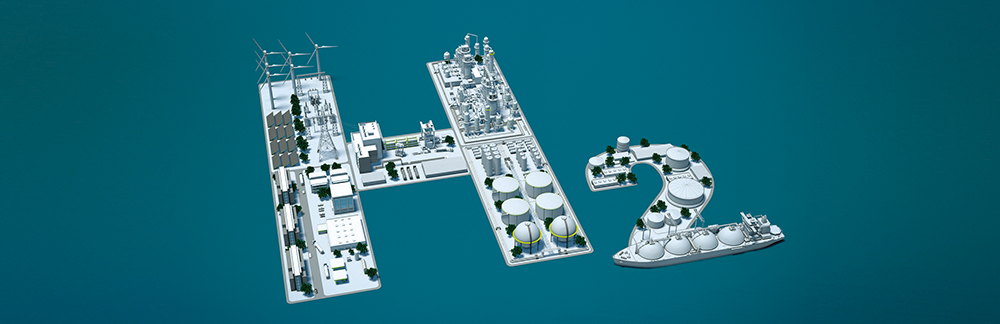

Van Pelt paints an exciting picture of the future of green hydrogen and its potential to transform South Africa’s economy and energy outlook. In a wide-ranging interview, he shares insights into how his company’s technology is contributing to this emerging industry, and why South Africa is uniquely positioned to become a global leader in green hydrogen production.
South Africa has the resources
He outlines the key elements needed for green hydrogen production: desalinated water, and energy from either wind or solar power or both. South Africa’s 3000 km coastline offers many opportunities for wind energy and water desalination, while its abundant sunshine makes it ideal for solar power generation. “Hydrogen is already used in multiple production processes in the country today, but it’s not green,” he notes. “Sasol, for example, is one of the world’s largest hydrogen consumers, and highest CO2 emitters. This needs to change.”
The Pepperl+Fuchs contribution
He adds that Pepperl+Fuchs strives to be at the forefront of technology, with automation and digitalisation forming the backbone of its drive to implement more sustainable manufacturing practises around the globe in line with the 2015 Paris agreement. At the heart of the company’s operations are its industrial sensors and explosion protection divisions. These areas are also critical in the production of green hydrogen. Its involvement spans the whole value chain, from solar and wind energy generation to desalination, through to storage and transport, and to downstream applications.
In solar energy production, Pepperl+Fuchs inclination sensors ensure that the solar panels are positioned optimally relative to the sun. These sensors feed data to the automation systems, which then adjust the panels throughout the day for maximum efficiency. In wind turbines, its sensors position the turbines and blades correctly to maximise energy production. They measure wind speed and blade angles, which are essential for optimal performance, and they also contribute to condition monitoring of the blades. This technology supports wind farm projects like those around Gqeberha that supply electricity to the Volkswagen plant in Kariega, for example.
The application of these sensors is not limited to energy production, but also extends to the electrolysis process essential for hydrogen production. The company collaborates with other industry giants like Honeywell, contributing to projects like the desalination plant in Ghana that feeds water to the whole of Accra.
There’s a lot going on
There are a number of green hydrogen projects in progress in South Africa and Namibia, and Van Pelt highlights a few. These involve significant investment from both local and international players, indicating growing confidence in the potential of green hydrogen. He is particularly excited about the potential for South Africa and Namibia to collaborate.
One large-scale project is being developed in Boegoebaai in the Northern Cape, where the government, in collaboration with Sasol, is developing a new port to support green hydrogen production using fresh water from the Orange River. This avoids the need for desalination, making the process more efficient and cost effective.
Van Pelt describes another notable green hydrogen project where Pepperl+Fuchs is involved. This is in Namibia’s Sperrgebiet, which is also an area that is ideal for solar and wind energy. The project aims to produce green hydrogen for export to Europe via Antwerp, Belgium. The $10 billion investment by the Namibian government, along with international investors, including the Belgian company Compagnie Maritime Belge (CMB), is expected to have its pilot plant operational by year end. It involves not only Pepperl+Fuchs sensors but also its explosion protection technology for safe transport. The green hydrogen generated will also be used as fuel for the container ships, reducing reliance on traditional fuels. The new Boegoebaai port will connect via pipeline to the Sperrgebiet area, facilitating joint development between the two countries.
The transport and storage challenge
Storing hydrogen safely and efficiently is the next significant challenge, and Van Pelt delves into the complexities. Safety is paramount, and explosion protection is crucial. Hydrogen is the most explosive gas on earth, and this is where Pepperl+Fuchs’ expertise in explosion protection, gained in natural gas, comes into play, as the company specialises in creating products that can safely handle hydrogen. This will become crucial as green hydrogen production scales up globally. Van Pelt puts it into perspective: “If you drop a metal bolt on a concrete floor, it will produce a spark. That tiny 20 μJ spark, smaller than the head of a needle, has sufficient electrical energy to make liquid hydrogen explode. On the other hand, you can heat it up to 571°C without a problem.”
Ammonia as a carrier
Transporting it also presents logistical hurdles. Like LNG, hydrogen needs to be liquefied for efficient transport, requiring a temperature of -253°C, an energy-intensive process. As a result, there’s a growing interest in green ammonia for transportation. This can serve as a carrier for hydrogen, offering a means of storing and transporting it efficiently. It’s already traded in high volumes worldwide. Currently, about 20 million tons of ammonia are transported by sea each year. So companies can circumvent the challenges associated with hydrogen storage and distribution by converting green hydrogen into green ammonia.
Van Pelt discusses its potential as a carrier for hydrogen, highlighting its advantages in terms of energy density. It also requires less energy to liquefy than hydrogen. It can be used directly as a fuel or split back into hydrogen at the destination. “This makes green ammonia a viable solution for transporting hydrogen over long distances, leveraging existing infrastructure,” he explains.
The downstream opportunities
He adds that the importance of green hydrogen for South Africa is twofold. Firstly, we could become one of the world’s largest green hydrogen producers. Secondly, on the domestic front, green hydrogen could run our power stations, replacing coal and natural gas in the long term. The potential for green hydrogen also extends beyond energy production. There is potential in other areas, such as transportation, industrial processes, and even as a feedstock for other chemicals and fuels.
“Globally, we have the largest reserves of platinum, which is a key component in fuel cells. I’m not only talking about cars, I’m talking bulk transport, including ships, buses and locomotives,” he says. “This is already happening on the mines, where Angloplatinum has the world’s largest hydrogen-powered mine haul truck at its Mogalakwena PGM mine in Limpopo.”
Another project which is already under way is a collaboration between Sasol and Toyota to produce sustainable aviation fuel at Sasol’s Secunda plant. Van Pelt says that the plan is for synthetic kerosene produced using green hydrogen to power aeroplanes travelling to Europe, with Lufthansa being the pioneer here. And in the Green Corridor project, Sasol and Toyota are developing a hydrogen fuel cell-powered truck that can drive between Durban and Johannesburg. Its range will be just right for the 600 km driving distance.
Challenges
Van Pelt doesn’t shy away from discussing the challenges. He emphasises the need for education and skills development to prepare the South African workforce for this emerging industry. “You can attract investors, but if you don’t have educated people to execute the projects you’re not there,” he warns. He also highlights the need for a just transition, particularly for the 90 000 workers currently employed in our coal mines who stand to lose their jobs.
In all this, the economic viability of green hydrogen production is crucial, with a global target of $2 per kilogram. Van Pelt believes that South Africa can meet this benchmark.
A new era
Despite the challenges, he is optimistic about green hydrogen’s potential to transform South Africa’s economy and energy landscape, while contributing to global sustainability goals. He paints a picture of a future where South Africa is not just a consumer of energy, but a major producer and exporter of clean energy. From powering vehicles and trains to fuelling aircraft and providing electricity to homes and industries, green hydrogen could revolutionise South Africa’s energy landscape.
For Pepperl+Fuchs, this means providing sensors and explosion protection for the entire supply chain, from energy production to safe storage and transport, to downstream applications. But Van Pelt’s vision for the company goes further. He sees it contributing to the green hydrogen industry as a driver of economic growth, job creation, and technological innovation. His message is clear: the green hydrogen revolution is coming, and South Africa has the potential to be at its forefront. The question is whether the country can seize this opportunity and turn its natural advantages into economic and environmental benefits. “Together with Namibia, we can become the Saudi Arabia of green hydrogen. We have all the cards. It’s just a matter of taking them and playing the right game,” he concludes.
| Tel: | +27 10 430 0250 |
| Email: | [email protected] |
| www: | www.pepperl-fuchs.com/en-za |
| Articles: | More information and articles about Pepperl+Fuchs |






© Technews Publishing (Pty) Ltd | All Rights Reserved
 printer friendly version