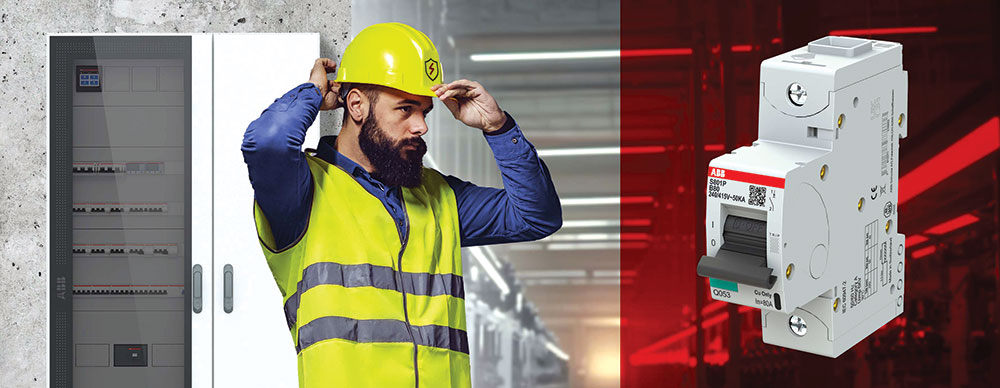
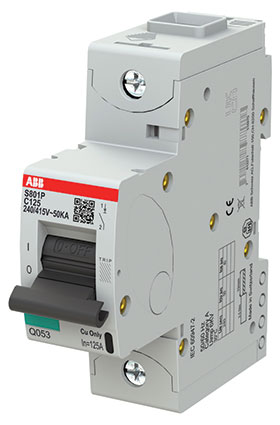
Celebrating a milestone in electrical safety, ABB proudly marks the 100-year anniversary of its revolutionary Miniature Circuit Breaker (MCB). Since its inception, the MCB has safeguarded electrical circuits, paving the way for a safer, more sustainable world. As we embark on a journey towards a net-zero future, ABB’s MCB enables the seamless integration of renewable energy sources while ensuring unparalleled protection against electrical hazards.
ABB’s vice president of Electrification, Ettienne Delport reflects on the significance of this milestone: “As we transition towards a net-zero future, it is essential to increase electrification and integrate more diversified, renewable energy sources. ABB provides electrical safety to everything from solar panels and heat pumps to electric vehicles, and brings additional protection against faults like residual currents, surges, earth fault currents, and arc faults.”
The evolution of the MCB is a testament to ABB’s commitment to excellence and innovation. From its humble beginnings in 1924, when Hugo Stotz and Heinrich Schachtner pioneered the first resettable MCB, to its present-day production lines spanning the globe, ABB has continuously set industry standards for performance, compact size, connectivity, and transparency.
At the heart of ABB’s MCB is a blend of cutting-edge technology and dedication to safety. With the ability to detect electrical faults within milliseconds, the MCB ensures swift intervention, mitigating potential risks and preventing catastrophic events. Its flexible, time-saving designs not only streamline installation processes but also address the current industry skills shortage, making it accessible to a broad spectrum of professionals.
ACTOM’s integrated electrical solutions reduce project risk and accelerate delivery
Electrical Power & Protection
ACTOM has secured multiple orders across four divisions for the Naos-1 hybrid solar and battery project in the Free State, demonstrating its integrated model for supplying the full electrical chain from high-voltage equipment to distribution transformers.
Read more...Smarter energy management starts with intelligent electrification ABB South Africa ABB Electrification Products
Electrical Power & Protection
ABB Electrification specialists Adeline Maleka and Nokulunga Dube explain how the convergence of electrification, digitalisation and automation is helping South African industries gain real-time visibility, reduce energy waste and build operational resilience.
Read more...Mining’s decarbonisation journey starts now Schneider Electric South Africa
Electrical Power & Protection
Mining companies are embedding decarbonisation into core operational strategies as technology, advisory services and digital platforms help translate ESG commitments into measurable environmental and business outcomes.
Read more...High-performance industrial power converters
Electrical Power & Protection
Vepac Electronics supplies PowerGood’s range of industrial AC/DC and DC/DC converters, spanning 15 W to 700 W, with full protection features and compliance with EN55032 Class A and Class B electromagnetic interference standards.
Read more...Decarbonising the energies and chemical industry without the risk Schneider Electric South Africa
Electrical Power & Protection
Schneider Electric argues that decarbonisation in Africa’s energies and chemical industry need not compromise production or profitability. A phased, digitally enabled approach, starting with energy efficiency improvements, can reduce emissions while strengthening competitiveness.
Read more...Modular UPS system with scalable, high-availability architecture
Electrical Power & Protection
Legrand South Africa has launched its fifth-generation TriMOD three-phase modular UPS, available from 10 to 80 kW. The system features hot-swappable modules, multiple input/output configurations, and up to 99% efficiency in Eco Mode, designed for data centres and critical industrial environments.
Read more...Why mining operations need local lightning early warning Senseca
Editor's Choice Electrical Power & Protection
Lightning can develop into a serious mining hazard before the first local strike, leaving crews little time to stop work and reach safety. Local early-warning technology can provide valuable lead time, allowing mines to connect developing storm conditions to defined trigger actions that protect people, explosives and equipment.
Read more...South Africa’s dirtiest fuel is building its most resilient boilers
Electrical Power & Protection
Steinmüller Africa argues that duff coal, the low-grade fines and discards stockpiled over decades, can now underpin reliable, compliant industrial boilers using mature circulating fluidised bed combustion technology, turning a long-standing liability into a phased energy transition pathway.
While every effort has been made to ensure the accuracy of the information contained herein, the publisher and its agents cannot be held responsible for any errors contained, or any loss incurred as a result. Articles published do not necessarily reflect the views of the publishers. The editor reserves the right to alter or cut copy. Articles submitted are deemed to have been cleared for publication. Advertisements and company contact details are published as provided by the advertiser. Technews Publishing (Pty) Ltd cannot be held responsible for the accuracy or veracity of supplied material.










 printer friendly version