



Beverage bottling facilities are among the most energy-intensive environments in manufacturing with consumption spread across production lines, utilities and support systems. According to a study from the Technical University of Munich, filling, cleaning, sterilisation and packaging are major contributors to overall plant energy demand. It is also estimated that a typical polyethylene terephthalate bottling line has an average total consumption of roughly 245 kW, with stretch-blow moulders averaging 157 kW.
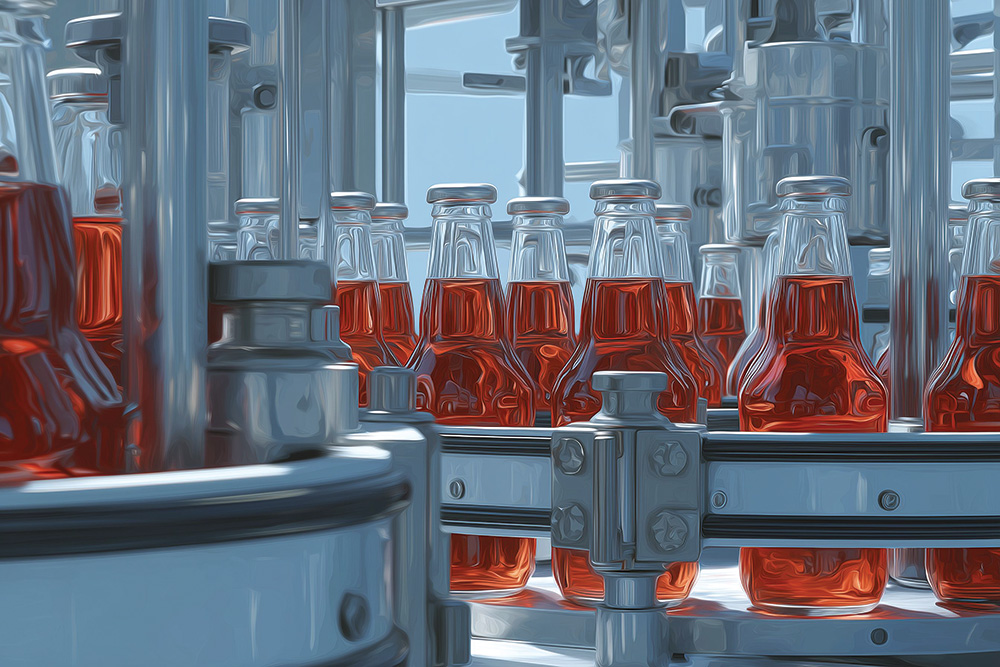
Many bottling plants still lack granular visibility into energy use, relying on aggregate data that obscures efficiency opportunities. Without accurate data, energy cannot be effectively managed.
The cost of fragmented visibility
Many beverage bottling plants today receive a single, aggregated utility bill from the municipality, with little ability to verify its accuracy or correlate costs with actual operational consumption. Without sub-metering or departmental-level insights, facilities are left struggling to:
• Allocate energy costs to specific production lines or processes
• Identify high-consumption areas or inefficiencies
• Validate utility charges against real usage.
Limited visibility also sees maintenance and engineering teams work in a reactive manner which is not conducive to an environment where issues should be addressed before potential failure. This is particularly true in the bottling industry where restarting production lines is both time-consuming and expensive.

Addressing these challenges requires more than just installing meters; raw electrical data needs to be transformed to create actionable insight. This is where advanced power monitoring platforms, like Schneider Electric’s Power Monitoring Expert, add tremendous value. These platforms offer a centralised, real-time view of electrical performance across the facility, enabling engineers to monitor, analyse and act on energy data from a single interface.
With connected metering infrastructure in place, facilities can:
• Access real-time visibility of energy usage and equipment behaviour
• Analyse consumption trends across departments and processes
• Track power quality and identify anomalies
• Generate automated reports on energy performance and cost allocation.
It also offers remote visibility, and data is available instantly from any connected workstation. Automated alarms further enhance responsiveness, notifying teams when abnormal conditions arise so that corrective action can be taken before issues escalate into failures. The result is proactive operations where teams can anticipate and prevent potential breakdowns, improving both operational continuity and financial performance.
The role of tiered metering architecture
Effective energy management requires the right data, captured at the right points across the electrical network. A tiered metering architecture aligns measurement capability with the various parts of the system.
At critical nodes such as incoming supplies and key loads, advanced power quality meters like Schneider Electric’s ION9000 and PM8000 provide precise, high-resolution diagnostics. Beyond capturing voltage sags and swells, harmonics, waveform distortion and transients, these meters also deliver millisecond time-stamping, disturbance direction detection and compliance reporting. Together, they enable facilities to pinpoint the source of power quality events, ensure reliability, and align energy performance with both profitability and sustainability goals.
At less critical points, more cost-effective devices, such as the Schneider Electric PM5000, provide essential monitoring of energy consumption, power factor and basic harmonics, enabling broad visibility across the facility without unnecessary complexity or cost.
Driving efficiency, resilience and sustainability
The impact of improved energy visibility extends beyond day-to-day operations. Advanced energy insights provide a foundation for long-term strategic improvement across three key areas: energy efficiency and cost reduction, operational resilience and sustainability performance. Energy management in the bottling sector serves as both a technical necessity and a strategic enabler of profitability and environmental sustainability.
Without accurate metering and real-time insight, beverage bottling plants remain exposed to inefficiencies. In contrast, facilities that invest in comprehensive monitoring gain the clarity needed to make informed decisions.
| Tel: | +27 11 254 6400 |
| Email: | [email protected] |
| www: | www.se.com/za/en/ |
| Articles: | More information and articles about Schneider Electric South Africa |






© Technews Publishing (Pty) Ltd | All Rights Reserved
 printer friendly version