October 2022System Integration & Control Systems Design
Industrial production accounts for 20% of global water consumption. Every industry needs water in one way or another. For safe and efficient processes, this water must be treated and monitored. Thanks to decades of experience in the water and wastewater industry, and a dedicated portfolio of solutions, Endress+Hauser can help make industrial water treatment safe and efficient.
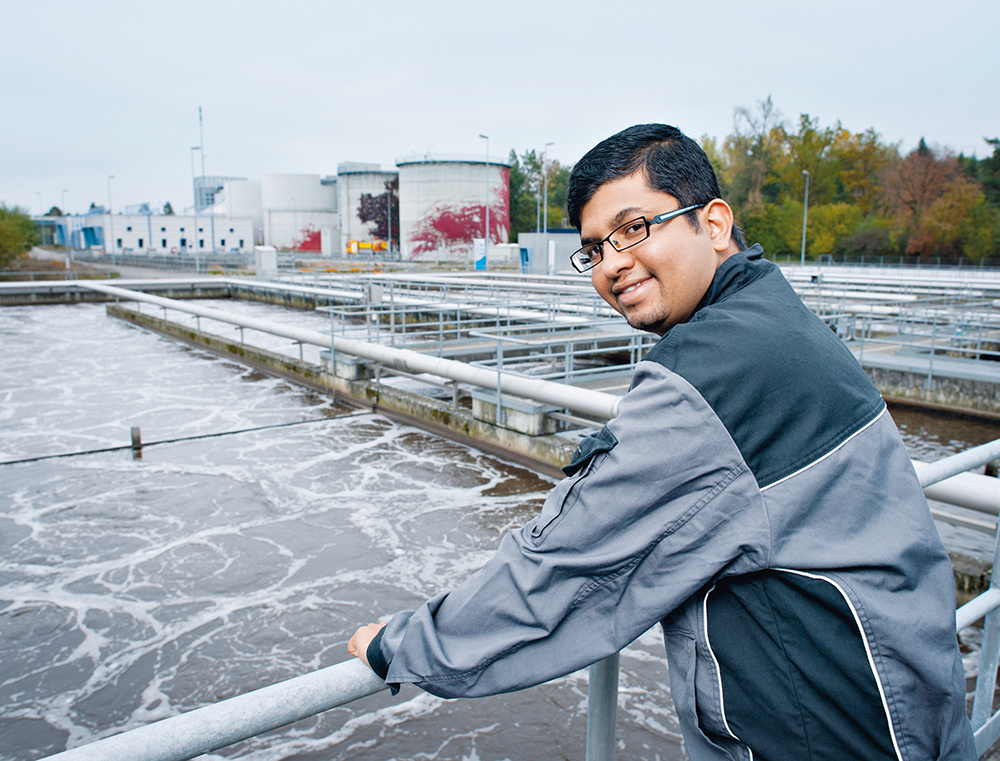
Water is one of our most precious resources and the basis of all life. Using it in a responsible way is a precondition for public health and environmental protection, but it also serves different purposes during industrial production: cooling, cleaning, rinsing and steam production, to name a few. Depending on the application and the industry, the water needs to have different qualities to ensure the quality of finished products and the overall safety of production – and afterwards, it must be discharged safely. No matter where the water ends up, in a natural body of water or in the sewers, in most cases some form of wastewater treatment is necessary.
According to Endress+Hauser South Africa, generally speaking, water treatment in an industrial plant has the same goals as in a municipal treatment plant. The main challenge is to balance out the water quality and the treatment costs. Most of the established applications that are used in municipal plants can also be found in industrial treatment plants.
Practical applications
One example is membrane filtration. Depending on the pore size, membrane filtration can be applied to achieve different treatment targets: from mechanical separation of bacteria or viruses down to single ions for desalination during the preparation of process water. It can also be used for water reuse by filtering already used water. The main parameters for optimising the membrane filtration are inlet quality and pressure; measuring these can help prevent damage to the membranes. Endress+Hauser has a portfolio of pressure and quality sensors that are ideal for this application.
Another challenge that both municipal and industrial wastewater operators face is sludge handling. Disposing of sludge is expensive, so it is common practice to reduce the amount, either by dewatering it through adding conditioners like polymers or lime milk, or by anaerobic digestion. Particularly for wastewater with a high biological load, which is typical for the pulp and paper or food industries, anaerobic digestion is a very efficient pre-treatment process. Plus, it generates biogas, which can be used as an energy source for other treatment processes.
A basic process control – for example, measurement of the inlet load, level, temperature, pH/ORP and biogas production – is needed to monitor the process accurately, and to optimise it. One of the toughest measurement challenges is the biogas flow, because of the high water saturation of the gas and very low pressures. Endress+Hauser’s unique ultrasonic flow devices offer a solution to this challenge.
Working with Endress+Hauser has two main advantages for industrial water operators. First, the company boasts a wide portfolio of measurement instrumentation, automation solutions and services dedicated to the water and wastewater industry, which can be used to optimise industrial water treatment processes. Second, it has decades of experience in both the water industry and other industries that need water treatment. By combining this experience, the company has a deep understanding of the applications of its customers, which enables it to find the ideal solutions for all of their challenges.
How certified industrial automation channels become co-creators in the AI era Schneider Electric South Africa
System Integration & Control Systems Design
As industrial automation becomes software-driven and AI-enabled, the role of channel partners is shifting from equipment supply to outcome-based consulting, software integration and lifecycle services that require continuous certification and capability development.
Read more...Why integration defines the next competitive edge in pulp and paper
System Integration & Control Systems Design
ABB’s Arvin Ramjee argues that fragmented automation, assembled from different suppliers at different stages of a plant’s lifecycle has become one of the pulp and paper industry’s most overlooked commercial risks, and that true integration, rather than surface-level connectivity, is what delivers measurable business value.
Read more...Integrated automation enhances water treatment at dairy facility Process Dynamics
System Integration & Control Systems Design
Process Dynamics delivered the electrical, instrumentation, control and automation integration for an advanced water treatment and reverse osmosis system at a major South African dairy processing facility, achieving a 50% reduction in the client’s water utility costs.
Read more...Intelligent process control is reshaping cement production in Africa
System Integration & Control Systems Design
Advanced process control, predictive analytics and automation are helping African cement producers cut energy use and stabilise output as they contend with rising electricity costs and tighter margins.
Read more...Why measurement matters in smelting Endress+Hauser South Africa
Analytical Instrumentation & Environmental Monitoring
South African smelters returning to operation after energy constraints face new demands for tighter control, better visibility and environmental compliance. Endress+Hauser explains how modern measurement technology supports safer, more efficient furnace operation and local beneficiation.
Read more...Process Dynamics – Integrated Automation for Dairy Water Treatment Process Dynamics
System Integration & Control Systems Design Project and industry
Process Dynamics delivered the electrical, instrumentation, control and automation integration for an advanced water treatment and Reverse Osmosis (RO) system at one of South Africa’s ...
Read more...New SI programme strengthens Schneider Electric’s partner ecosystem Schneider Electric South Africa
System Integration & Control Systems Design
Schneider Electric’s SI Energise 2.0 programme offers system integrators a competency-based framework to develop deeper expertise in EcoStruxure and AVEVA software, enabling them to deliver full-lifecycle industrial automation solutions.
Read more...AI and smart solutions for underground proximity detection systems
System Integration & Control Systems Design
Booyco Electronics explains why fitting proximity detection systems underground is far more complex than installing sensors, and how integration, data and intelligent analytics are helping mines manage the challenge.
While every effort has been made to ensure the accuracy of the information contained herein, the publisher and its agents cannot be held responsible for any errors contained, or any loss incurred as a result. Articles published do not necessarily reflect the views of the publishers. The editor reserves the right to alter or cut copy. Articles submitted are deemed to have been cleared for publication. Advertisements and company contact details are published as provided by the advertiser. Technews Publishing (Pty) Ltd cannot be held responsible for the accuracy or veracity of supplied material.










 printer friendly version