



For decades, investment decisions in South Africa’s pulp and paper industry have largely focused on expanding production capacity, improving product quality and driving operational efficiencies. Mills modernised equipment as business needs evolved, replacing ageing assets, upgrading process controls and introducing new technologies to improve specific areas of the operation. Individually, these investments made sound commercial sense.
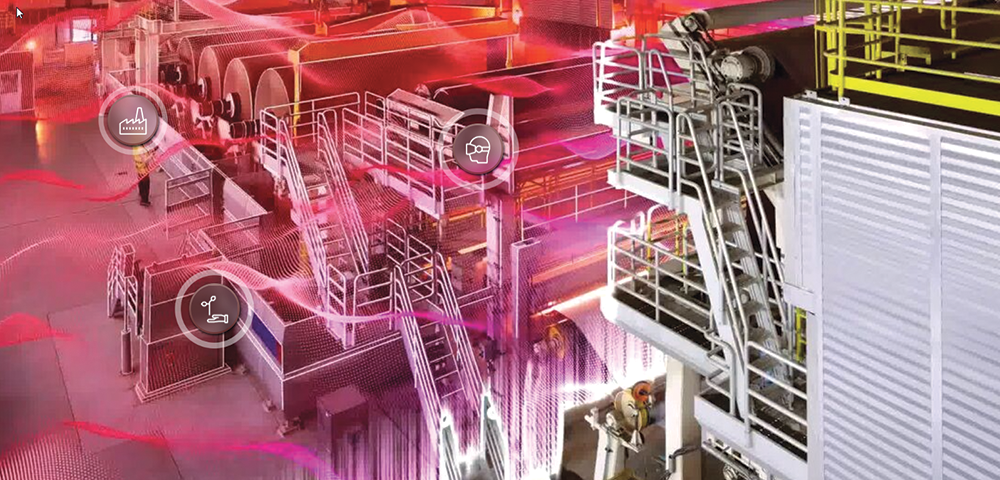
Numerous mills operate highly capable technologies that were never designed to function as a single industrial ecosystem. Electrical infrastructure, process control systems, drives, quality management platforms and digital applications often come from different suppliers, implemented at different stages of the plant’s lifecycle. While each performs its intended function, these systems frequently operate in isolation, limiting information flow and creating operational complexity that becomes increasingly costly over time.
This fragmentation has become one of the industry’s most overlooked commercial risks. The operating environment has fundamentally changed. Rising electricity tariffs continue to reshape the economics of manufacturing, while power instability has made operational resilience as important as production efficiency. Water scarcity is placing greater emphasis on resource optimisation, sustainability requirements continue to tighten, and a shortage of specialist engineering and automation skills is making complex industrial environments more difficult to manage.
Manufacturers are under pressure to produce more with fewer resources while maintaining product quality, improving environmental performance and protecting margins in an increasingly volatile operating environment. The question is no longer whether mills have invested in automation; the more pressing question is whether these investments are working together to deliver maximum business value.
The financial impact of fragmented automation extends far beyond the cost of maintaining multiple systems. Every production interruption carries significant consequences for a continuous-process industry. Power disturbances, process instability or equipment failures can trigger lengthy recovery periods, increase energy consumption, generate unnecessary waste and compromise production schedules. The inability of systems to communicate during these events often prolongs recovery times and limits operational visibility precisely when it is needed most.
Digital transformation requires integrated foundations
The discussion around digital transformation has intensified across every industrial sector, with AI, predictive analytics and industrial software positioned as the next frontier of manufacturing competitiveness. One fundamental principle is often overlooked: digital technologies cannot compensate for fragmented operational foundations. Advanced analytics are only as valuable as the quality of the data they receive. Artificial intelligence cannot generate meaningful insights from disconnected systems that fail to provide consistent, contextualised operational information. Digital transformation is the outcome of getting the fundamentals of integration right, not its starting point.
Not all integration delivers the same outcome. In many mills, integration means aggregating data from multiple manufacturers’ drives, switchgear and instrumentation into a single automation vendor’s visualisation and control layer. This approach can unify the operator’s screen, but it does not eliminate the underlying complexity. Every additional manufacturer in the stack still means a separate protocol, a separate diagnostic model, and a separate lifecycle to manage, even if that complexity is hidden behind one interface. True single-vendor integration is different: drives, medium- and low-voltage switchgear, the distributed control system, the quality control system and the digital and MES layers are engineered by the same organisation, sharing a common object model and native communication from the outset, not translated or mapped after the fact.
The commercial benefits are tangible. Improved asset availability reduces costly downtime. Better coordination between electrical and process systems improves energy efficiency at a time when electricity has become one of the industry’s highest operating costs. More accurate process control reduces variability, improves product quality and lowers raw material and chemical consumption. Collectively, these improvements strengthen the one metric most important to manufacturers: the cost per tonne.
South Africa’s specific operating conditions
This is particularly important in South Africa where manufacturers must contend with conditions that differ markedly from many of their international counterparts. Mills must navigate a complex energy landscape, ageing industrial infrastructure and ongoing pressure to improve environmental performance, all while remaining globally competitive. Technology investments can no longer be assessed in isolation. Every investment must contribute to a more resilient, efficient and intelligent operation.
The ideal automation landscape combines electrification, advanced process control, drives, instrumentation, quality control, asset performance management and digital intelligence within a single architecture. These capabilities must be engineered to communicate natively with one another, creating a consistent stream of contextualised operational data that enables smarter decisions across the enterprise. This is where digital transformation begins to deliver measurable business value through improved operational performance, rather than dashboards alone.
ABB’s integrated approach
This philosophy has underpinned ABB’s approach to industrial automation for many years. Rather than treating electrification, automation and digitalisation as separate disciplines, ABB has built an integrated portfolio spanning MV and LV switchgear, variable speed drives, distributed control systems, quality control systems and a digital suite extending into ABB’s own MES layer, all engineered as one architecture. The objective is to create connected operations where information flows across the business, enabling higher productivity, lower energy intensity, greater operational resilience and more sustainable manufacturing outcomes. This integration is most valuable during a power disturbance or process upset when translated or gateway-dependent data paths are most likely to introduce latency, mapping errors or diagnostic blind spots at precisely the point where fast, accurate information is most critical.
Combining global innovation with regional engineering expertise allows ABB to deliver solutions tailored to the conditions South African manufacturers face every day. The pulp and paper industry is entering a period where competitive advantage will increasingly be defined by how effectively manufacturers connect their operations, not by the performance of individual technologies. The discussion is shifting from automation to integration, from isolated efficiency improvements to enterprise-wide operational intelligence, and from digital ambition to measurable business outcomes.
Integration is no longer simply about connecting systems. It is about connecting strategy with execution, technology with business outcomes, and today’s operational investments with tomorrow’s competitive advantage. For South Africa’s pulp and paper industry, that may prove to be the defining differentiator of the decade.
For more information contact ABB,






© Technews Publishing (Pty) Ltd | All Rights Reserved
 printer friendly version