


Analytical Instrumentation & Environmental Monitoring


Vaporising regulator increases the reliability of gas chromatograph analysers

September 2019 Analytical Instrumentation & Environmental Monitoring

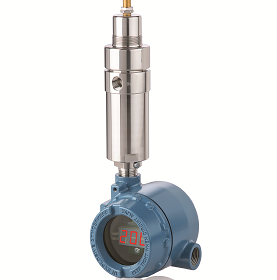
With the Tescom 44-6800, Emerson has introduced a vaporising pressure reducing regulator for gas chromatograph analysers with the option to separate the regulator body from the electronic enclosure, without compromising hazardous location certifications. This design provides protection to the regulator’s electronics from the extreme high temperatures found in petrochemical refineries and processing plants.

Designed for sample conditioning systems for online gas chromatography analysis, the new regulator promotes greater reliability and accuracy in sample testing results, while simplifying system commissioning, reducing maintenance and enabling remote and local monitoring to meet global process requirements. The device works by ensuring the carefully controlled delivery of single-phase vapour samples of hydrocarbon mixtures to a gas chromatograph (GC) where the sample is separated and its physical properties analysed. Obtaining precise and reliable values from the GC, such as the measurement of natural gas BTUs, can lead to substantially improved refinery efficiencies.

Separability ensures optimum performance

Unlike traditional vaporising regulators, the 44-6800 series separability enables the user to detach the electrical housing – which contains sensitive electronics, power supply and temperature adjustment dial – from the regulator body. This can then be installed in a lower temperature environment, preventing sensitive electronics from being exposed to ambient temperatures exceeding 65°C. Separability, coupled with high tolerance to voltage spikes and extreme ambient temperatures, ensures optimal performance and safety in locations rated as hazardous. The series is available in two body material options: 316 stainless steel and nickel alloy that provide maximum corrosion resistance for added value and long-term reliability.

“Optimal plant operation relies on accurate analytical results, and our customers seek absolute reliability in their gas chromatography sample conditioning systems, something that may be compromised when electronics are exposed to high temperatures inside heated cabinets, or when using vaporising regulators with inferior heat transfer technology,” said Laura Schafer, vice president of sales, precision fluid control, Emerson. “With its innovative design, we have boosted the reliability of sample conditioning systems so that our customers do not have to worry about the quality of their samples.”

The regulator is designed for a flow capacity of 0,02 and pressures up to 415 bar. It is offered in both electric and steam versions. Emerson is launching the new series specifically for sample conditioning systems used in on-line gas chromatography analysis in oil, gas, petrochemical and chemical applications.

Patented heat transfer technology preserves sample integrity by preventing condensation of heavier components from occurring during pressure reduction. Temperatures can be precisely controlled using the single-turn heater control dial and the regulator is also equipped with a PID controller for precise heater temperature control.

Remote monitoring has become mission critical for the oil and gas industry. The Tescom 44-6800 features an industry standard 4-20 mA analog output to enable remote monitoring of the heater temperature and for data acquisition. Signals can be output to modulating field devices, PLCs, and scada systems, amongst others, to achieve the networked goals of Industry 4.0 applications. The series also has the option for an LED screen for local monitoring in the field.

Certification adheres to the global requirements of the CSA (Canadian Standards Association), ATEX (ATmosphere EXplosibles) and IECEx (International Electrotechnical Commission) certification to T3 (200°C) rating, along with the National Association of Corrosion Engineers MR0175/ISO 15156 standards for the use of materials in hydrogen sulphide bearing environments. In addition, the regulator offers global flexibility with its 100-240 VAC, 50/60 Herz design supported by voltage spike protection.

For more information contact Devesh Roopnarain, Emerson Automation Solutions, +27 11 451 3700, [email protected], www.emerson.com


Credit(s)


Share this article:
Share via emailShare via LinkedInPrint this page

Further reading:

How SCE approaches sensor selection for critical environments
Specialised Climate Engineering Analytical Instrumentation & Environmental Monitoring
Specifying the right sensor for a critical climate involves far more than matching a datasheet accuracy figure. As an authorised Vaisala HVAC partner, SCE explains how understanding the environment, the measurement purpose and sensor placement determines effective climate control.

Read more...
Changing gas quality calls for smarter combustion control
Analytical Instrumentation & Environmental Monitoring
As South Africa prepares for a transition from declining Mozambican natural gas to a proposed methane-rich bridge, LNG, industrial users can no longer assume a constant Wobbe Index and calorific value. The compact RMG RGQ 5 provides fast, plant-level gas-quality data to support approved burner and engine settings.

Read more...
Getting the chemistry right
Analytical Instrumentation & Environmental Monitoring
Grace’s European production site has relied on analogue compression load cells from Minebea Intec for decades, with the long-proven measurement concept now serving as the reference for new silo projects as the company expands its capacity.

Read more...
The wireless route to safer, more efficient mining operations
Emerson Automation Solutions Editor's Choice Sensors & Transducers
Modern wireless level measurement technologies are helping mining operations improve process control, increase safety and reduce installation costs. Emerson’s Rosemount 3408 wireless non-contacting radar level transmitter uses 80 GHz frequency-modulated continuous wave radar with HART communication to reach remote assets where cabling is impractical.

Read more...
Why measurement matters in smelting
Endress+Hauser South Africa Analytical Instrumentation & Environmental Monitoring
South African smelters returning to operation after energy constraints face new demands for tighter control, better visibility and environmental compliance. Endress+Hauser explains how modern measurement technology supports safer, more efficient furnace operation and local beneficiation.

Read more...
Sun tracking with pinpoint precision
Senseca Analytical Instrumentation & Environmental Monitoring
Senseca has introduced the SEMS-2000 solar energy measurement system, a 2-axis solar tracker with pinpoint sun-pointing accuracy that automatically monitors direct, global and diffuse irradiance for unattended outdoor solar installations.

Read more...
‘Control Talk SA’ podcast with Emerson on level measurement for the mining industry
Emerson Automation Solutions Level Measurement & Control
Reliable level measurement is critical to keeping South African mines safe, productive and sustainable, but harsh conditions can make accurate readings challenging. In this Emerson podcast, Shivam Misra explores how advanced radar technology and remote monitoring are helping mines improve measurement reliability while reducing operator exposure to hazardous areas.

Read more...
AMETEK expands 993X gas analyser series with explosion-proof enclosures
Analytical Instrumentation & Environmental Monitoring
AMETEK Process Instruments has added ATEX and IECEx Zone 1-certified explosion-proof enclosures to its 993X series of gas analysers, enabling reliable installation in Zone 1 hazardous locations where purge gas is unavailable.

Read more...
Expanding visibility in mining operations
Emerson Automation Solutions Editor's Choice Sensors & Transducers
Advances in wireless communications, condition monitoring and sensing technologies are helping mining operators extend measurement into previously under-monitored areas, improving equipment reliability, process performance and water stewardship.

Read more...
Why medical device leak testing matters for South Africa's MedTech future
ATEQ South Africa Analytical Instrumentation & Environmental Monitoring
As South Africa works to grow local medical technology manufacturing, non-destructive leak and flow testing is becoming a strategic quality assurance tool, helping manufacturers verify device integrity, meet regulatory requirements and improve production efficiency.

Read more...


While every effort has been made to ensure the accuracy of the information contained herein, the publisher and its agents cannot be held responsible for any errors contained, or any loss incurred as a result. Articles published do not necessarily reflect the views of the publishers. The editor reserves the right to alter or cut copy. Articles submitted are deemed to have been cleared for publication. Advertisements and company contact details are published as provided by the advertiser. Technews Publishing (Pty) Ltd cannot be held responsible for the accuracy or veracity of supplied material.


© Technews Publishing (Pty) Ltd | All Rights Reserved

