


Analytical Instrumentation & Environmental Monitoring


Young sensors measure atmospheric visibility

October 2016 Analytical Instrumentation & Environmental Monitoring

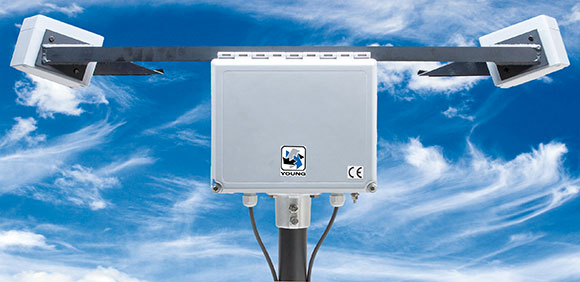
The Model 73000 Sentry Visibility Sensor

The Young Sentry Visibility Sensor measures atmospheric visibility (meteorological optical range) by determining the amount of light scattered by particles in the air (smoke, dust, haze, fog, rain and snow).

Performance in all weather conditions is achieved with an integrated design that keeps all cabling internal to the sensor for complete protection from hazards. The sensor is made from anodised aluminium and rugged, UV-resistant fibreglass enclosures. Based on the proven field experience of the NWS and FAA, the sensor uses a ‘look down’ geometry to reduce window contamination and clogging from blowing snow. The optical windows have continuous duty anti-dew heaters. Optional thermostatically controlled external hood heaters are available for additional protection in extreme environments. All power and signal lines to the Sentry are protected with surge and EMI filtering to ensure uninterrupted service for the life of the sensor.

Installation and maintenance are simple with the Sentry. A sturdy mounting flange located on the bottom of the main enclosure mates with a user-supplied mounting pipe. Power and signal cables are installed through waterproof cable glands on the bottom of the main enclosure to terminal boards for simple but reliable connections. Calibration of the Sentry in the field is as simple as attaching a factory supplied calibration fixture and following a procedure that takes less than 30 minutes.

Model 73100 Sentry T optimised for operation in tunnels The Young Sentry Tunnel Visibility Sensor’s sensitivity is optimised for reduced visibility in automobile and rail tunnels, typically caused by vehicle emissions.

Model 73200 Sentry EX for hazardous area applications

The Young Sentry EX Explosion Proof Visibility Sensor is designed for high performance in hazardous environments at petrochemical production sites, refining facilities and transportation terminals. The ATEX Zone 1 rated housing and offshore marine-grade sheathed cables ensure all-weather IP66 performance to monitor changes in visibility.

Operation

A LED emitter with 850 nm wavelength focuses on a measurement volume that intersects with the observation zone of an IR receiver, which measures the amount of ‘light’ that is ‘forward-scattered’ by airborne particles. The IR energy measured at the receiver is proportional to the ‘extinction coefficient’, which is inversely proportional to visibility. The airborne particles can be fog, rain, snow, smoke or dust.

Standard visibility units are either kilometres or miles. Forward scatter type sensors like the Sentry measure a sample volume of air close to the sensor, and using the assumption of air homogeneity, calculate the visibility, which could be as far as 16 km depending on the clarity of the air. Visibility sensors cannot measure what is happening 16 km away, but must assume that if the atmosphere between the sensor and distance is uniform, then an observer at the sensor can see a range of 16 km.

To reduce dust/ice/snow collection on the lens as well as reflection from other objects, the Sentry’s emitter and receiver lens face downward. The lens must be kept clean for an accurate measurement and a quick wipe with window cleaner is all that is required. The frequency of cleaning varies depending on proximity to dust, salt or other contamination sources. The typical service life of an LED emitter is 5 to 7 years.

Every Sentry has a lens heater within the emitter and receiver housings to prevent condensation. This is a standard feature. As an option, hood heaters may be installed to help prevent snow accumulation and icing on the housings. Hood heating is recommended for all applications in colder environments.

For more information contact Felie Le Roux, Inteltronics, +27 (0)82 445 2531, [email protected], www.inteltronics.co.za


Credit(s)


Share this article:
Share via emailShare via LinkedInPrint this page

Further reading:

Importance of gas analysis in the petrochemical industry
Elemental Analytics Analytical Instrumentation & Environmental Monitoring
Gas analysis plays a critical role in petrochemical operations, supporting process optimisation, product quality and plant safety. As an experienced and expert gas analysis supplier, Elemental Analytics can provide the correct analyser and sample system package to meet individual plant requirements.

Read more...
Fully integrated standalone thunderstorm warning system
Senseca Sensors & Transducers Analytical Instrumentation & Environmental Monitoring
Senseca South Africa has introduced its BTD-1 fully integrated, standalone thunderstorm warning system, which detects lightning by monitoring the background quasi-electrostatic field. The system can generate alerts before the first lightning strike, with a detection raterange of up to 83 km.

Read more...
Environmental monitoring with testo Saveris 1
Analytical Instrumentation & Environmental Monitoring
The testo Saveris 1 environmental monitoring system has been in continuous use since 2010 at Jungbunzlauer, a biotechnology company in Germany, providing seamless temperature and humidity data for audit-ready, GxP-compliant processes across laboratories, warehouses and production areas.

Read more...
Reliability restored through systemic vibration analysis
Wearcheck Analytical Instrumentation & Environmental Monitoring
Condition monitoring specialist, WearCheck uses a variety of testing techniques to enhance reliability in machinery components and prevent failures.

Read more...
Meteorological data logger with up to 32 analogue sensors
Senseca Analytical Instrumentation & Environmental Monitoring
Senseca has introduced its advanced data acquisition system for environmental monitoring, which has a universal data logger for up to 32 analogue, pulse and smart digital sensors.

Read more...
Yokogawa’s free chlorine analyser is gold standard for water treatment utilities
Yokogawa South Africa Analytical Instrumentation & Environmental Monitoring
One of the key factors in ensuring safe drinking water is the accurate monitoring of free chlorine residuals. This is where advanced online analysers, such as Yokogawa’s FC800 free chlorine analyser, are becoming increasingly valuable for water treatment operators and municipal utilities.

Read more...
Cooling tower bleed control
Analytical Instrumentation & Environmental Monitoring
Cooling towers rely on evaporation to remove heat, but this process also concentrates dissolved solids in the system. Left unmanaged, this buildup can lead to scaling, corrosion and fouling, reducing efficiency and increasing maintenance costs.

Read more...
Expanded test laboratory provides polymer users with more information
igus Analytical Instrumentation & Environmental Monitoring
igus has expanded its international testing facilities to accommodate its increasing product portfolio and enable continuous improvement of its product quality.

Read more...
Filters for zero-alcohol wine
Parker Hannifin - Sales Company South Africa Analytical Instrumentation & Environmental Monitoring
The market for zero-alcohol wine is creating fresh opportunities for wine producers, but processing these products creates new contamination challenges. Technical support from an established filtration specialist, such as Parker, can help wineries in overcoming the challenges posed by the increased risk of contamination.

Read more...
Remote monitoring solution for sewage plants
ifm - South Africa Analytical Instrumentation & Environmental Monitoring
With ifm’s remote monitoring solution, you can visualise the condition of the submersible pumps in your sewage plant and diagnose issues before they become serious problems.

Read more...


While every effort has been made to ensure the accuracy of the information contained herein, the publisher and its agents cannot be held responsible for any errors contained, or any loss incurred as a result. Articles published do not necessarily reflect the views of the publishers. The editor reserves the right to alter or cut copy. Articles submitted are deemed to have been cleared for publication. Advertisements and company contact details are published as provided by the advertiser. Technews Publishing (Pty) Ltd cannot be held responsible for the accuracy or veracity of supplied material.


© Technews Publishing (Pty) Ltd | All Rights Reserved

