Diode array spectrophotometer
July 2010
Analytical Instrumentation & Environmental Monitoring
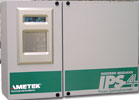
Online monitoring of bisphenol A in polymer plants.
Bisphenol A (BPA) is a chemical building block that is used to make polycarbonate plastic and epoxy resins. Polycarbonate is a lightweight, high-performance plastic that is used for products such as electronics, automotive and sports safety equipment. Epoxy resins are used for paints and adhesives as well as a variety of protective coatings.
Although most of the Bisphenol A is consumed in the polycarbonate and epoxy manufacturing processes, low level releases of residual Bisphenol A are possible. The level of Bisphenol A present in the process effluent must be measured to ensure that it meets environmental regulations. A typical range for BPA in the effluent is 0-25 ppmw, although a 0-100 ppmw measurement range is often used to monitor possible process upset conditions.
The IPS-4 diode array from Ametek Process Instruments is a cost-effective UV spectrophotometer for the measurement of low ppmw Bisphenol A in effluent water. A major advantage is the rapid scan time of the diode array. Typically a full spectrum is scanned in less than one second. This fast optical response allows for rapid corrective action when an upset condition occurs.
An important consideration when measuring Bisphenol A in effluent is the pH of the aqueous stream. BPA exists as an acid in acidic streams and as a phenate salt in alkaline streams. The UV absorption band for phenol at 265 nm shifts to 285 nm for the phenate absorption. In most Bisphenol A applications, the pH of the effluent is adjusted with caustic and the phenate is measured at 285 nm. There is less susceptibility to interfering components at the 285 nm wavelength for the phenate absorption band.
The IPS-4 has no moving parts in the optical bench, which provides excellent wavelength stability. It has an easy-to-use, multilanguage LED display, a Xenon flash lamp source for long service life, typically greater than two years, and auto zero and auto calibration capabilities. If required, an optional heated sample cell enclosure is available for operation up to 150°C.
For more information contact Jan Pretorius, OEN Enterprises, +27 (0)11 675 4447, [email protected], www.oenenterprises.co.za
Further reading:
Importance of gas analysis in the petrochemical industry
Elemental Analytics
Analytical Instrumentation & Environmental Monitoring
Gas analysis plays a critical role in petrochemical operations, supporting process optimisation, product quality and plant safety. As an experienced and expert gas analysis supplier, Elemental Analytics can provide the correct analyser and sample system package to meet individual plant requirements.
Read more...
Fully integrated standalone thunderstorm warning system
Senseca
Sensors & Transducers Analytical Instrumentation & Environmental Monitoring
Senseca South Africa has introduced its BTD-1 fully integrated, standalone thunderstorm warning system, which detects lightning by monitoring the background quasi-electrostatic field. The system can generate alerts before the first lightning strike, with a detection raterange of up to 83 km.
Read more...
Environmental monitoring with testo Saveris 1
Analytical Instrumentation & Environmental Monitoring
The testo Saveris 1 environmental monitoring system has been in continuous use since 2010 at Jungbunzlauer, a biotechnology company in Germany, providing seamless temperature and humidity data for audit-ready, GxP-compliant processes across laboratories, warehouses and production areas.
Read more...
Reliability restored through systemic vibration analysis
Wearcheck
Analytical Instrumentation & Environmental Monitoring
Condition monitoring specialist, WearCheck uses a variety of testing techniques to enhance reliability in machinery components and prevent failures.
Read more...
Meteorological data logger with up to 32 analogue sensors
Senseca
Analytical Instrumentation & Environmental Monitoring
Senseca has introduced its advanced data acquisition system for environmental monitoring, which has a universal data logger for up to 32 analogue, pulse and smart digital sensors.
Read more...
Yokogawa’s free chlorine analyser is gold standard for water treatment utilities
Yokogawa South Africa
Analytical Instrumentation & Environmental Monitoring
One of the key factors in ensuring safe drinking water is the accurate monitoring of free chlorine residuals. This is where advanced online analysers, such as Yokogawa’s FC800 free chlorine analyser, are becoming increasingly valuable for water treatment operators and municipal utilities.
Read more...
Cooling tower bleed control
Analytical Instrumentation & Environmental Monitoring
Cooling towers rely on evaporation to remove heat, but this process also concentrates dissolved solids in the system. Left unmanaged, this buildup can lead to scaling, corrosion and fouling, reducing efficiency and increasing maintenance costs.
Read more...
Expanded test laboratory provides polymer users with more information
igus
Analytical Instrumentation & Environmental Monitoring
igus has expanded its international testing facilities to accommodate its increasing product portfolio and enable continuous improvement of its product quality.
Read more...
Filters for zero-alcohol wine
Parker Hannifin - Sales Company South Africa
Analytical Instrumentation & Environmental Monitoring
The market for zero-alcohol wine is creating fresh opportunities for wine producers, but processing these products creates new contamination challenges. Technical support from an established filtration specialist, such as Parker, can help wineries in overcoming the challenges posed by the increased risk of contamination.
Read more...
Remote monitoring solution for sewage plants
ifm - South Africa
Analytical Instrumentation & Environmental Monitoring
With ifm’s remote monitoring solution, you can visualise the condition of the submersible pumps in your sewage plant and diagnose issues before they become serious problems.
Read more...










 printer friendly version