Profitek expands Hirschmann portfolio
March 2010
Fieldbus & Industrial Networking
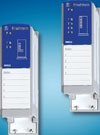
New media module for switches of the MICE family.
The new media module supports PTP (precision time protocol) according to IEEE 1588 V2 and offers a synchronisation accuracy of less than 80 nanoseconds even in large, cascaded networks.
The module can be equipped with an electrical port and an optical transceiver, permitting the connection of other networking components or field devices using twisted-pair cables as well as multi or single mode fibres. The new media module is suited for use in any data network requiring extremely high realtime capability, such as in measuring technology or drive control. With a software update, available for download free of charge at www.hirschmann-ac.com, the module can also be used in MICE switches of the MS 20/30 series.
The media module has an MTBF of 28 years, is designed for an operating temperature range of -10 to +60°C, and can be commissioned by plug-and-play. A hot swap function also permits live replacement during operation if required. Operating parameters are displayed by an array of LEDs on the front panel. Large label fields are available for customised designation of each module as well as clear allocation of ports.
Specially designed for operation in rugged industrial environments, the MICE family of Hirschmann switches consists of a switch unit with an integrated back plane that can be equipped with various different media modules. They support Fast and Gigabit Ethernet as well as numerous routing, redundancy and security modes. Passive cooling and a redundant 24 VDC power supply ensure high operational safety. Since the switches can be mounted on standard DIN rail, they fit well in both central control cabinets and in peripheral distribution boxes. The new media module provides two RJ45 (10/100/1000 BASE-TX) or two SFP fibre-optical transceiver (1000 BASE SX/LX).
PTP V2’s improved synchronisation accuracy results from the Transparent Clock function introduced in addition to Boundary Clock and Ordinary Clock, which now also permits end-to-end synchronisation. This means that virtually all runtime jitter and latency can be compensated in the switches, achieving maximum synchronisation accuracy even in very large networks.
For more information contact Fons de Leeuw, Profitek, +27 (0)12 664 4998, [email protected], www.profiteksa.com
Further reading:
Isolated Modbus gateways with built-in Wi-Fi for industrial IoT applications
Vepac Electronics
Fieldbus & Industrial Networking
Vepac Electronics offers the Sielco Sistemi SS10680 series of isolated Modbus gateways with built-in Wi-Fi, providing three configurations for industrial data acquisition: cloud publishing via MQTT, local USB and FTP logging, and straightforward Modbus TCP to Modbus RTU conversion.
Read more...
XPlanar aids innovation in laser processing
Beckhoff Automation
Fieldbus & Industrial Networking
Aalborg University is among the first in the world to test Beckhoff’s XPlanar intelligent transport system in advanced laser processes, opening the door to faster, tool-free production of metal parts.
Read more...
Belden expands edge computing portfolio with ProLinx Edge Gateway
Fieldbus & Industrial Networking
Belden has released the ProSoft Technology ELX3 ProLinx Edge Gateway, combining operational technology protocol conversion with Docker-based edge application hosting on a single ruggedised hardware platform for deployment in harsh industrial environments.
Read more...
Anybus Communicators are CRA-ready
Industrial Data Xchange (IDX)
Fieldbus & Industrial Networking
HMS Networks has upgraded its Anybus Communicator range to meet new EU cybersecurity rules, giving industrial manufacturers and integrators an easier path to compliance.
Read more...
Remote I/O modules provide flexible options for distributed applications
Fieldbus & Industrial Networking
Dinkle International is now stocking the iO-GRID NEMO industrial-grade remote input/output modules, offering support for five leading industrial Ethernet protocols and a range of discrete channel configurations for distributed automation applications.
Read more...
Local energy solutions rewiring resilience across Africa
News Fieldbus & Industrial Networking
Engineers across Africa are developing practical, scalable energy and mobility solutions supported by the Africa Prize for Engineering Innovation.
Read more...
Daudin expands fieldbus modular remote I/O series
Fieldbus & Industrial Networking
: The Dinkle iO-GRID X modular remote I/O family is now available, offering fieldbus coupler modules for major industrial Ethernet protocols, and over 20 types of I/O modules to help integrators and equipment builders create flexible, efficient control systems.
Read more...
Siemens and HighByte partner to scale industrial AI
Siemens South Africa
IT in Manufacturing Fieldbus & Industrial Networking
Siemens is expanding its Industrial Edge ecosystem through a partnership with HighByte, enabling customers to connect, contextualise and transform data from operational technology and information technology sources to build AI models and applications at scale.
Read more...
Automotive Ethernet media converter
Fieldbus & Industrial Networking
HMS Networks has introduced its first automotive ethernet product under the PEAK brand. The PAE-Media Converter is a compact device designed to connect automotive Ethernet (100BASE-T1 or 1000BASE-T1) with standard Ethernet (100BASE-TX or 1000BASE-T) networks.
Read more...
3D electrical systems design workflow for electromechanical innovation
Siemens South Africa
Fieldbus & Industrial Networking IT in Manufacturing
Siemens has announced new 3D electrical design capabilities within its Capital software, enabling electrical and mechanical engineers to work concurrently in a shared 3D environment to reduce late-stage design changes and accelerate time to market for complex electromechanical products.
Read more...










 printer friendly version