




The automation sector is currently undergoing a major shakeup of old established practices. The change to digitally networked, highly flexible and transparent industrial production, as described in recent years under the label Industry 4.0, is presenting designers and electrical planners with new tasks. One of the routines of mechanical engineering, and particularly in electrical planning, is the design of a control cabinet for protecting sensitive electrical and electronic equipment such as controllers, power supply units or I/O solutions from the severe conditions present at the machine. With its robust portfolio of IP67/IP69K I/O solutions, Turck offers a smart alternative.
Decentralised I/O solutions in themselves are nothing new, but are becoming ever more important in the light of modern automation and machine concepts, which increasingly have a modular design. The trend is moving away from the control cabinet and towards installation in the field. The use of robust I/O technology with protection to IP67 enables users to run the cables of the sensors directly in the field to a nearby I/O distributor, which can route the signals to the control cabinet, either as a passive multi-pole cable junction or actively as a fieldbus device. Compared to point-to-point wiring, this saves the user considerable costs for the connection technology and the wiring. There is also a time saving benefit when the machine is set up. Instead of running several individual cables to the control cabinet, it is normally only necessary with fieldbus or Ethernet systems to run one communication cable and power supply in order to connect the I/O level to the controller. The wiring of the periphery to the remote I/O technology can then be done in advance at the machine builder.
High performance
Turck takes the decentralisation from the control cabinet to the field one step further. The TBEN-L-PLC Codesys-3 controller of the Mülheim automation specialist is a compact IP67 controller for use directly in the field. When used as a master, the device also supports Modbus RTU, in addition to CANopen and SAE J1939, as well as the industrial Ethernet protocols Profinet, EtherNet/IP and Modbus TCP. The RS-232 and RS-485 serial interfaces can also be used as required in Codesys. The block I/O controller offers eight universal I/O channels for the direct connection of sensors and actuators.
The TBEN-PLC can also be run as a slave (e.g. device) in the CANopen and Modbus RTU networks as well as in the three supported industrial Ethernet networks, enabling it to be used as a protocol converter. For example, the controller can operate as the CANopen manager of a machine module networked with CANopen and connect this module to a system running with Profinet. As part of the increasing digitisation of industrial production processes, this enables existing machine concepts to be made fit for the challenges of closely networked, highly flexible production. Turck provides an answer to the question of how existing machinery and plants can benefit from the increased efficiency and increased transparency as part of the evolution of Industry 4.0.
TBEN-L-PLC as protocol converter for CANopen
This is of particular benefit to plant operators wishing to connect their plants and machinery to higher-level ERP or MES systems and wish to network their machines to Industrial Ethernet. Networking with Ethernet-capable components down to the lowest level of automation is not necessarily economically advisable, and is rarely necessary. With the TBEN-L-PLC, existing valve blocks or drives, which frequently communicate in CANopen, can also be used in industrial Ethernet networks. The compact PLC then functions in a Profinet network as a Profinet slave and translates this communication as a CANopen Manager for the CANopen devices in the CAN network.
As CANopen is widely used in the field of drive engineering and pneumatics, this protocol converter option is particularly useful here. In most cases the technical benefits of a completely new installation of drive engineering and pneumatics with industrial Ethernet interfaces mostly does not justify the costs involved in a comprehensive Ethernet network.
Controller for mobile machinery
Besides the protocol converter function, the compact TBEN-L-PLC also allows stand-alone control of complete machines. These can be conventional machines or machine modules, as well as mobile machinery. Thanks to its robust and fully encapsulated housing, the controller is particularly suitable for the field of mobile machinery. It is very well protected against vibrations and shock and complies with degree of protection IP65/67/69K. The extended temperature range from -40 to 70°C and the fully screwed plug-in connections are important features in the field of mobile machinery. The fact that most programmers in the mobile equipment sector use Codesys makes it ideal for use in this sector.
As an increasing volume of data is being networked with Ethernet, the use of the new protocol converter can also be helpful here. Particularly when the user wishes to use peripheral devices with a CAN interface which have proved successful in the past, or for which there is not yet a counterpart with an Ethernet interface.
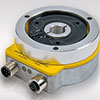
The Turck sensors with a CAN interface are often used in the mobile sector. Turck offers its B1N (single axis) and B2N (twin-axis) inclination sensors with CAN bus here. Customers from a wide range of different sectors are purchasing the QR24 rotary encoder as well as the smaller QR14 angle sensor with a CAN interface. Both sensors are fully encapsulated and detect rotary movements without contact.
Besides the block modules of the piconet and BLcompact product families, the BL20 and BL67 modular I/O systems are also available with a CANopen gateway. The modular systems offer outstanding performance, particularly thanks to their flexibility. For example, Turck’s BL ident RFID system can also be connected to CANopen via BL20 or BL67 CAN gateways.
For more information contact Brandon Topham, RET Automation, +27 (0)11 453 2468, [email protected], www.retautomation.com
| Tel: | +27 11 453 2468 |
| Email: | [email protected] |
| www: | www.turckbanner.co.za |
| Articles: | More information and articles about Turck Banner Southern Africa |






© Technews Publishing (Pty) Ltd | All Rights Reserved
 printer friendly version