



The testing of an installation is one of the last functions to be carried out. Therefore, any time saving here is a profit in real terms, both financially and in productivity. The sooner testing is completed, the sooner the electrician is off-site and on to his next job, and the sooner the certificates can be written and the contractor paid.
" ...So how can I reduce testing time?"
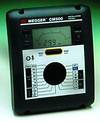
The most frustrating factors in the time taken to test an installation are the problems incurred by swapping between an insulation tester, a continuity tester, a loop tester and an RCD tester. There is, however, a simple solution to all of these problems, in the form of the new multifunction installation tester from AVO International, the Megger CM500, available from sole local distributor Spescom MeasureGraph, a leading supplier of test and measurement equipment.
Previously, multifunction installation testers have perhaps been a bit of a compromise, with the basic features of several other instruments being shoe-horned into a single box. The whole essence of the CM500, however, is ease of use. All the advanced features and ranges available have been specifically designed to be used in conjunction with each other creating an ergonomic, fully integrated standalone piece of equipment capable of testing any installation to UK or European standards.
The large liquid crystal digital display is good for taking precise measurements. It also includes an analog scale, which is useful for monitoring trends, or for a quick 'at a glance' indication of what's going on during a test. The selectable backlight provides a clear view of the display while testing in the darkest of corners - and the instrument is driven by a microprocessor controlled power management system.
We at AVO believe that the advanced features provide more unique benefits than any other installation tester on the market. The 15 mA non-tripping loop test is one of them. If the circuit under test is protected by an RCD, it is impossible to test that circuit at the normal 23 A unless the RCD is rendered inoperative in some way. This is dangerous because it removes a level of protection and risks damage to the device and other equipment. Any RCD rated at 30 mA or above must withstand a fault current of 15 mA. It is therefore possible to perform a true earth loop impedance test at 15 mA anywhere on that circuit without tripping the RCD.
Pressing the test button when performing loop and RCD tests has always been a problem with both hands holding probes onto live conductors. The CM500 overcomes this with an automatic test feature, whereby on detecting a live supply, the test sequence begins automatically. For added convenience and speed, when using the optional three-wire test lead, it is not necessary to change connections to switch between L-PE and L-N loop tests, but merely move the range knob. An additional feature on the loop test is the direct display of maximum prospective fault current - another small but significant advance towards reduced testing time.
One of the major time saving benefits of the instrument is that during testing 750 different results can be stored in approximately 10 000 locations within the instruments internal memory. These results may be reviewed on-site at any time via the display, or downloaded, via the RS232 serial interface, directly to a printer or onto a PC. Direct connection to a printer enables the electrician to leave a comprehensive list of test results with the customer rather than having to spend time on-site writing out results. Additionally, when he gets back to the clean and comfortable environment of the workshop or office the information can be recalled and transferred directly to the certificate with considerably less risk of errors.
"...Multitesting RCDs is all very well, until the nearest test point is nowhere near the device itself!"
During certain test routines an RCD can be expected to trip up to five times. What can be more frustrating than having to walk back and forth between the tester and the RCD to initiate the next test, and then reset the trip? It would be a lot more convenient if the instrument could detect when the trip was reset, and then automatically proceed with the next test without any operator intervention, storing the results of all the tests for later evaluation.
The CM500 does just that. It is capable of testing all standard types and ratings of RCDs, as well as any non-standard device rated anywhere between 10 mA and 1 A. Test results are available as trip time, trip current, the equivalent fault impedance for the RCD to trip, and can also provide the earth/phase loop impedance. There is also a ramp test feature, which is very useful for establishing the actual current at which a device opens, and saving considerable time in diagnosing nuisance-tripping problems through faulty RCDs.
"...Could you just push that 'Test' button for me? - I cannot quite reach... "
There are three insulation voltage ranges, 250, 500 V (default) and 1 kV, measuring from 1 kW to 99,9 MW. The instrument will automatically discharge any capacitive circuits after testing.
Because of the safety issues involved it is not practical to use an automatic testing facility in conjunction with high voltage insulation ranges, so an optional switched probe, the SP2, is available with an integral test button. This is very useful when trying to carry out tests in those 'hard to get to' places. Again, for added convenience, when using a three-wire lead set, there is no need to swap connections to change between L-N, L-PE and N-PE insulation tests.
" ...So what else can the CM500 do?"
* Upon initial connection to a live system, the instrument will give a warning of any dangerous voltages present and inhibit testing. On a healthy system, it will show the supply voltage and polarity, with the frequency available at the push of a button. The continuity ranges are auto-ranging, measuring from 0,01 W to 99,9 kW, with a threshold selectable fast continuity bleeper.
* Earth resistance tests are possible from 0,01 (to 3 kW for a TT system, using the optional test spike and 20 m lead.
* Automatic phase sequence indication for three-phase supplies with the optional three-wire test lead.
Overall, the instrument is designed to make the contractors life easier with reduced testing, reporting and certification times. There's less to buy, less to carry around, and less to have calibrated.






© Technews Publishing (Pty) Ltd | All Rights Reserved
 printer friendly version