



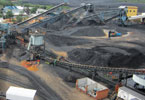
Royal HaskoningDHV (formerly SSI Engineers and Environmental Consultants) in Cape Town, in partnership with ADP Projects, has been working on the Morupule Colliery Expansion project since 2009. ADP Projects is the appointed engineering contractor and Royal HaskoningDHV was appointed to complete the electrical and electronic designs for this coal expansion project. Royal HaskoningDHV’s involvement began in the pre-feasibility phase and has continued through feasibility, detailed design and implementation. The company is currently in the final stages of the commissioning.
The colliery is situated in Palapye, eastern Botswana, and delivers coal to the Morupule Power Station currently being upgraded by the Botswana Power Corporation to 600 MW. The mine is an underground operation with access down an incline shaft to a depth of approximately 80 m. The underground infrastructure is being expanded in order to deliver sufficient coal to the new crushing and screening plant, associated surface stockpile capacity is also being expanded.
Project scope
The scope of the project is to upgrade the existing mining infrastructure, materials handling systems and processing plant in order to increase coal production from 1 to 3,2 million tons per annum. The upgrade will eventually result in an electrical load increase for the mine from 4 to 16 MVA.
The electronic scope of the project included the full specification and design of:
* Field instrumentation for the plant and underground coal mine.
* Plant and mining Mitsubishi PLC control systems.
* Conveyor control systems (safe and hazardous areas).
* Automatic fail-over centralised Adroit Scada visualisation system.
* Building and conveyor fire detection system.
* Underground voice communication system.
* Office and production ICT system.
* New buildings access control system.
* Scopes, bills and technical datasheets for the procurement of the various systems.
Royal HaskoningDHV also performed the following activities:
* Technical adjudication of tenders for all electronic equipment/systems.
* Quality management of all the equipment/systems during manufacturing.
* Factory acceptance testing in order to ensure that build was according to design.
* Technical support to the contractors and project staff on site during the construction and commissioning phases of the project.
Problem and challenges
Traditionally C&I projects focus almost entirely on the system control and instrumentation aspects. The Morupule project’s challenge to the C&I team was maximum use of the limited space and access available in a coal mine as well as to implement the solution during a limited shutdown window while complying with all statutory standards and guidelines for hazardous area installations. In addition to these challenges, the team also had to take existing systems, equipment standards and relatively low on-site engineering skills into consideration during the specification and design phases. The specific challenge was to ensure high availability of a control system that would be deployed over a 14 km fibre optic network.
Design approach
The INCOSE systems engineering approach was followed which included determining the project and system functional, physical and interface requirements. This is a common approach used throughout the systems engineering field and the use of contextual analysis of the entire system resulted in the identification and specification of all system interfaces, a challenge when dealing with a large quantity of vendor supplied control systems and black box solutions.
A hazardous zoning study was completed by specialists with the assistance of the project team. The result of this collaboration was that the mobile characteristics of the mining equipment were included in the zoning study, which became a key driver during system equipment and cabling selection. The probability and impact of risks were determined during this study and appropriately mitigated.
Specific challenges were encountered during the selection and specification of instrumentation and equipment for underground hazardous areas. These were overcome by constant communication with experts in the field that included Dimako Transformers, Explolabs and SAFA (South African Flameproof Association). In line with the risk-based approach all flameproof power centres were equipped with a local flammable gas sensor that back-trips the supply equipment through the pilot protection system.
Automation solution
A common services fibre optic infrastructure solution was selected for the mine-wide communications network as it catered for network flexibility, use in hazardous environments and network segment lengths that ranged from 500 to 1700 m.
The automation solution consists of a Mitsubishi System Q PLC for the underground mine networked via Profibus DP to remote I/O panels. An additional PLC handles the new crushing and screening plant networked via Melsecnet to the remote I/O. Mitsubishi System Q PLCs were also incorporated into two flameproof power centres for the remote control and monitoring of electrical loads.
The underground network is arranged in a self-healing fibre optic ring topology that extends into the underground workings and returns via the cable shafts and the 11 kV overhead transmission lines to the centralised control room.
Extensive use was made of fibre optic infrastructure for the underground mine. A single 12 core fibre optic cable is reticulated underground that carries the services for communications to the PLC, continuous miners, variable speed drives and intelligent conveyor head end controllers. Fibre optic reels were deployed to cater for the mobile nature of the continuous miners and flameproof power centres. All PLCs are networked via industrial Ethernet back to the Adroit Server cluster.
The intelligent conveyor head end controllers are remotely monitored and activated from the mining system PLC, achieved through a Modbus communications link to each head end controller.
Project statistics
* Total fibre optic cable installed: 14 km.
* Instrumentation number increase: 48 to 320.
* IO count increase: 250 to 1243.
* C&I project capital estimate: R31 million.
* Number of PLCs: 8.
* Number of remote IO panels: 20.
* Number of telemetry outstations: 6.
Project benefits
* Compliance with hazardous zoning requirements.
* Improved operator interfaces to the plant and mining equipment systems.
* Improved troubleshooting capabilities.
* High availability control networks.
* Software standards are in place for future use. The software configuration process involved the creation of functional design specifications for both the scada and PLC systems. Standardised software blocks were designed and programmed by Megadrive Automation, the SI for the project.
* Network architecture flexibility. The fibre optic network deployed underground includes fibre optic reel technology to cater for mobile equipment.
* The use of common infrastructure reduced costs. The automation system, fire detection and continuous miners communication services are catered for within a single fibre optic cable.
* Improved sharing of production data with other plant stakeholders.
* Improved production reporting with the introduction of Opus reports.
For more information contact Alfred Schroder, Royal HaskoningDHV, +27 (0)21 936 7600, www.rhdhv.co.za
| Tel: | +27 11 548 9960 |
| Email: | pcc@profiafrica.co.za |
| www: | www.profiafrica.co.za |
| Articles: | More information and articles about PI SA (PROFIBUS & PROFINET SA) |






© Technews Publishing (Pty) Ltd | All Rights Reserved
 printer friendly version