



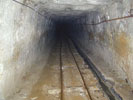
Increased productivity, decreased production costs and a safer working environment are probably the three main goals of any mine. An important factor is the amount of electricity needed to run the massive and continuous ventilation systems. In an average mine, approximately 50% of the electricity budget is directly related to ventilation. Gold mines alone account for 15% of South Africa’s total electricity consumption, a figure which is increasing yearly. Mine ventilation managers are well aware of the long-term implications of their ventilation system requirements.
A major challenge for a mine ventilation management team is finding a balance between the huge cost of keeping the air clean and breathable and the cost of lost production. So how could a mine go about radically reducing electricity costs to curb low supply and high tariffs and at the same time increase productivity as well as worker safety? The answer could be the implementation of a system that addresses all three and can be rolled out within weeks.
Allpronix has acquired the southern African agency for the Maestro air flow system. This system has been deployed in over 50 mines across Canada, USA, Europe and other countries. After installation, an average of 40% reduction in energy consumption has been achieved, while at the same time air quality has increased, resulting in more time at the face and more productivity at a lower cost.
The system consists of an air flow measuring instrument. The principal used to measure the air flow is the time-tested ultrasonic time-of-flight technique. Two ultrasonic transducers (both transmitting and both receiving) with integrated temperature probes are installed opposite each other. They are connected to the Maestro air flow monitoring electronics, housed in a NEMA4 enclosure. Transducers can be mounted in all the locations where measurement is necessary for accurate ventilation management. This means on ducting, auxiliary fans, discharge cones, drifts, airways and tunnels. The transducers are capable of measuring the largest and the smallest cross-sections present in these applications and thus give a far more accurate air velocity, air temperature and mass flow reading when compared to traditional methods of underground air flow measurement. Using a temperature compensated ultrasonic method also means that the equipment and the method are far less susceptible to environmental challenges and therefore stable, continuous and reliable readings are achieved.
The main reason for monitoring air flow is to ensure that the air quality is up to standard. Therefore the measurement of multiple gas analyser inputs is also necessary. Fan bearing vibration must also be monitored for maintenance, as well as VSD/VFD inputs and outputs.
By using a more accurate air flow measuring technique, a high level of predictive, live monitoring and control is achievable throughout a mine ventilation system. The Maestro is monitored by its own electronics, which can accept and analyse gas monitors and can control fan speeds locally. By accurately measuring and then controlling the ventilation system to run at the optimal level, the mine can operate for longer periods because the air is cleaner and at the same time the system uses far less energy for fans and cooling.
A typical scenario would see an average mine install around six sets of transducers at key measuring points, then installing the necessary gas analysers and fan vibration transmitters. A massive implementation advantage of the Maestro system is that all the inputs (gas, air flow, vibration, VSD/VFD) are connected directly to the Maestro’s electronics. The electronics box has an EtherNet communications port which is then connected to the nearest available network switch on the mine’s existing network backbone. The Maestro even comes with a PoE option which means even easier installation, with an existing PoE switch nearby providing both communications and power to the device. The readings are then easily available to the surface scada system, to be monitored and controlled by the system managers. The Maestro air quality station is web-managed for easy setup via the network. No additional handheld programmers are required.
The bottom line is that effective and efficient air quality control means greater worker safety, greater productivity and far less energy expenditure, all of which contribute to increasing profits.
For more information contact Dylan Swartz, Allpronix, +27 (0)11 795 9500, dylan@allpronix.com, www.allpronix.com
| Tel: | +27 11 795 9500 |
| Email: | sales@allpronix.com |
| www: | www.allpronix.com |
| Articles: | More information and articles about Allpronix |






© Technews Publishing (Pty) Ltd | All Rights Reserved
 printer friendly version