Inline OCR measurement systems for real-time oil monitoring in refrigerants
September 2025Analytical Instrumentation & Environmental Monitoring
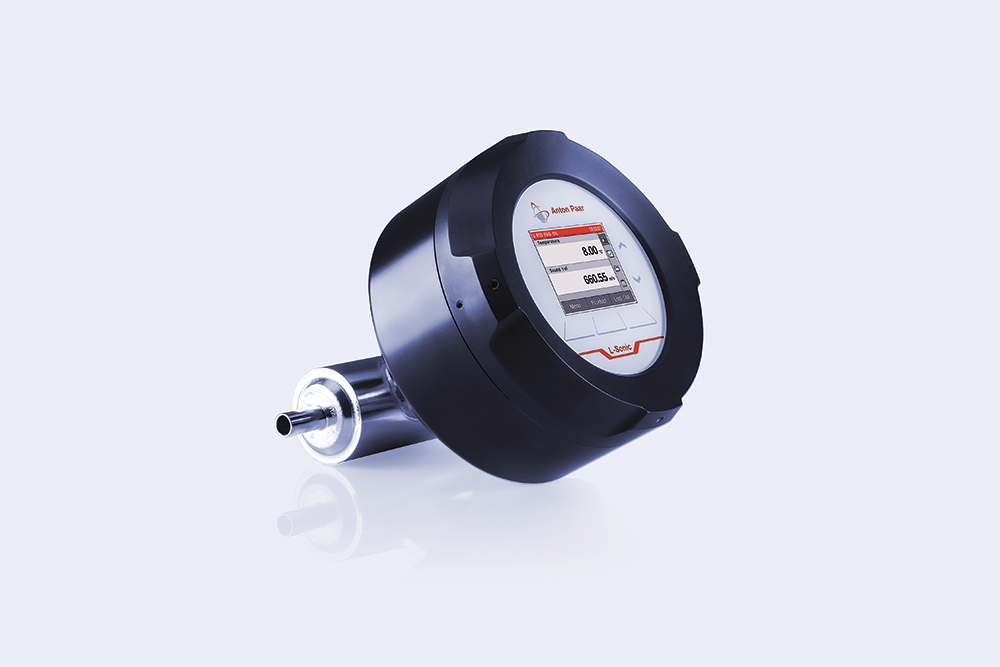
[Sponsored] Anton Paar’s L-Sonic 6100 offers a reliable, real-time inline measurement solution for monitoring the oil circulation ratio (OCR) in cooling and refrigeration systems. This advanced sound velocity sensor provides a cost-effective and precise alternative to traditional, time-consuming laboratory methods like pressure pycnometers.
Why OCR measurement matters
Oil content in refrigerants significantly impacts the efficiency, lubrication and thermodynamic behaviour of a cooling system. Excess oil can reduce performance, while insufficient oil can lead to compressor damage. Accurate OCR measurement is essential to ensure optimal operation and avoid costly downtime.
Inline measurement with the L-Sonic 6100
The L-Sonic 6100 allows continuous, direct inline monitoring of OCR, eliminating the need for complex sampling. Using the speed of sound, which is influenced by oil concentration, temperature and pressure, the system calculates oil content via proprietary formulas developed by Anton Paar. It features:
• Maintenance-free stainless steel design
• No moving parts
• Flow-through integration without adapters
• Immediate operation after installation
For flammable refrigerants, Anton Paar offers Ex-certified versions (L-Sonic 6100 Ex-d / NPT Ex-d) with certifications valid across major global markets.
Applications and compatibility
The L-Sonic 6100 is compatible with a wide range of refrigerants, including:
Compatible oils include POE, PAG and PAO, and custom formulas can be developed for new refrigerant/oil combinations and specific process conditions.
With over 900 installations worldwide, Anton Paar serves customers in the automotive, HVAC, research and manufacturing industries, offering tailor-made solutions backed by years of OCR expertise.
Flexible system integration
Depending on customer needs, the sensor can be:
• Connected to the EDGE evaluation unit
• Operated independently via a Pico 3000 transmitter
• Supplied with separated electronics (SE)
Key benefits
The sensor has a number of advantages:
• Real-time monitoring with no lab delays
• Avoids sampling errors and operator mistakes
• Plug-and-play integration with no fluorescence additives required
• High accuracy even in harsh environments
• Wide formula database for diverse refrigerant/oil mixtures
• Fully compatible with eco-friendly refrigerants like R290 and R744
• Ready for future refrigerant developments and regulatory shifts
Why choose Anton Paar’s L-Sonic 6100?
These are some of the reasons why the L-Sonic 6100 should be the instrument of choice for measuring oil circulation ratio:
• True 24/7 inline OCR measurement
• No maintenance, no moving parts
• Accurate under varying pressure and temperature
• More reliable than NIR or RI technologies
• Custom OCR formula development for unique applications
How SCE approaches sensor selection for critical environments Specialised Climate Engineering
Analytical Instrumentation & Environmental Monitoring
Specifying the right sensor for a critical climate involves far more than matching a datasheet accuracy figure. As an authorised Vaisala HVAC partner, SCE explains how understanding the environment, the measurement purpose and sensor placement determines effective climate control.
Read more...Changing gas quality calls for smarter combustion control
Analytical Instrumentation & Environmental Monitoring
As South Africa prepares for a transition from declining Mozambican natural gas to a proposed methane-rich bridge, LNG, industrial users can no longer assume a constant Wobbe Index and calorific value. The compact RMG RGQ 5 provides fast, plant-level gas-quality data to support approved burner and engine settings.
Read more...Getting the chemistry right
Analytical Instrumentation & Environmental Monitoring
Grace’s European production site has relied on analogue compression load cells from Minebea Intec for decades, with the long-proven measurement concept now serving as the reference for new silo projects as the company expands its capacity.
Read more...Why measurement matters in smelting Endress+Hauser South Africa
Analytical Instrumentation & Environmental Monitoring
South African smelters returning to operation after energy constraints face new demands for tighter control, better visibility and environmental compliance. Endress+Hauser explains how modern measurement technology supports safer, more efficient furnace operation and local beneficiation.
Read more...Sun tracking with pinpoint precision Senseca
Analytical Instrumentation & Environmental Monitoring
Senseca has introduced the SEMS-2000 solar energy measurement system, a 2-axis solar tracker with pinpoint sun-pointing accuracy that automatically monitors direct, global and diffuse irradiance for unattended outdoor solar installations.
Read more...AMETEK expands 993X gas analyser series with explosion-proof enclosures
Analytical Instrumentation & Environmental Monitoring
AMETEK Process Instruments has added ATEX and IECEx Zone 1-certified explosion-proof enclosures to its 993X series of gas analysers, enabling reliable installation in Zone 1 hazardous locations where purge gas is unavailable.
Read more...Why medical device leak testing matters for South Africa's MedTech future ATEQ South Africa
Analytical Instrumentation & Environmental Monitoring
As South Africa works to grow local medical technology manufacturing, non-destructive leak and flow testing is becoming a strategic quality assurance tool, helping manufacturers verify device integrity, meet regulatory requirements and improve production efficiency.
Read more...Moving forward with reverse osmosis
Analytical Instrumentation & Environmental Monitoring
Rising water costs and pressure on infrastructure are changing the way industries view reverse osmosis. G-Chem Aquacare is developing tailored, containerised solutions that make the technology more accessible for South African industry.
Read more...Meteorological data logger with up to 32 analogue sensors Senseca
Analytical Instrumentation & Environmental Monitoring
Senseca has introduced its advanced data acquisition system for environmental monitoring, which has a universal data logger for up to 32 analogue, pulse and smart digital sensors.
Read more...Importance of gas analysis in the petrochemical industry Elemental Analytics
Analytical Instrumentation & Environmental Monitoring
Gas analysis plays a critical role in petrochemical operations, supporting process optimisation, product quality and plant safety. As an experienced and expert gas analysis supplier, Elemental Analytics can provide the correct analyser and sample system package to meet individual plant requirements.
While every effort has been made to ensure the accuracy of the information contained herein, the publisher and its agents cannot be held responsible for any errors contained, or any loss incurred as a result. Articles published do not necessarily reflect the views of the publishers. The editor reserves the right to alter or cut copy. Articles submitted are deemed to have been cleared for publication. Advertisements and company contact details are published as provided by the advertiser. Technews Publishing (Pty) Ltd cannot be held responsible for the accuracy or veracity of supplied material.











 printer friendly version