



Across laboratories worldwide, from research and development to clinical diagnostics, professionals rely on pipettes to measure and dispense precise liquid volumes. Even small inconsistencies at this early step can cascade into costly failed assays, repeat testing or compliance risks, making accuracy and repeatability essential. Air displacement micropipettes are the primary choice in most modern testing environments.
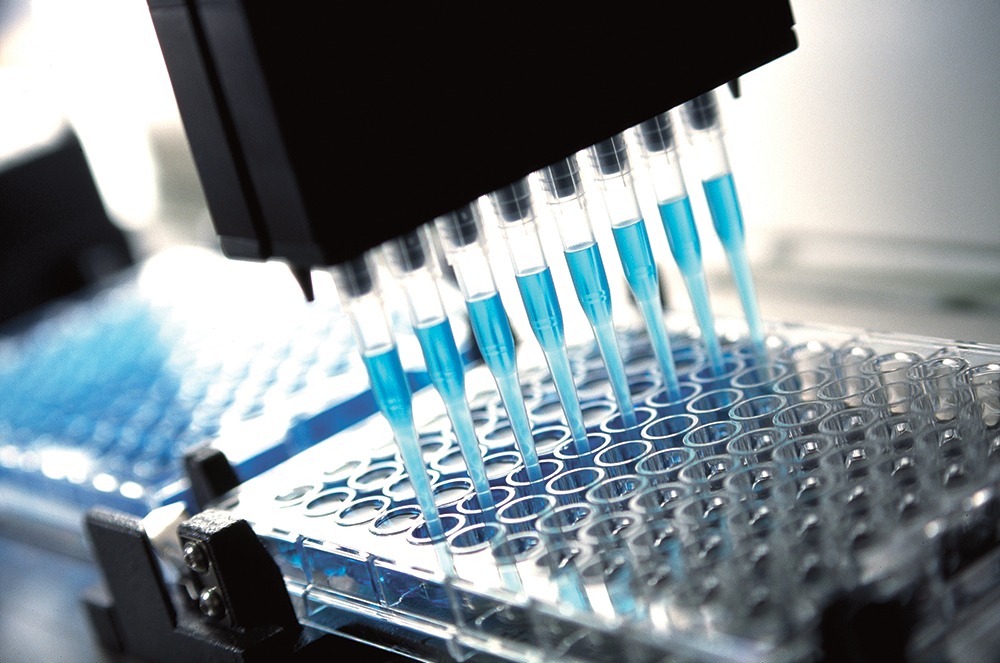
Air displacement micropipettes became particularly visible during the global response to COVID-19 where vital RT-PCR sample preparation required consistent, high-volume pipetting and accelerated the uptake of electronic pipette use. Sample preparation has historically used both manual and electronic pipettes, but as laboratories increasingly prioritise efficiency, consistency and operator comfort, electronic pipettes have become the more popular choice.
Manual vs electronic pipettes
In an air displacement pipette, manual or electric action of a piston drives changes in the air column to aspirate and dispense liquid. Manual pipettes rely on the operator to compress and release a spring-loaded mechanism, generating the required pressure changes. While effective, this design introduces natural variations in force, speed and timing, each of which can subtly influence the resulting liquid volume. Repeated manual pipetting also presents ergonomic challenges, as frequent use can lead to discomfort and an increased risk of repetitive strain injuries.
Electronic pipettes remove much of that burden. A digital interface controls a motorised piston via a button rather than a thumb-controlled plunger, producing more consistent aspiration and dispense profiles based on predictable motion, as well as reduced operator strain. Digital interfaces can also improve the accuracy of volume settings, monitor output and support automated functions such as sequential multi-dispensing, mixing and tip detection, reducing the likelihood of human error. Programs can be stored, reducing set-up time and further improving efficiency.
Motor selection for electronic pipettes
As the first step in many laboratory workflows, pipetting performance has a direct impact on downstream results, reproducibility and operational efficiency. For instrument designers, motor selection influences not only motion performance and accuracy, but also calibration stability, maintenance demands and long-term cost of ownership. Motor choice defines the force, speed, smoothness and positional fidelity of the piston’s movement. The two most common options are brushed DC motors and stepper linear actuators.
Brushed DC motors
Brushed DC motors translate direct current power into rotational motion without complex electronics. Their smooth operation and straightforward control make them attractive for handheld devices such as pipettes. However, as pipetting requires linear movement, DC motors need additional components to convert the plane of movement, increasing integration complexity and requiring completion under strict specifications. Systems using DC motors typically incorporate feedback devices such as magnetic encoders to ensure accurate piston positioning and compensate for backlash or mechanical tolerances within the screw-driven assembly.
Stepper actuators
Stepper linear actuators offer a more integrated solution and are widely used in electronic pipettes due to their direct linear motion and high positional resolution. A common approach combines a can-stack stepper motor with a threaded rotor and integrated lead screw in a single, compact assembly. As electrical pulses drive the motor, the rotor advances in discrete steps, producing predictable linear motion without external gearing or complex mechanical conversion. This architectural simplicity can translate into improved repeatability and reduced dependence on frequent recalibration.
Stepper actuators can operate in open-loop mode without an encoder for precise positioning, as each step corresponds to a fixed increment of travel. This reduces system complexity and provides high resolution and predictable motion, ensuring consistent liquid handling across users and workloads. Proper sizing is important to avoid performance issues such as missed steps. Key considerations include ensuring adequate force margin, avoiding low-frequency resonances, and preventing sudden back-driving events. Addressing these factors early supports consistent performance under high-throughput conditions and protects instrument reliability over time.
Essential considerations
Both brushed DC motors and stepper linear actuators can be engineered to meet the precision demands of electronic pipettes, with the most appropriate choice depending on intended usage. DC motors deliver smooth motion, but require additional components and closed-loop control to achieve microlitre accuracy, with superior speed and efficiency coming at the cost of increased system complexity. The direct linear motion of stepper actuators enables strong repeatability and accuracy from a simpler architecture, and this has made them the preferred option for many pipette platforms.
Selecting the right motor technology is vital as laboratories rely on precise results across every industry and field of research. Balancing the need for repeatable, consistent output with the priority of minimising operator strain makes thoughtful motion system design an important factor in electronic pipetting performance.
For more information contact Katie Guiler, Portescap,






© Technews Publishing (Pty) Ltd | All Rights Reserved
 printer friendly version