



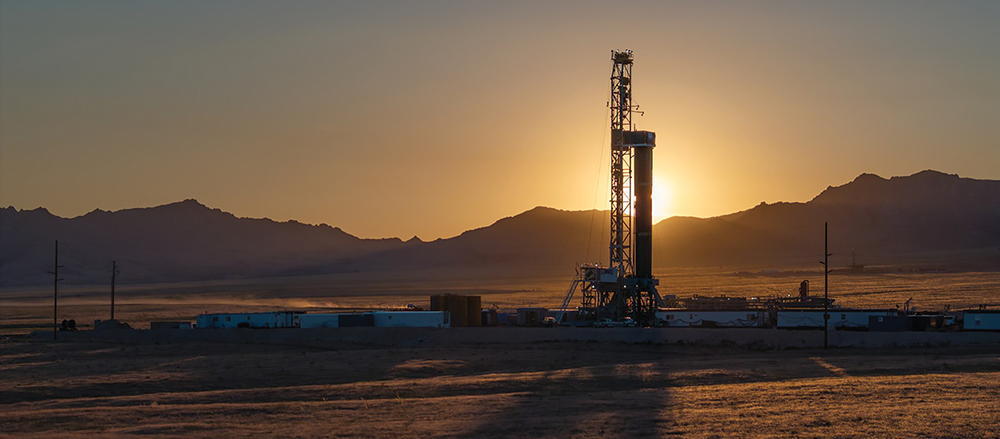
New developments in geothermal technology are set to change how heat trapped beneath the earth’s surface can contribute to the clean-energy transition. Fervo, a geothermal technology firm backed by Google, has adapted drilling techniques from the oil and gas industry to reach heat that conventional geothermal projects could never access economically. This reflects the rising demand for electricity that is available continuously, particularly from data centres, advanced manufacturing plants, and other energy-intensive operations that cannot rely only on intermittent renewable supply.
Fervo plans to start generating power next year, the first phase of a 500 MW deal involving Shell’s power division and a California utility. This is the largest commercial geothermal electricity agreement in the sector, and shows growing confidence that the technology can scale. Geothermal currently supplies less than 1% of global energy, but this could shift quickly. The International Energy Agency estimates cumulative global investment in geothermal could reach $1 trillion by 2035, against roughly $1 billion to $2 billion invested during 2024.
Geothermal energy produces very low operational greenhouse-gas emissions and runs around the clock, unlike wind and solar that depend on weather and daylight. This makes it a promising renewable source, able to support electricity grids while also supplying energy-intensive industrial processes. It can additionally provide clean heat for manufacturing and long-duration energy storage.
Conventional geothermal projects have been limited by the geology, needing naturally occurring hot water, temperatures of around 150 to 200°C, and permeable rock fractures within about 4 km of the surface. Conventional wells are drilled vertically, letting naturally heated fluids rise to drive turbines.
Newer approaches are widening the pool of viable sites. Enhanced geothermal systems use hydraulic stimulation and multilateral drilling to create artificial fractures in hot rock. Closed-loop systems circulate a working fluid through sealed pipe networks that draw heat from the surrounding rock. Both methods can work where natural fractures are absent, provided sufficiently hot rock sits within roughly 4 km to 5 km of the surface.
Fervo’s geothermal design starts with a deep vertical well that curves gradually into a horizontal section. A second well, drilled nearby, runs parallel to the first. The two wells do not connect directly, instead, controlled fractures are formed in the rock between them, creating an engineered underground reservoir.
Water is pumped down one well and passes through this fracture network, absorbing heat from the rock, then returns through the second well at a higher temperature. At surface, the heat transfers to another fluid, which drives a turbine and generates electricity.
Drilling productivity is the key to the project economics. Fervo has reported a 70% year-on-year cut in drilling times, helping lower overall costs. Faster drilling, improved well design and repeatable field development could let enhanced geothermal systems compete with other power technologies within a few years.
Closed-loop geothermal systems use sealed pipes arranged in a deep U-shape or semi-circular loop. A working fluid travels down one side, heats up at depth and returns through the other. Because the fluid stays enclosed, the technology suits arid regions or locations where water use and hydraulic stimulation are restricted. The trade-off is that closed-loop systems require more drilling and pipework, raising complexity and capital cost. They may, however, prove valuable in regions where enhanced geothermal systems are not feasible because fracking is prohibited or water resources are scarce.
In Germany, Canadian company, Eavor, has drilled two vertical wells between 4,5 and 5 km deep, connected by 12 horizontal wells of roughly 3 km each. The underground network works like a radiator, transferring heat into the circulating fluid. Drilling performance improved as the project progressed, the final lateral wells taking about half the time needed for the first set. The development is expected to deliver more than 8 MW of electricity and 64 MW of district heating to nearby communities.
The long-term prize is superhot geothermal systems, aiming for depths of
For manufacturers seeking reliable, low-carbon power and heat, geothermal technology stands to become a significant part of the future energy mix.
Continuous output, compact land use and falling drilling costs make it an attractive option for industrial regions where dependable clean energy is essential.
For more information visit www.fervoenergy.com






© Technews Publishing (Pty) Ltd | All Rights Reserved
 printer friendly version