



Sub-Saharan Africa’s infrastructure challenge is gradually evolving, with the Africa Infrastructure Development Index score increasing by 50% from 2003 to 2025. It has been a slow, uphill challenge, affected by funding, governance and legacy issues, and its limitations have played no small role in depressing productivity and competitiveness across the continent. According to the World Bank’s April 2026 Africa Economic Update, public capital investment has dipped to 20% below 2014 levels. The report, highlighting ongoing economic and geopolitical shocks as central to the continent’s issues, underscored the difficulties faced by countries to fund the infrastructure they need. Infrastructure has long dragged on private-sector productivity and manufacturing cost structures.
Power is central to the challenge. A recent study by the Centre for Global Development in sub-Saharan Africa found that unreliable power can cost companies as much as 31% in sales. Across 37 African countries and more than 3 000 companies, the study examined how power outages affected business. Nigeria, Angola and Ghana lost significant sales, averaging 31%, and across the continent, some companies are barely surviving with low growth due to the cost of keeping the lights on. African manufacturers are operating in far tougher conditions than their global counterparts, and yet they are still delivering innovation and value.
Despite steady advancements in energy infrastructure, manufacturers are still struggling to achieve power reliability. Generators have kept manufacturers running throughout the lights-on, lights-off years and have been the backup plan that has allowed factories to ride out grid pressure and keep their customers supplied. They have become central to ensuring that companies have their own infrastructure. There is a change, however, in how companies approach the use of generators and the structure of their energy portfolios.
Behind-the-meter, or BTM, power applies the same on-site principle as diesel backup and extends it to include more fuel options, greater control and a better position on costs and emissions. In Africa, BTM is defined as generator or storage assets such as solar PV, batteries, diesel or hybrid microgrids that manufacturers own directly, and that allow them to bypass the grid for part of their power load. The size of a BTM operation depends entirely on the manufacturer’s needs. Options include a gas generator designed to meet peak demand, a diesel set with battery storage to even out fuel use, or a hybrid setup that includes solar to reduce runtime hours and costs.
The BTM principle is the same as the generator backup plan. The power structure on your premises is designed to support your assets and uptime, ensuring reliable energy in the event of infrastructure failure. You can then balance the load and structure it so it becomes a strategic part of your operation’s infrastructure.
The challenge for BTM comes down to how you plan and design the energy mix behind it. There is no single ‘best source’ of energy anymore. Each solution has its own value and drawbacks, so the goal is to create a portfolio that is optimised for your operation and that features energy solutions that complement one another’s strengths and trade-offs.
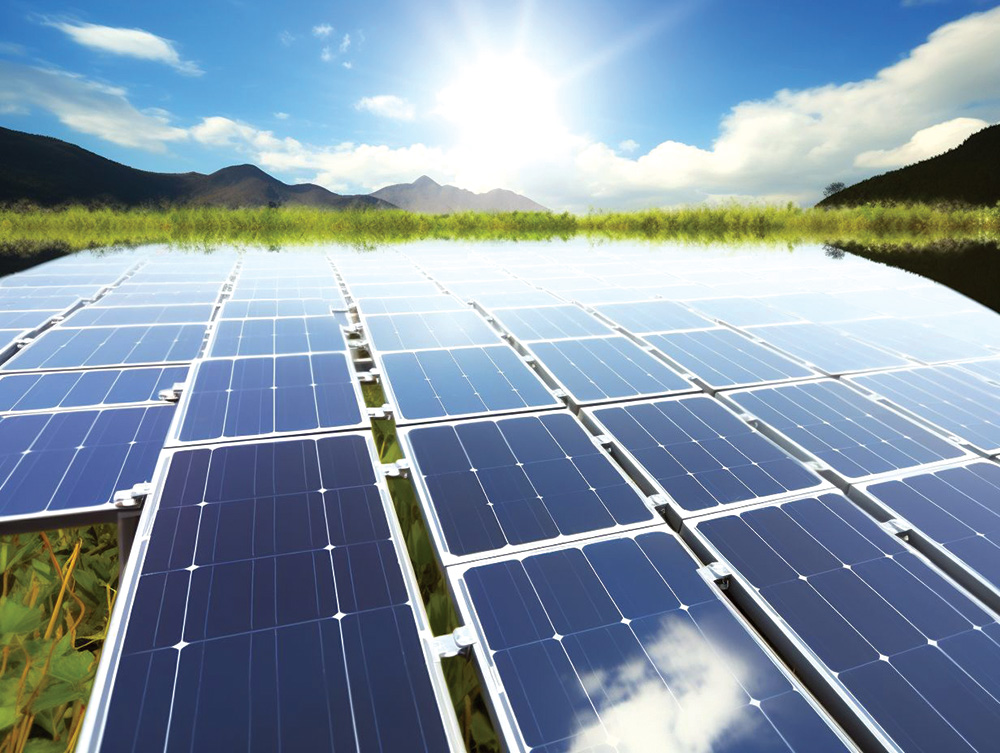
Solar is the obvious clean choice, but its output is limited by daylight and weather, and it can struggle with large block loads. While battery energy storage has transformed solar energy storage, shifting energy to when it is unavailable, it doesn’t generate power on its own. Gas performs well as a stable base-load solution, but it is slow to respond to sharp load changes. Diesel is still the most responsive option, but it comes at a high operating cost. Utility supply can absorb sudden demand, but peak tariffs are expensive and availability is outside your control.
The most resilient energy strategy combines these sources into a customised system that fits your load profile, cost objectives and risk tolerance, ensuring your energy infrastructure is predictable, reliable and under your control. This reliability shift changes the manufacturer’s productivity narrative because energy is now a planning input. Power is on your site and on your terms.
As the energy outlook is volatile and complex, BTM offers manufacturers control and visibility into their energy provisioning and costs. Instead of carrying grid risk, you can create a solution that sits on your side of the meter and gives you more ways to keep your production lines moving. The number of energy options has also increased significantly over the past five years, giving you choice without compromise. It is not as complex today to build your own BTM as it was five years ago; choose the right partner and collaborate on an approach that blends the tools to fit your goals.
For more information contact Ruth Mweu, Aggreko,






© Technews Publishing (Pty) Ltd | All Rights Reserved
 printer friendly version