



ABB is advancing its Mission to Zero programme at its Sasbach manufacturing site in Germany, demonstrating how onsite renewable energy, electrification and digital energy management can deliver meaningful emissions reductions while strengthening energy resilience.
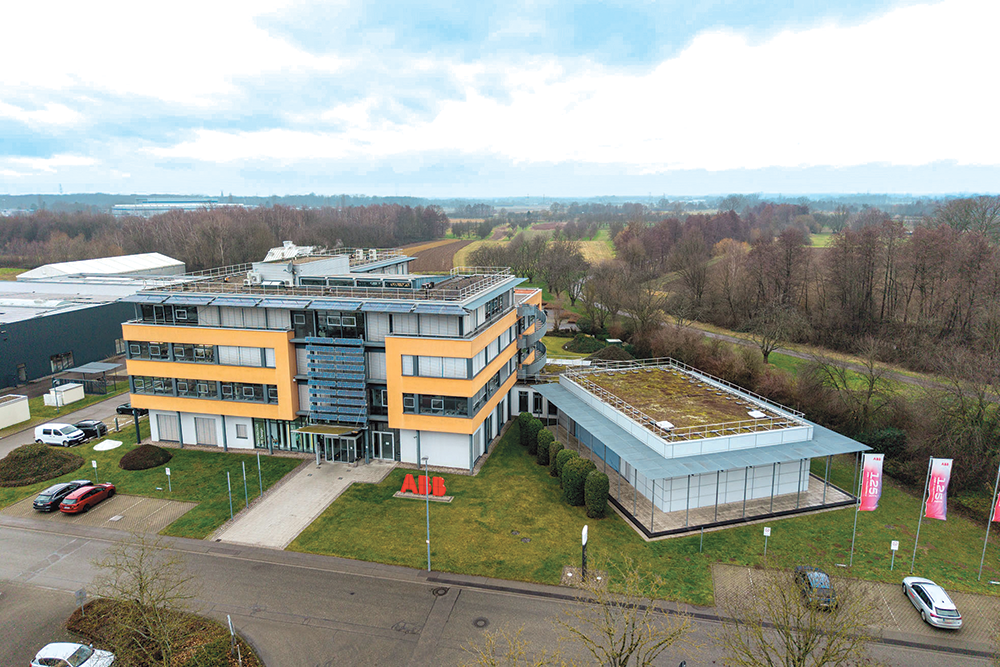
The Sasbach site manufactures enclosures and energy distribution systems for local and regional markets, supporting ABB’s production footprint in Germany. As part of ABB’s global Mission to Zero program, the site is implementing a data-led decarbonisation roadmap focused on energy efficiency, renewable electricity and smart energy management. Sasbach is one of 37 ABB sites worldwide currently participating in the programme, which aims to significantly reduce operational emissions across ABB’s global footprint.
With manufacturing and production accounting for around one-fifth of global carbon emissions, improving energy efficiency and accelerating electrification are critical to achieving European climate targets. The Sasbach site shows how manufacturers can reduce emissions while maintaining reliable, competitive operations.
Taken together, the actions implemented at the Sasbach site deliver total CO2 savings of approximately 3786 tons. This includes around 2700 tons of CO2 savings from the purchase of certified renewable electricity from the grid, alongside annual emissions reductions of approximately 1086 tons of CO2 delivered through onsite measures. Of these yearly onsite savings, around 550 tons of CO2 per year come from solar generation, which has been expanded. The site now operates 3410 photovoltaic modules, generating around 1500 megawatt-hours of electricity annually, enough to supply approximately 400 homes for a year.
Onsite generation will cover close to one-third of the site’s total electricity demand, reducing exposure to volatile energy prices and enhancing long-term energy security. A newly installed transformer station ensures stable and efficient integration of the renewable electricity into the site’s power infrastructure. The remaining reductions are achieved through electrified production upgrades, energy efficiency measures and digital energy management. Together, these actions are strengthening energy resilience and supporting stable, reliable day-to-day operations.
“What we are doing at Sasbach shows how Mission to Zero works in practice,” said Mike Mustapha, president of ABB electrification’s smart buildings division. “By investing in onsite renewables, electrifying our processes and using digital energy management, the site is reducing emissions while also improving energy resilience and day-to-day operational stability. This kind of practical progress is what will matter most for manufacturers navigating the energy transition.”
In parallel, ABB has continued to modernise production processes to reduce energy demand at source. A new powder coating facility has expanded production capacity while significantly lowering energy requirements. Designed across two levels, the facility incorporates heat recovery and operates with substantially lower installed heating capacity than conventional systems, supporting both efficiency gains and production reliability.
Additional efficiency measures across the site include full LED lighting in production areas, building automation employing the ABB i-bus KNX, waste heat recovery from compressed air systems, and optimised process controls. Twenty one onsite electric vehicle charging stations support low-emission mobility for employees and visitors.
Together, these initiatives have significantly improved energy productivity compared with 2019 levels, while helping stabilise operations and reduce operating costs. ABB’s building automation system and energy management solutions bring these measures together, providing real-time visibility into energy use, enabling continuous improvement and data-driven decision making that supports efficiency, resilience and operational stability.
Building on these achievements, ABB has defined a clear roadmap for the next phase of decarbonisation at Sasbach. Battery storage systems are planned to store excess solar electricity and support production during peak demand and night shifts. Gas-based heating systems are being progressively replaced with electric heat pump solutions, reducing reliance on fossil fuels over time. The site is also evaluating the potential for onsite wind generation to further strengthen energy self-sufficiency in the future.
The Sasbach site joins ABB’s growing global network of Mission to Zero locations spanning Europe, the Americas and Asia. Mission to Zero began as a local initiative at ABB’s Lüdenscheid factory in Germany and has since scaled globally. Together, Mission to Zero sites are already reducing more than 60 000 tons of CO2 emissions from ABB’s operations per year, demonstrating how electrification, digitalisation and energy efficiency can deliver measurable progress toward low-carbon manufacturing.
Through continued investment in renewable electricity, electrified processes and smart energy management, ABB’s Sasbach site is becoming a future-ready manufacturing location that combines environmental responsibility with strong operational performance, supporting a more resilient and efficient industrial base for the region.
For more information contact ABB Electrification,






© Technews Publishing (Pty) Ltd | All Rights Reserved
 printer friendly version