


Electrical Power & Protection


Digital substations power Africa’s transition to a smarter, more resilient grid

June 2026 Electrical Power & Protection

As Africa’s energy systems face increased pressure from rapid urbanisation, ageing infrastructure and the accelerating shift towards renewable energy, utilities are being challenged to do more with less, and to do it faster. Digital substations are emerging as a critical enabler of grid resilience and modernisation.
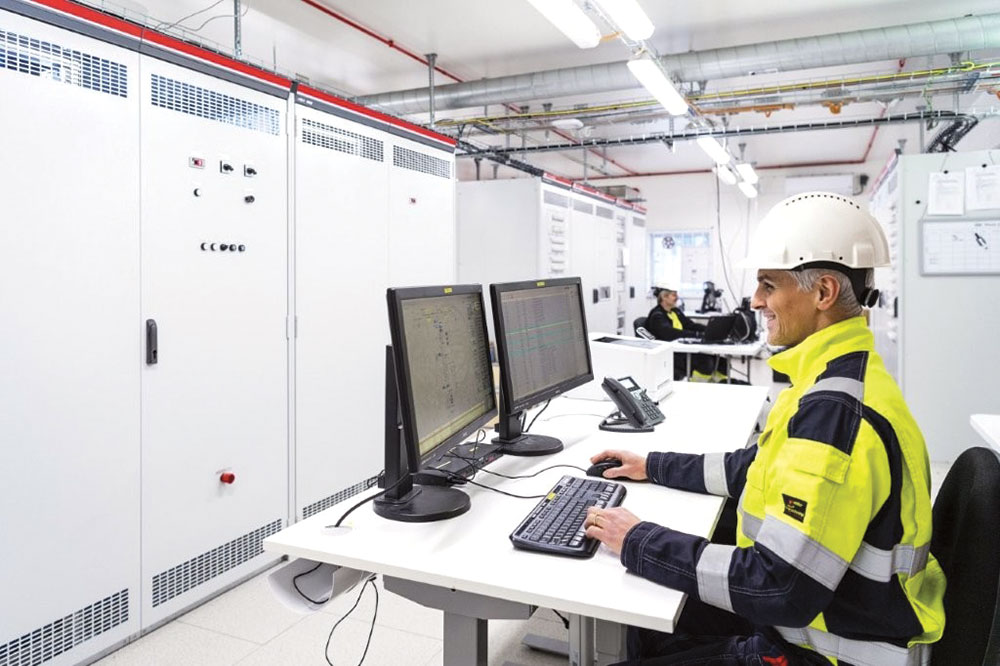
Traditionally, substations have relied on extensive copper wiring, manual monitoring and reactive maintenance. However, the demands of today’s energy landscape, characterised by decentralised generation, fluctuating loads, and increasing electrification require a fundamentally different approach. Digital substations represent that shift.

From infrastructure to intelligence

Digital substations replace conventional point-to-point copper connections with fibreoptic communication networks, enabling real-time data exchange across the grid. This transition allows utilities to move from static infrastructure to dynamic, data-driven systems that can respond instantly to changing conditions.

By integrating advanced sensors, automation systems and cloud-enabled analytics, operators gain access to the latest information allowing for faster, more informed decision making.

Mohamed Hosseiny, country managing director for Africa at Hitachi Energy, explains: “Digital substations fundamentally change how utilities see and manage their networks. Instead of reacting to faults after they occur, operators can anticipate issues, optimise performance and improve reliability in real time.”
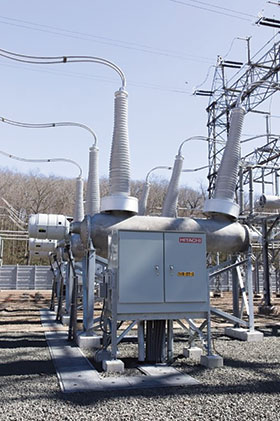

Enabling renewable integration and grid stability

One of the most pressing challenges facing African utilities is the integration of renewable energy sources. While solar and wind offer significant opportunities, their intermittent nature introduces volatility into the grid.

Digital substations play a crucial role in managing this complexity. By improving data quality and reducing decision making time during disturbances, they enable utilities to maintain stability, even as energy inputs fluctuate.

“The energy transition is not just about adding renewables,” says Hosseiny. “It is about ensuring the grid can handle that transition. Digital substations provide the visibility and control needed to balance supply and demand in increasingly complex systems.”

Driving efficiency, safety and cost savings

Beyond performance improvements, digital substations deliver tangible operational benefits. The reduction in physical cabling significantly lowers installation and maintenance costs, while also decreasing the overall footprint of substations, a critical advantage in space-constrained urban environments.

Safety is also enhanced. By removing traditional electrical connections between high-voltage equipment and control systems, digital substations reduce the risk of electrical hazards for personnel. In addition, continuous monitoring and predictive maintenance capabilities help utilities reduce downtime, extend asset lifecycles, and improve service reliability.

A leap forward for Africa’s infrastructure

For many African countries, the transition to digital substations presents an opportunity to leapfrog legacy infrastructure and adopt future-ready systems from the outset. With more than 20 years of substation communication experience and hundreds of thousands of deployed control and protection systems globally, Hitachi Energy brings both the expertise and the proven technology needed to support this transformation. “Africa has a unique opportunity to build smarter grids from the ground up,” notes Hosseiny. “Digital substations are a foundation for long-term energy security, sustainability and economic growth.”

Building the grid of the future

As utilities across the continent navigate the dual pressures of expanding access and improving reliability, the need for intelligent, adaptable infrastructure has never been greater. Digital substations offer a clear path forward, enabling utilities to move beyond traditional limitations and build grids that are more resilient and ready for the demands of a rapidly evolving energy future.

For more information contact Hitachi Energy, +27 64 523 5097, lerato.nkosi@hitachienergy.com, www.hitachienergy.com/africa/en


Share this article:
Share via emailShare via LinkedInPrint this page

Further reading:

Decarbonising the energies and chemical industry without the risk
Schneider Electric South Africa Electrical Power & Protection
Schneider Electric argues that decarbonisation in Africa’s energies and chemical industry need not compromise production or profitability. A phased, digitally enabled approach, starting with energy efficiency improvements, can reduce emissions while strengthening competitiveness.

Read more...
Modular UPS system with scalable, high-availability architecture
Electrical Power & Protection
Legrand South Africa has launched its fifth-generation TriMOD three-phase modular UPS, available from 10 to 80 kW. The system features hot-swappable modules, multiple input/output configurations, and up to 99% efficiency in Eco Mode, designed for data centres and critical industrial environments.

Read more...
Accurate illuminance measurement for safer, more efficient environments
Electrical Power & Protection
The Sonel LXP-10A illuminance meter is designed for accurate measurement of lighting levels in industrial environments where adequate illumination is essential.

Read more...
Why mining operations need local lightning early warning
Senseca Editor's Choice Electrical Power & Protection
Lightning can develop into a serious mining hazard before the first local strike, leaving crews little time to stop work and reach safety. Local early-warning technology can provide valuable lead time, allowing mines to connect developing storm conditions to defined trigger actions that protect people, explosives and equipment.

Read more...
South Africa’s dirtiest fuel is building its most resilient boilers
Electrical Power & Protection
Steinmüller Africa argues that duff coal, the low-grade fines and discards stockpiled over decades, can now underpin reliable, compliant industrial boilers using mature circulating fluidised bed combustion technology, turning a long-standing liability into a phased energy transition pathway.

Read more...
Retrofitting for sustainability
Schneider Electric South Africa Electrical Power & Protection
As budgets tighten and sustainability targets increase, retrofit and modernisation strategies are gaining traction across Africa, allowing organisations to upgrade only what limits performance while preserving existing infrastructure and extending asset life.

Read more...
USB-Datalogger for voltage 0 to 30 V DC
Vepac Electronics Electrical Power & Protection
The PeakTech 5186 is a data logger for DC voltages from 0 V to 30 V with terminals on the top of the device.

Read more...
Pole-top boxes for smarter, more secure electricity networks
Electrical Power & Protection
As South Africa accelerates the rollout of smart prepaid electricity metering, innovative enclosure technology from Power Process Systems is helping utilities improve network security, reduce electricity theft and protect critical electrical infrastructure.

Read more...
Simplifying electrical design compliance
Electrical Power & Protection
Referro Systems highlights how Rockwell Automation’s Global SCCR Tool simplifies short-circuit current rating compliance for complex industrial electrical systems.

Read more...
Engineering resilience into Africa’s energy future
Electrical Power & Protection
Zutari’s managing director of water explains how Burundi’s landmark Jiji and Mulembwe hydropower projects demonstrate what resilient, climate-adapted infrastructure delivery looks like – and what this means for Africa’s energy future.

Read more...


While every effort has been made to ensure the accuracy of the information contained herein, the publisher and its agents cannot be held responsible for any errors contained, or any loss incurred as a result. Articles published do not necessarily reflect the views of the publishers. The editor reserves the right to alter or cut copy. Articles submitted are deemed to have been cleared for publication. Advertisements and company contact details are published as provided by the advertiser. Technews Publishing (Pty) Ltd cannot be held responsible for the accuracy or veracity of supplied material.


© Technews Publishing (Pty) Ltd | All Rights Reserved

