



As modern engines become smaller, more powerful and increasingly complex, coolant technology has undergone a fundamental transformation. No longer limited to basic freeze protection, today’s formulations are engineered as sophisticated thermal management systems designed to meet stricter OEM standards, higher heat loads and the demands of modern engine design.
According to Johan Nell, lubricant engineer at African Group Lubricants (AG Lubricants), coolant technology has shifted decisively in recent years. Coolant technology has moved from simple freeze protection to advanced thermal management systems capable of handling the higher heat loads of modern, downsized and turbocharged engines.
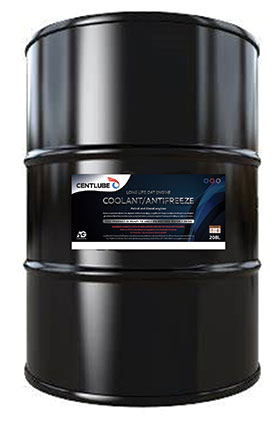
Mark Pretorius, managing director of Lubrichem adds that the market now expects long-life, extended-protection formulations that deliver superior corrosion resistance, improved heat transfer and reduced maintenance, all while complying with rigorous OEM specifications and global standards. As a result, AG Lubricants and Lubrichem have entered into a partnership to introduce the Centlube Long Life OAT Engine Coolant/Antifreeze range.
Meeting new performance demands
Across both automotive and heavy-duty sectors, the market is increasingly value-driven. Operators are seeking extended service intervals and lower total cost of ownership rather than simply focusing on fluid volume. Nell highlights the shift towards Organic Acid Technology/OAT, which now supports service intervals of up to five years or 250 000 km in passenger vehicles. In heavy-duty applications, premium coolants can extend service to 8000 hours, reducing additive and fluid costs by up to 80% compared to conventional types.
Fleet operators are also demanding maintenance-free or ‘lifetime’ fluids to minimise downtime and labour costs. Material compatibility has become equally critical. Modern engines incorporate lightweight materials such as aluminium and magnesium alloys which are highly sensitive to chemical corrosion.
Sustainability is another driving force. Regulatory pressure is accelerating the move towards bio-based glycols, such as propylene glycol and glycerine-based coolants, which are biodegradable and less toxic than traditional ethylene glycol formulations. Modern specifications also increasingly require NAP-free formulations and the elimination of heavy metals.
Centlube Long Life OAT is engineered for modern fleets
Against this evolving backdrop, Centlube Long Life OAT has been developed to meet current and future performance requirements. Nell explains that the product is based on patented, silicate-free organic additive technology, delivering long-life corrosion protection for all engine metals, including aluminium and ferrous alloys.
Extensive fleet testing has demonstrated protection of at least 650 000 km, about 8000 hours in truck and bus applications; 250 000 km, about 2000 hours in passenger vehicles, and up to 32 000 hours or six years in stationary engines.
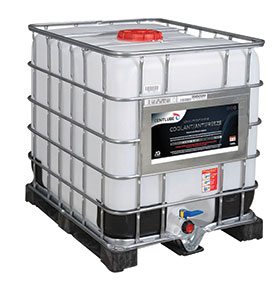
Pretorius adds that Centlube Long Life OAT is supplied as a ready-to-use 50/50 premix based on advanced organic additive technology. It meets key OEM specifications, including Ford WSS-M97B44-D, Mercedes-Benz 325.3, General Motors GM 6277M, MAN 324 Typ SNF and Volkswagen TL 774F, enabling compatibility across mixed fleets.
Clear advantages over conventional coolants
Unlike traditional silicate-based Inorganic Additive Technology (IAT) coolants which can deplete rapidly, form deposits and require frequent replacement, Centlube Long Life OAT uses silicate-free, phosphate-free organic additives.
Nell notes that OAT coolants provide significantly extended service life, selective corrosion protection and superior heat transfer efficiency compared to conventional technologies. Pretorius emphasises that the slower depletion of organic inhibitors eliminates gel formation, enhances hard water stability and removes the need for supplemental additives, resulting in cleaner systems and a longer operational life.
The practical impact is measurable. Extended drain intervals reduce fluid changes, labour and disposal costs while minimising environmental impact. Non-depleting inhibitors prevent corrosion-related failures, reducing downtime by 20 to 30% in fleet operations, lowering total cost of ownership through improved fuel efficiency, fewer repairs and extended component life.
Positioned for the future of thermal management
Looking ahead, coolant technology will continue evolving as a critical component of modern engine thermal management. Nell anticipates continued advances in additive chemistry, longer service intervals and improved compatibility with increasingly complex engine materials and designs. Greater emphasis will also be placed on sustainability, including more environmentally responsible formulations and improved lifecycle efficiency.
Pretorius believes the future will demand even greater sustainability, enhanced heat transfer performance and compatibility with evolving engine technologies. AG Lubricants is positioning Centlube Long Life OAT as a proven, forward-compatible solution backed by broad OEM approvals and extended-life performance to help operators meet evolving efficiency, emissions and durability requirements with confidence.
“AG Lubricants remains committed to staying at the forefront of the latest lubricant and coolant technology,” concludes Nell. By continuously aligning with global standards and OEM requirements, the company enables its clients to make informed decisions, improve operational efficiency and reduce overall costs.
For more information contact Nicole Jooste, African Group Lubricants,






© Technews Publishing (Pty) Ltd | All Rights Reserved
 printer friendly version