



Turbines operate for months on end. Slow to start and cumbersome to shut down, these power machines are at their best when they work continuously. However, no turbine is immune from wear and tear, and unexpected downtime or poor performance can quickly degrade its value and lifespan. But strategically maintained turbines can deliver decades of performance.
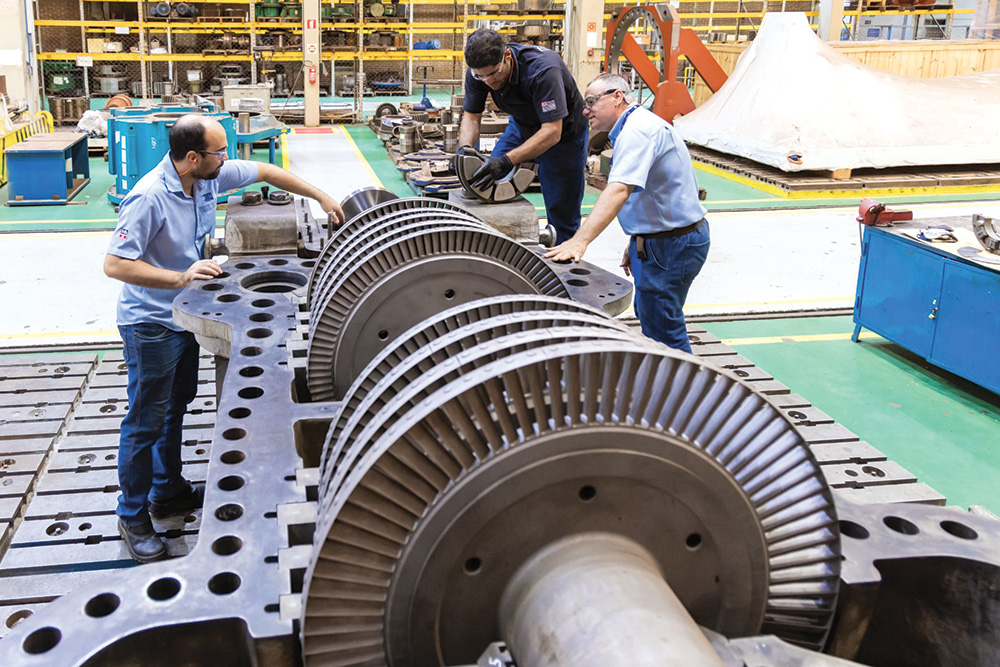
“There are turbines in South Africa that have been running for many years, some over 50 years in operation. While it is not uncommon for turbines to achieve such a long lifespan, it is important to ensure that regular maintenance interventions take place to promote increased equipment lifetime,” says Alastair Gerrard, WEG’s executive for Energy Systems.
Best practices for turbine maintenance
Shutting a turbine down is not a quick task. Cooldown periods can last as long as two days, and returning the machine to a fully operational condition where maximum power can be generated, requires several hours. Turbine power output can range from a few kilowatts to several hundred megawatts, and they typically support heavy industrial machinery and processes. While maintenance downtime is often inconvenient, performing no maintenance will result in breakdowns which could be costly or even catastrophic.
Turbine maintenance is not only crucial, but also requires smart planning and expert management. Non-intrusive maintenance intervals can happen every few months, with deeper interventions occurring annually to every few years.
“A steam turbine’s lifecycle is typically 5 to 6 years, or up to 14 000 operating hours before it will require a major overhaul. Before reaching that milestone, we recommend doing visual inspections every few months, valve cleaning and inspections once a year, and a minor overhaul every two years,” says Gerrard.

Selecting the right maintenance partner
Skilled turbine maintenance professionals are best qualified to carry out inspections and overhauls. They can identify wear and performance loss, source spare parts, and use workshop facilities to repair components or machine replacements. Qualified maintenance experts also investigate issues such as under-performance, and provide guidance on conditions for long-term parts storage to avoid issues associated with incorrect care and preservation.
In the past, OEMs appointed locally-based turbine maintenance partners, but turbine owners now require OEMs to deliver an end-to-end service, including extensive turbine maintenance capabilities. This trend has encouraged consolidation, with OEMs such as WEG acquiring or establishing local turbine repair facilities. It has also led to new services and innovations, says Gerrard.
“Two areas have become more prominent in turbine maintenance. The first is to invest in the equipment and skills to re-engineer and manufacture spare parts. We have advanced scanning and machining services to re-engineer parts, even without the original drawings, supporting older turbines and turbines from any manufacturer. The second is modernising turbine control systems with remote monitoring features. Remote monitoring improves inspections and reduces interruptions through access to real-time operational data. If we need to dispatch technicians to the site, we can study the operational data to determine the cause, and develop initial remedies even before they reach the equipment, reducing downtime and saving customers money.”
Relationships ensure healthy turbines
Isolated workshops or OEMs that depend heavily on third parties often lack the capacity to provide these services. As a result, turbine owners tend to choose ISO-accredited OEM maintenance providers that support the full turbine lifecycle, including auxiliary equipment such as gearboxes and generators, under a comprehensive service level agreement.
“Keeping turbines running requires technical expertise and a strong relationship with our clients. They expect us to be helpful, efficient, skilled and able to respond to a wide range of needs, from supporting turbines of any origin to sourcing and preserving parts,” says Gerrard.
Well-maintained steam turbines can operate reliably for many years, and effective maintenance keeps downtime to a minimum. Long service life depends on an OEM maintenance partner that provides end-to-end support for any turbine brand or model, from visual inspections and parts manufacturing to smart and remote monitoring. “An integrated OEM reduces risk and increases flexibility. We tailor solutions to each customer. That’s how we keep their turbines spinning.”
For more information contact WEG Africa,






© Technews Publishing (Pty) Ltd | All Rights Reserved
 printer friendly version