


Electrical Power & Protection


Unifying building information into a sea of insight

May 2026 Electrical Power & Protection

Facility managers realise that in order to gain the most from building automation, they can longer deploy and operate technologies in isolation. However, in many buildings, systems remain siloed. HVAC is managed separately from lighting, access control, energy metering, water management and property management platforms, which results in limited integration and efficiency. Each system may perform its function well in isolation, but without integration, valuable insights are lost, inefficiencies persist and operating costs escalate.
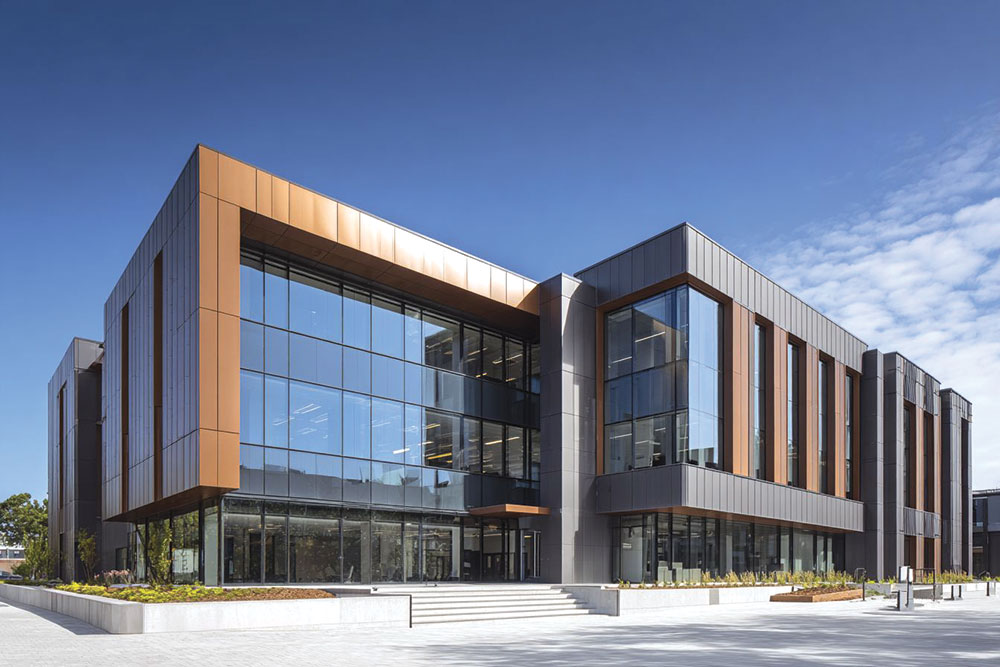
Beyond fragmented building systems

Apart from systems physically residing in buildings, how do managers and operator gain insight into geographically distributed structures as well as multiple vendors? The dilemma is that data is often fragmented and is spread across different platforms, service providers and legacy systems. This makes it difficult to answer even basic operational questions such as where energy is being wasted, which buildings are underperforming, and whether systems are still running when spaces are unoccupied.

Modern, integrated building management solutions address this challenge by bringing data from multiple sources and dispersed locations like HVAC, lighting, access control, lifts, generators, field devices, energy and water meters into a single ‘pane of glass’ such as a building management system or BMS.

Anoop Hariparsad, offer marketing manager, Microgrids, MEA at Schneider Electric.

This unified view provides operators and managers with actionable insight as the raw data has been transformed into digestible and practical information that can be used for proactive decision making. It doesn’t require a complete overhaul of technologies. Today’s unified platforms are designed to integrate with installed assets, extending its life and value, and adding a new layer of intelligence.

Modern building management platforms are modular and expandable. Organisations can start small, automating critical systems first, and then expanding over time as budgets allow.

Even where older equipment lacks native intelligence, supplementary technologies such as sensors can bridge the gap, adding smart capabilities without wholesale replacement. Over time as assets reach end of life, they can be upgraded strategically, rather than reactively.

When buildings respond to people

The value of unified data becomes clearer when BMS’ are integrated with software systems such as property management systems or PMS.

For example, by linking PMS data with building controls, buildings gain awareness of which spaces are occupied, unoccupied, rented or temporarily vacant. This allows energy usage to align precisely with real-world behaviour.

Using a hotel room as an example; when a guest checks in, room conditions can be automatically adjusted to preferred settings. When the guest leaves the room, occupancy sensors signal the system to switch off lighting and reduce air-conditioning output. The moment the guest returns, comfort is restored, quietly and automatically.

In one real-world example, two identical hotel rooms were monitored side-by-side. Both rooms were occupied, but only one was automated with occupancy-based controls. The result was impressive, with energy cost savings significantly higher in the automated room, without impacting the guest experience.

Energy and water management

Integrated building platforms also provide critical insight into energy and water consumption, an important feature as most property groups today have sustainability targets to meet. Facility managers can validate utility billing, track usage trends and identify anomalies, provided the correct, compliant metering infrastructure is in place. With accurate data, buildings can monitor incoming utility supplies, compare consumption against billing, and confidently engage utilities or municipalities when discrepancies arise. This level of transparency strengthens governance, improves cost control and supports long-term sustainability goals

The sky is the limit when it comes to unifying technologies and the resultant data in order to gain the most from buildings. The trick is to be systematic and ensure the unifying software provides true operational insight for improved decision making.


Credit(s)


Share this article:
Share via emailShare via LinkedInPrint this page

Further reading:

Africa’s net-zero ambition must become operational
Schneider Electric South Africa Electrical Power & Protection
Schneider Electric’s Rohit Chashta argues that the biggest gap in Africa’s green transition is not ambition but execution, and outlines how advisory services, bankable project roadmaps, digital visibility and SF6-free switchgear can turn sustainability commitments into measurable progress.

Read more...
High-efficiency half-brick DC-DC converters
Vepac Electronics Electrical Power & Protection
The Supreme series half-brick DC-DC converters from Vepac Electronics use synchronous rectification for high conversion efficiency, in a six-sided metal case built to withstand harsh industrial and transportation environments.

Read more...
Even in autonomous systems, human insight is important
Schneider Electric South Africa IT in Manufacturing
As AI, IIoT and digital twins reshape industrial operations, Schneider Electric’s Kobus Vermeulen and Bafana Msibi argue that the operator’s role is shifting from controlling equipment to interpreting intelligence, validating AI recommendations and making decisions that improve

Read more...
Designing the modern AI cooling stack
Schneider Electric South Africa Industrial Computer Hardware
As average rack densities in data centres climb from 16 to 27 kW in a single year, Schneider Electric’s Canninah Dladla outlines the six liquid cooling architectures available to operators, seven design factors, and three operational practices that determine energy and water efficiency.

Read more...
Software-defined automation is overcoming hardware interoperability limits
Schneider Electric South Africa SCADA/HMI
Schneider Electric’s Kobus Vermeulen and Sydney Higgo explain how open communication standards and software-defined architectures are enabling industrial operators to integrate legacy equipment, new control systems, and cloud platforms without disrupting operations.

Read more...
Zinc-based batteries power a more sustainable energy future
Electrical Power & Protection
Zinc-based batteries are gaining ground as a safe, recyclable and cost-effective energy storage option, from consumer electronics to grid-scale systems. The International Zinc Association’s Simon Norton explains why zinc is well placed to support the clean energy transition.

Read more...
Calcamite partners with Schneider Electric and 4Sight for smart water management
Schneider Electric South Africa Editor's Choice
Schneider Electric, AVEVA and 4Sight OT Automation are helping South African wastewater specialist, Calcamite, digitalise its modular treatment plants through a scalable edge-to-cloud automation platform, with the award-winning Gourikwa pilot now scaling to hundreds of remote sites.

Read more...
AI in industry is an early warning system, not a guarantee
Schneider Electric South Africa IT in Manufacturing
Schneider Electric’s Paul Steyn argues that AI in industrial maintenance is only as good as the infrastructure and people behind it, and explains the three layers a facility needs before predictive maintenance can deliver on its promise.

Read more...
Energas introduces lower-cost German gas genset for South African market
Electrical Power & Protection
Energas Technologies will supply R Schmitt Enertec’s new Energy Line genset to the South African market, offering German-engineered gas-to-power generation of 400 to 500 kW at a lower entry cost through focused standardisation and a simpler standalone architecture.

Read more...
ACTOM plays key role in large transmission substation project in Swellendam
ACTOM Electrical Machines Electrical Power & Protection
ACTOM has been appointed to engineer, procure, construct and commission the 1000 MVA main transmission substation for the Overberg Wind Farm in Swellendam, one of the largest substations of its kind in South Africa.

Read more...


While every effort has been made to ensure the accuracy of the information contained herein, the publisher and its agents cannot be held responsible for any errors contained, or any loss incurred as a result. Articles published do not necessarily reflect the views of the publishers. The editor reserves the right to alter or cut copy. Articles submitted are deemed to have been cleared for publication. Advertisements and company contact details are published as provided by the advertiser. Technews Publishing (Pty) Ltd cannot be held responsible for the accuracy or veracity of supplied material.


© Technews Publishing (Pty) Ltd | All Rights Reserved

