



India’s population is nearing 1,4 billion, and if the current economic growth of 5 to 7% continues, energy demand will be double between 2035 and 2040. Companies often face challenges in meeting this demand as they extract and refine oil in remote regions under difficult climatic conditions.
Separating smarter
The extraction process often results in a mixture of materials that is hard to characterise due to varying density and viscosity at different drilling sites. Conditions at the wellhead, such as pressure, gas content, temperature and contamination, are rarely consistent. This variability affects extraction and processing costs, presenting a significant challenge in improving yields while pursuing discoveries.
Enhanced oil recovery addresses key industry challenges. It employs methods like chemical injection, ultrasound or steam to boost crude oil recovery by up to 20% so that downstream treatment processes can improve. Crude oil first passes through a ‘slug catcher’, and it is at this stage that oil, water and sand are sorted for further processing, emphasising measurement technology’s role in optimisation and safety.
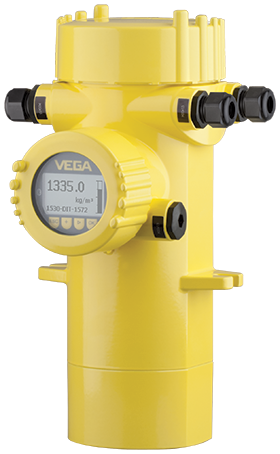
One of the common issues in the slugging process is the formation of plugs that hinder the flow. Cairn Oil & Gas, a subsidiary of Vedanta, utilises multi-density arrays (MDAs) made up of vertically arranged radiometric density sensors in its slug catcher to enhance separation efficiency. The MINITRAC 31 sensors monitor density throughout a vertical range of 0 to 5000 mm using advanced scintillating crystal technology without contact with the process medium. This setup enables real-time data transmission to the control centre, ensuring smooth operations at the Rajasthan field.
Crude control
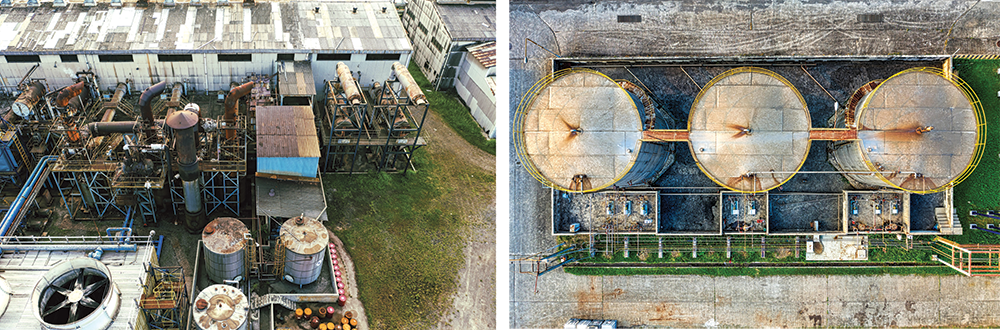
Large oil reserves are becoming increasingly rare, and the costs associated with their development and production continue to rise. As a result, there is a growing interest in enhancing yield. To this end, Cairn Oil & Gas secured a significant area in the Rajasthan desert back in 2002, and tapped into the new Mangala oil field. Despite the remote location and lack of access to water and transport links, this discovery was the largest oil find of the year globally, and India’s biggest onshore discovery in 25 years. The Mangala field has since produced 473 million barrels of crude oil, and Cairn produces nearly 25% of India’s annual crude oil output from this field alone.
Deep insights
The oil from this site is unique due to its waxy characteristics, solidifying quickly upon surfacing. The pipeline, extending about 700 kilometres, is the world’s longest heated crude oil pipeline. Before reaching refineries, the oil is cleaned at the extraction site to remove water, sand and impurities.
Thorough simulations are essential for pipeline construction and designing the slug catcher. Slug catchers manage slug flow, temporarily storing liquids between the pipeline outlet and processing facilities to protect downstream equipment. They rely on droplet separators, which can reach capacity quickly if overloaded.
To prevent solid contaminants from accumulating, the VEGA MDA profiling system monitors density data at various heights within the slug catcher. This ensures efficient separation by accurately tracking the movement of the separation and emulsion layers.
Less maintenance
The measuring system selected by Cairn is designed for minimal maintenance since all detectors are mounted externally on the vessel, avoiding direct contact with the process. A flexible mounting system allows for a straightforward, yet robust, installation and the detectors remain easily accessible for any necessary maintenance. With multiple measuring points operating independently, any issues with a single detector won’t disrupt the performance of the entire system. The ease of use begins even earlier in the process; the rapid commissioning and calibration of the measuring system significantly cut down on startup time and costs. Additionally, extensive diagnostics through the PACTware configuration software, along with its DTM and EDD description technologies, provide a clear and simple overview of the system’s health.
Sensor intelligence
In oil production, yield is influenced by more than just the volume of material that reaches the surface. There’s a growing emphasis on optimising raw materials before they head to the refining stage. This is why Cairn has taken a close look at every step of the crude oil processing journey.
The precise monitoring of separation layers in the slug catcher, facilitated by the radiometric system from VEGA, enables efficient operation of this critical separation process. This reliable measuring system performs effectively in extreme temperatures, preventing excessively large particles from being carried along. It contributes to the protection of downstream processes and components, ensuring the quality of the crude oil is maintained as it moves through pipelines to the sea for loading onto ships for further transport.
| Tel: | +27 11 795 3249 |
| Email: | [email protected] |
| www: | www.vega.com/en/home_za |
| Articles: | More information and articles about VEGA Controls SA |






© Technews Publishing (Pty) Ltd | All Rights Reserved
 printer friendly version