



In my role as market strategy lead at Rockwell Automation and as a World Economic Forum New Generation of Industry Leader and Manager, I’ve seen sustainability shift from being just an important business goal to becoming an essential part of our overall strategy. In today’s business landscape, sustainability is no longer an in-house corporate initiative, it has become a powerful driver of business differentiation. At Rockwell Automation we are not just observing this shift, we are leading it.
We partner closely with customers to embed sustainable, data-driven solutions into their manufacturing operations. This involves meeting environmental targets and also unlocking operational excellence, boosting productivity and fostering real business growth. By transforming sustainability from a compliance necessity into a catalyst for innovation, we help companies gain a strategic edge in a rapidly evolving industrial landscape.
Integrating sustainability deeply
Many organisations treat sustainability as a peripheral workstream that is loosely tied in as a series of isolated projects, and is led by varying teams, reported annually and disconnected from core business operations. Too often, it is approached as a marketable corporate goal or reduced to a compliance checkbox rather than fully integrated into strategic decision making to drive growth.
At Rockwell Automation, we have deliberately forged a different path. We recognise that an impact is achieved when sustainability shifts from a standalone initiative to a deeply integrated business imperative. This is now part of our culture and ethos, shaping how we drive ethical and sustainable growth and customer-centric solutions. Rather than treating it as a separate initiative, we embrace it as a guiding principle that influences our operations and decision making.
Our Triple A Framework for Customer Sustainability meets clients wherever they are on their journey, guiding them through key milestones to enhance both sustainability and productivity in ways that deliver measurable results.
The WEF catalyst
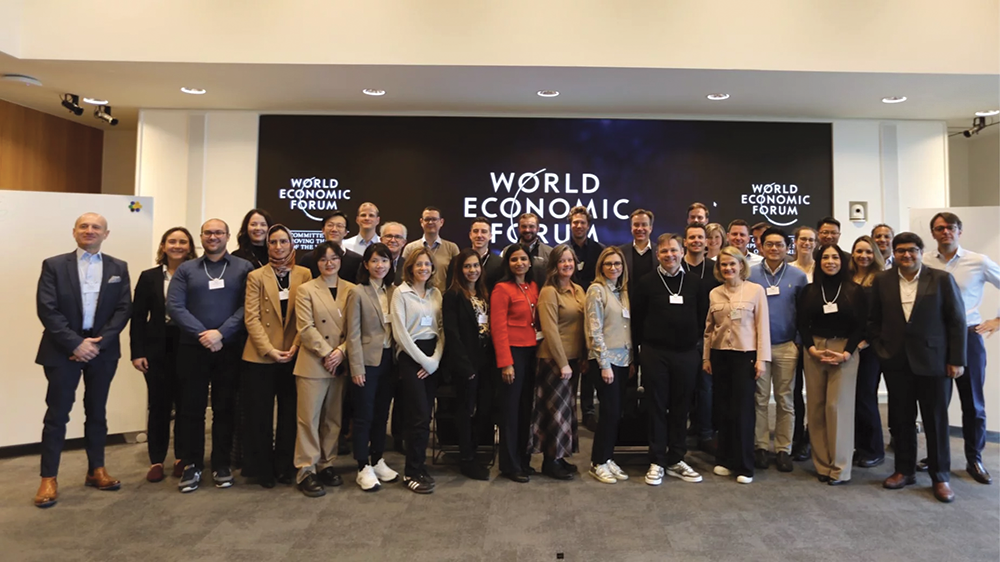
Our sustainability transformation gained momentum through active involvement with the World Economic Forum’s Centre for Advanced Manufacturing and Supply Chains group. This collaboration exposed us to global best practices and innovative approaches that sharpened our strategic focus.
Internally, we moved beyond viewing sustainability as merely a compliance or EHS function, and embraced it as an opportunity to build deeper partnerships with our customers. By collaborating to define their sustainability goals, we deliver solutions that drive meaningful results, tailored to their unique journeys. This shift, from isolated internal projects to integrated customer-centric thinking, was profoundly influenced by insights gained through our World Economic Forum engagement.
Internally, we have evolved from viewing sustainability as merely a compliance function to embracing it as an opportunity for deeper customer partnerships. In July 2021, Rockwell formally established a dedicated sustainability team focusing on three pivotal areas: sustainable company, sustainable customers and sustainable community.
I was brought onboard to spearhead the sustainable customer strategy within Rockwell’s Lifecycle Services group. A key achievement has been developing our industry-first Sustainability Calculator for Repairs, which empowers the circular economy by encouraging customers to repair rather than replace industrial assets.
Three principles for sustainability leadership
Through my work and participation in the World Economic Forum’s program, I have developed three core principles that guide both our delivery and my leadership:
Creating value, not just managing costs
We have moved beyond viewing sustainability as regulatory compliance or corporate social responsibility. Those are still very important pillars but now it is also seen as a powerful engine for innovation and competitive advantage. By redesigning processes with sustainability in mind, we have unlocked efficiencies that reduced both environmental impact and operational costs.
For example, companies choosing to repair existing assets rather than buying new can achieve an estimated 90% reduction in avoided CO2 equivalent scope 3 emissions. Our Sustainability Calculator quantifies this impact, creating reports that companies can use to track progress toward their goals. This creates a compelling business case where sustainability and profitability reinforce each other.
Embedding sustainability into everyday operations
At Rockwell, we are taking practical steps to integrate sustainability into the core of how we work, without isolating it to a single department. We are embedding sustainability considerations into existing business processes. This includes:
• Using supplier scorecards that evaluate environmental performance
• Expanding Design for Sustainability practices within product development
• Incorporating Life Cycle Assessment data and emerging Digital Product Passport standards
These tools help inform better decision making throughout the product lifecycle. This approach makes sustainability a natural part of our workflows, metrics and everyday business conversations. This deeper visibility into the environmental impact of our products helps to inform better decision making, from sourcing and design to deployment, ongoing use and end of life.

Digital Innovation is the accelerator for sustainability
One of our most powerful realisations has been recognising how digital transformation and sustainability reinforce each other. Our Industrial IoT platforms provide visibility into resource consumption, emissions and waste across complex manufacturing systems, allowing clients to identify sustainability opportunities they never knew existed.
This data-driven approach is already delivering results. At our Singapore manufacturing facility, we use our own technologies to enhance resilience, agility and sustainability through:
• Autonomous mobile robots/ AMRs
• Advanced automation and AI-guided troubleshooting
• Real-time applications for smart energy management
• Automated temperature and humidity controls
By embedding these digital tools into operations, we transform sustainability into a tangible advantage.
Sustainability as a mindset
Our journey is dynamic and ongoing. As industrial leaders, we have a responsibility to continuously push boundaries and challenge outdated assumptions about the relationship between industrial growth and environmental stewardship. The perceived conflict between profitability and sustainability disappears when sustainability becomes an ingrained business mindset rather than just a compliance strategy.
To organisations still treating sustainability as a siloed initiative, I offer this perspective: sustainability is not just something you do, it is a way you think. When it permeates every business decision, from supply chain management to product development to customer engagement, it becomes a powerful catalyst for innovation, resilience and enduring value creation.
A global perspective
My participation in the World Economic Forum’s programme has reinforced this perspective and broadened my understanding of how this integrated mindset applies across diverse industries and cultures. Through collaboration with fellow leaders worldwide, I have gained valuable insights into varied global sustainability challenges.
Despite current complexities and political headwinds, connecting with peers who face similar challenges has been profoundly affirming. Many of our common obstacles find solutions rooted in systems thinking and digital innovation, driven by people committed to positive change.
I invite you to consider how your organisation might transform sustainability from a compliance exercise into a strategic advantage. What opportunities exist to integrate sustainable thinking into your core operations? What data is already available that you may leverage to provide sustainability-focus insights? The companies that answer these questions effectively will be the ones that thrive in tomorrow’s business landscape.
| Tel: | +27 11 998 1000 |
| Email: | mjunius@rockwellautomation.com |
| www: | www.rockwellautomation.co.za |
| Articles: | More information and articles about Rockwell Automation |






© Technews Publishing (Pty) Ltd | All Rights Reserved
 printer friendly version