



Buildings may be getting smarter, but too many control rooms are still anchored to yesterday’s technology: on-site servers, rigid architectures and a patchwork of interfaces that are expensive to run and painfully slow to evolve.
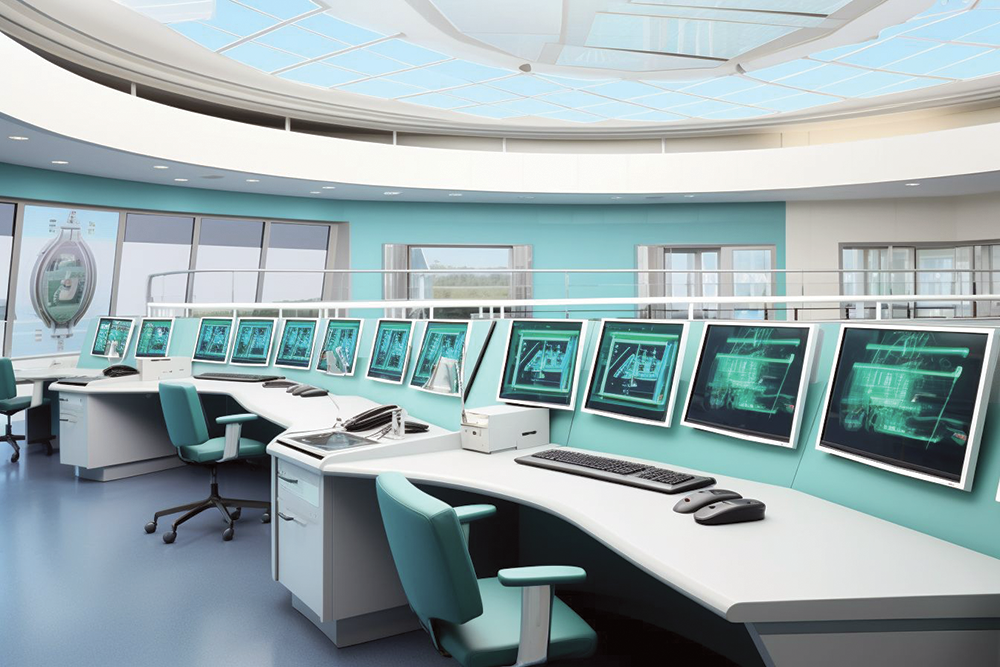
While many modern buildings are marketed as ‘smart’, much of today’s building management system (BMS) infrastructure is rooted in ageing, server-bound control rooms. These legacy environments struggle to deliver the resilience, scalability and intelligence demanded by an increasingly connected, data-driven built environment. This leaves facility teams constrained by hardware that cannot evolve at the pace of operational or regulatory change.
Virtualisation in BMS is breaking that deadlock. By shifting core BMS functions onto flexible, IT-friendly infrastructure, owners gain a centrally deployed, cloud-ready environment that is easier to update, faster to recover and far more secure. Hardware and software are finally decoupled, allowing portfolios to standardise, scale and respond to regulatory or operational change with unprecedented agility.

Fundamental shift in building operations
The move toward virtualised, cloud-ready BMS platforms marks far more than a technical refresh. It represents a fundamental shift in how buildings are operated, secured and optimised, replacing brittle, hardware-centric systems with agile digital architectures that can adapt, scale and strengthen resilience across entire portfolios.
As buildings grow more complex, traditional BMS architectures cannot keep pace. Scaling a legacy system, whether by adding devices, integrating new subsystems or extending control across multiple sites, demands new hardware, manual configuration and costly on-site intervention. Even routine upgrades or recovery processes are fragmented and tied to physical infrastructure, creating unnecessary delay and risk.
Virtualisation breaks this pattern as cloud-enabled BMS platforms deliver elastic scalability, automated updates and built-in redundancy, allowing systems to adapt, expand and recover without disruption. Facility teams gain a resilient digital foundation that evolves as quickly as their operational needs.
Impact on day-to-day operations
The impact of virtualisation is most evident in day-to-day operations. Cloud-enabled platforms allow facility teams to oversee multiple sites from a single interface, improving visibility and ensuring consistent performance across entire portfolios. Integrated analytics and automation support faster response times and predictive maintenance, reducing downtime and preventing costly failures before they occur.
In practical terms, virtualisation delivers measurable gains, fewer outages, lower maintenance overheads and far simpler multi-site management. It replaces fragmented, reactive workflows with a unified operational model that is both more efficient and more resilient.
Cybersecurity is often raised as a concern in connected buildings, yet it is frequently the legacy systems that pose the greatest risk. Many still depend on outdated protocols and inconsistent patching practices that leave critical infrastructure exposed. Modern, cloud-ready environments offer a far stronger security posture, with encryption, multi-factor authentication and continuous monitoring built in from the outset.
Distributed cloud architectures also minimise the impact of single-site failures or targeted attacks through redundancy and segregation, creating a more resilient and defensible operational landscape.
Organisational barriers to adoption
One of the biggest barriers to adopting virtualised BMS is organisational. For decades, building management has been treated as a standalone facilities function, separate from the disciplines and governance frameworks that shape enterprise IT.
As buildings evolve into digital platforms, that separation becomes untenable. Real value emerges only when IT and operational teams work in concert, shifting from infrastructure-focused thinking to outcome-driven, portfolio-wide strategies. This demands shared ownership, clearer accountability and a mindset oriented toward integrated, enterprise-level platforms rather than isolated systems.
Looking ahead, cloud-native BMS platforms are becoming the foundation for a new generation of building services. With real-time data flowing into cloud environments, organisations can apply artificial intelligence to predict failures, optimise energy use and automate performance across entire estates. At the portfolio level, operators can benchmark sites, orchestrate resources and manage buildings remotely from centralised operations centres.
The traditional control room, once defined by alarms and manual intervention, is evolving into a strategic hub for analytics, optimisation and informed decision making, reshaping how buildings are run in a digital era.
| Tel: | +27 11 254 6400 |
| Email: | [email protected] |
| www: | www.se.com/za/en/ |
| Articles: | More information and articles about Schneider Electric South Africa |






© Technews Publishing (Pty) Ltd | All Rights Reserved
 printer friendly version