



Authorities like the South African Health Products Regulatory Authority (SAHPRA), the FDA (in the USA), and the EMA (in Europe) impose strict requirements on pharmaceutical and cosmetic packaging. Companies must document and validate every stage of the process, ensuring that product handling, storage and filling meet hygiene and safety standards. Different products behave differently during packaging. Thick creams or gels may stick to equipment, while powders can become airborne and cause contamination.

Liquids can generate foam or bubbles, which affect accurate level measurement in holding tanks. Maintaining sterility is critically important. Equipment used for bulk packaging must be easy to clean and resistant to cross-contamination. Any error in packaging can lead to costly recalls or reputational damage. Pumps, sensors and valves must handle constant use without degradation. Some pharmaceutical ingredients are corrosive, abrasive or sensitive to temperature, which makes choosing the right instrumentation essential. Manufacturers must balance speed and accuracy. A slow process leads to inefficiency and higher costs, but rushing can cause spillage, incorrect filling or safety hazards. Bulk packaging lines must integrate seamlessly with upstream production and downstream distribution. Any bottleneck in the process can disrupt the entire supply chain. This is why choosing the right instrumentation, such as the VEGAFLEX 83 for level measurement, helps manufacturers navigate these challenges with accuracy, reliability and compliance.
Think about bulk packaging. Maintaining exact levels in batch holding tanks during filling is not an option or nice to have, it is essential. Accurate level measurement ensures that each batch meets the specified volume, maintaining product consistency and preventing overfilling or underfilling, which can lead to significant financial losses and regulatory issues. The VEGAFLEX 83 guided wave radar sensor offers an exceptional solution to these challenges. Designed for continuous level and interface measurement, this sensor operates reliably, even in conditions that typically thwart other measurement technologies. Its ability to function unaffected by steam, buildup, foam or condensation makes it particularly suitable for the complex environments found in pharmaceutical packaging.
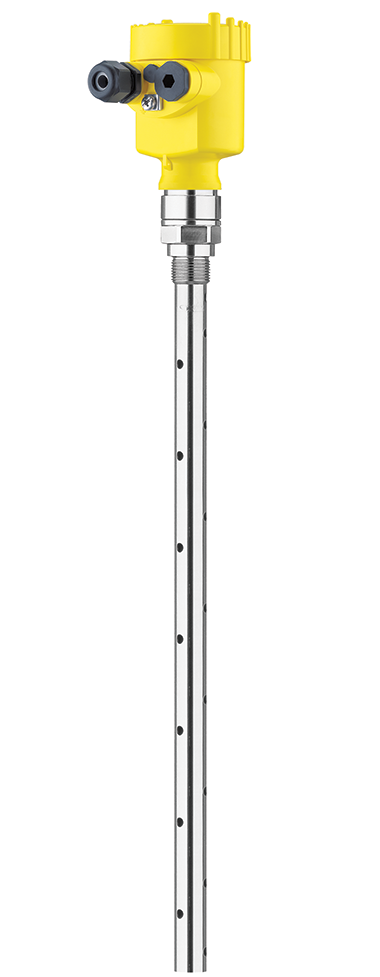
The VEGAFLEX 83 uses high-frequency microwave pulses guided along a probe. When these pulses encounter the product surface, they are reflected to the sensor, allowing for precise level measurement. This method ensures accuracy, regardless of the medium’s properties such as density or temperature, which can vary significantly during different stages of production. For instance, in batch holding tanks where the product may foam or generate condensation, the VEGAFLEX 83 continues to provide reliable data, ensuring that each batch is processed correctly.
Adherence to regulatory standards is a critical aspect of pharmaceutical manufacturing. In South Africa, SAPRAH mandates strict compliance with hygiene and safety protocols. The VEGAFLEX 83 is designed with these regulations in mind, featuring a gap-free hygienic design that ensures simple and reliable cleanability. This design minimises the risk of contamination, a crucial factor in maintaining product integrity and meeting SAHPRA’s stringent standards.
The sensor’s maintenance-free operation enhances plant efficiency. In an industry where interruptions can be costly, the reliability of the VEGAFLEX 83 ensures continuous operation without the need for frequent maintenance interventions. Its durable construction and advanced technology reduce the likelihood of sensor failure, thereby supporting uninterrupted production schedules.
Implementing the VEGAFLEX 83 in batch holding tanks during the filling process exemplifies its practical benefits. Accurate level measurement prevents overfilling, which can cause spillage, waste and potential safety hazards. Conversely, underfilling can lead to product shortages and inconsistent quality.
By providing precise level data, the VEGAFLEX 83 ensures that each batch is filled to the correct volume, maintaining consistency and quality across the production line. The sensor’s guided adjustment feature enables a simple, time-saving and reliable setup. This ease of installation allows for quick integration into existing systems, minimising disruption during implementation. Once operational, the VEGAFLEX 83 delivers continuous, real-time data, empowering operators to make informed decisions and promptly address any issues that may arise during the filling process.
VEGA’s level and pressure instrumentation, exemplified by the VEGAFLEX 83, plays a fundamental role in optimising bulk packaging processes in pharmaceutical and cosmetics manufacturing. By ensuring accurate level measurement in batch holding tanks, these instruments uphold product quality, enhance operational efficiency and ensure compliance with regulatory standards. In an industry where accuracy and hygiene are non-negotiable, VEGA provides the tools necessary to meet these demands, supporting manufacturers in delivering safe and effective products to the market.
| Tel: | +27 11 795 3249 |
| Email: | [email protected] |
| www: | www.vega.com/en/home_za |
| Articles: | More information and articles about VEGA Controls SA |






© Technews Publishing (Pty) Ltd | All Rights Reserved
 printer friendly version