



New research commissioned by Lenovo reveals that data centre design must evolve to future-proof businesses across EMEA. From powering AI workloads efficiently to meeting urgent sustainability and compliance demands, traditional data centre designs are falling short, with nearly half of IT leaders admitting their current infrastructure does not support energy or carbon-reduction goals.
At the same time, an overwhelming 99% of IT and C-level decision makers in the region say data sovereignty will be important to how data is collected, stored and processed in the years ahead. And while AI continues to accelerate data usage across industries, many organisations are still struggling to implement the technology effectively or power it sustainably, highlighting the growing gap between digital ambition and infrastructure reality.
Lenovo undertook the ‘Data Centre of the Future’ study in partnership with Opinium to provide a blueprint for the key factors influencing the future design, technology and location of data centres. It comes as the data centre market grows and energy usage, sustainability and costs become critical considerations for IT decision makers in EMEA.
Sustainability readiness gap requires a new approach
92% of IT decision-makers prioritise technology partners who reduce energy use and carbon footprint, yet only 46% say their current data centre design supports sustainability goals. This gap underscores the growing environmental pressures of AI, automation and exponential data growth, with traditional cooling systems (such as air cooling) struggling to balance efficiency, cost and carbon reduction.
Data sovereignty is important for 99%
With 88% of IT decision makers already viewing data sovereignty as a priority, and nearly 99% expecting it to remain important over the next five years, it’s clear that compliance and control over where data resides will define future data centre design. At the same time, 94% highlight low latency as a key requirement today and in the years ahead, driven by the growth of real-time applications and edge computing.
Powering AI at scale to define the data centre future
90% of IT decision makers believe AI will significantly increase organisational data usage in the next decade, and 62% expect AI and automation to have the greatest impact on IT strategy. Yet, despite the promise, 41% admit their organisation is not prepared to integrate AI efficiently.
“The data centre of the future will be defined by how effectively it can scale for AI, deliver on sustainability targets, and operate with maximum energy efficiency,” said Simone Larsson, head of enterprise AI, EMEA at Lenovo. “As demand for compute accelerates, customers will increasingly look to infrastructure partners who can deliver performance without compromise and who take responsibility for reducing environmental impact.
“In EMEA, data sovereignty stands out as a particularly urgent priority, shaped by complex regional regulations and heightened scrutiny from CIOs and C-suites alike. Businesses must act now to align their infrastructure with these rising expectations, because preparing for the future starts with the choices they make today.”
Designing the data centre of 2055
Lenovo has worked with engineering firm AKT II and architects Mamou-Mani to consider how data centres could look in 30 years, as their importance to our personal and working lives continues to grow and energy demand increases. The concepts take the rack server data centre model and leverage water cooling technology to boost their sustainability, while also making use of natural resources, disused spaces and unexpected locations to solve the challenges and meet the needs of their users. The designs include:
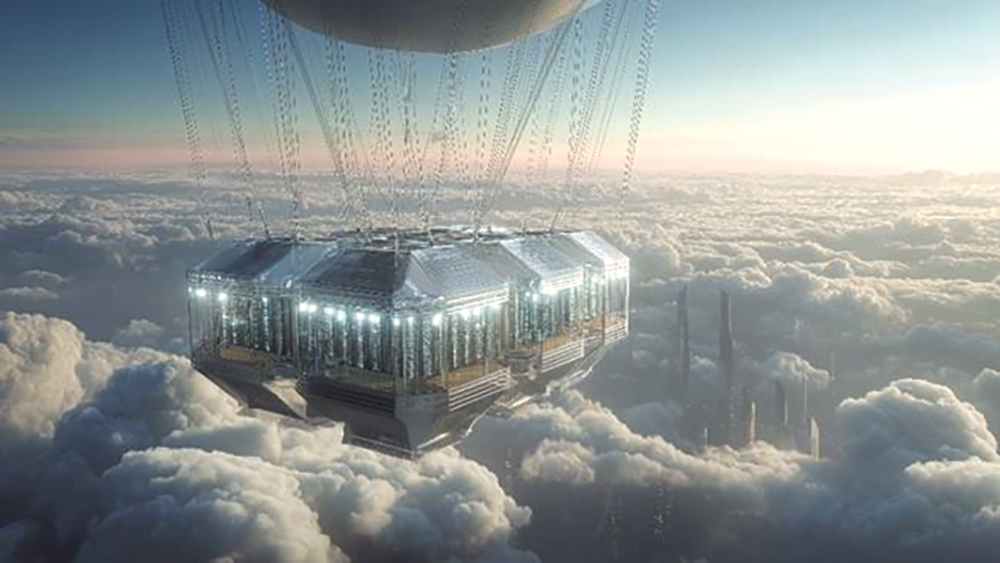
The floating cloud: A novel concept involving the suspension of the data centre in the air, at an altitude of 20 to 30 km (safely away from commercial aircraft), with 24/7 energy from solar power and using pressurised closed liquid cooling loops to prevent air pollution. Smaller modules make the design feasible for floating in the air.
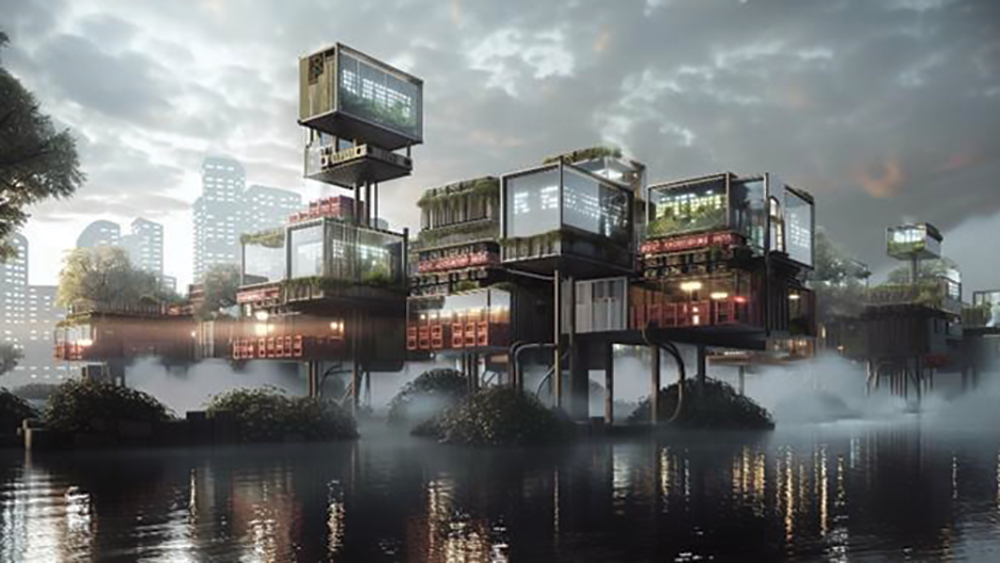
The data village: Located close to water sources such as rivers or canals, the data village involves a modular, stackable brick or pod system of data centres linked to city needs. This location benefits from enhanced liquid cooling and the ability to transfer waste heat to power or heat local amenities like schools or homes, as well as reducing latency thanks to its proximity to key locations. This model also extends into a data spa. Powered by geothermal energy, this concept blends into natural landscapes (such as a valley, lagoon or geothermal pools), creating a biophilic data centre with low visual impact.
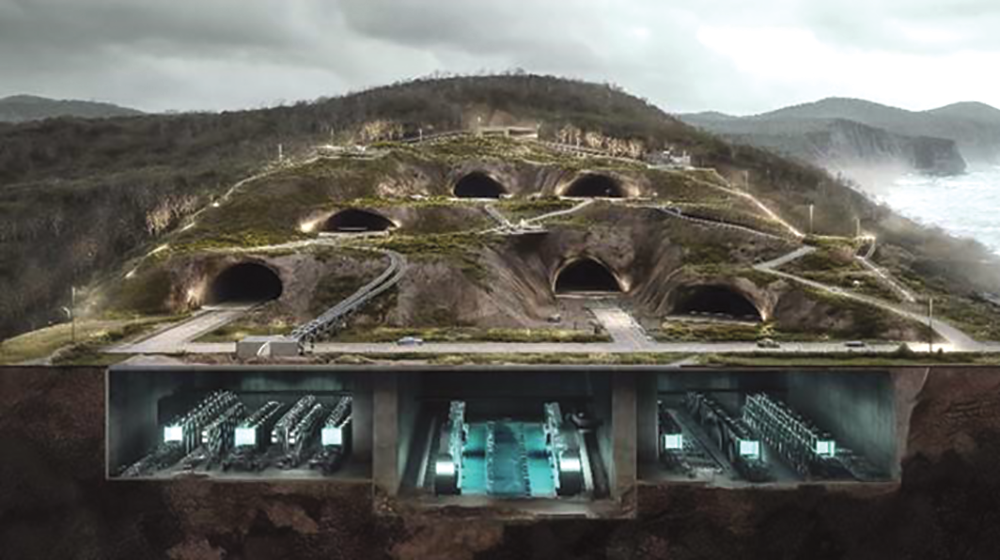
The data centre bunker: Utilising disused tunnels, bunkers or transport systems, the data centre bunker places the technology underground to minimise the need for new spaces to increase capacity. This reduces land use while allowing for facilities to be set up in central locations with a lower impact. Benefitting from enhanced security resilience, the subterranean location creates a naturally efficient heat management system.
Importantly, all of the concepts would require and have been designed to incorporate liquid cooling technology to address the issue of heat in data centres and the limitations of traditional air cooling. Liquid cooling uses less energy than air cooling, increasing the efficiency and sustainability of the concepts.
“As architects and engineers, we have a responsibility to make data centres better, not just bigger. The Data Centre of the Future project combines the evolving needs of businesses with practical pathways, from reusing mines and bunkers to high-altitude cloud modules, urban data villages and data spas that pair server heat with public amenities”, said James Cheung, partner at Mamou-Mani. “Based on Lenovo’s liquid cooling technology, we show how natural resources and existing locations can reduce overheads and return energy to communities. While we don’t have a crystal ball to show exactly what the future holds for data centres, this playbook provides a glimpse of concepts that could move from ideas to pilots, faster and with less risk.”
To meet the dual challenges of increasing compute demand and stricter sustainability requirements, organisations must begin optimising their infrastructure today. Liquid cooling technology offers a tangible and effective solution, and with Lenovo Neptune liquid cooling, 98% of system heat can be removed directly at the source. Neptune also significantly reduces energy consumption and reliance on traditional air-based cooling methods. As businesses scale their use of AI and advanced analytics, Neptune solutions offer a future-ready platform that aligns with both performance objectives and environmental commitments.
“Lenovo is committed to enabling smarter, more sustainable infrastructure at scale,” Larsson added. “With Neptune liquid cooling technology, we’re already helping customers address the rising energy demands of AI by integrating liquid cooling solutions that are both highly efficient and immediately deployable. Future-ready data centres require a shift in mindset, one where sustainability is not retrofitted, but engineered into the system from the very beginning.”
For more information contact Lovejoy Shangase, Burson Global,






© Technews Publishing (Pty) Ltd | All Rights Reserved
 printer friendly version