



Digitalisation has become a defining factor in how the process industry evolves. Across sectors such as chemicals, food and beverage, water and wastewater, mining, metals and life sciences, companies are under increasing pressure to operate more efficiently, sustainably and safely, while managing rising complexity and skills shortages. Digital technologies provide the foundation to meet these challenges by unlocking data, improving transparency and enabling better decision making across the entire lifecycle of industrial assets.
For decades, automation has helped improve productivity and quality in industrial processes. Today, digitalisation takes this a step further; by connecting field devices, systems and people, it creates new opportunities to optimise operations, enhance maintenance strategies and support continuous improvement. As a leading instrumentation provider and major source of process data, Endress+Hauser plays a key role in enabling this transformation by delivering reliable, validated and easily accessible information throughout the plant lifecycle.
Why digitalisation matters in the process industry
Process installations generate vast amounts of data every day, from measurement values and diagnostics to asset health information and operational parameters. Historically, much of this data has remained underutilised, locked away in isolated systems or available only locally. Digitalisation changes this by making data accessible where and when it is needed, enabling companies to move from reactive to proactive and data-driven operations.
Digital tools allow organisations to gain real-time insights into their processes, identify inefficiencies early and respond faster to deviations. This improves productivity, reduces downtime and supports more consistent product quality. At the same time, digitalisation helps address key challenges such as aging infrastructure, increasing regulatory requirements and the need for greater flexibility in production.
Digitalisation isn’t the end goal. Its value lies in how effectively data is transformed into actionable insights that support operational excellence, sustainability goals and long-term competitiveness. This requires a structured approach that aligns technology, processes, and people.
A structured approach to digitalisation
Endress+Hauser’s digitalisation strategy follows a structured, incremental approach designed to support customers at different stages of their digital journey. Rather than treating digitalisation as a single project, it is addressed as a continuous process that evolves over time.
The digitalisation focus topic is organised into clearly defined sub-topics and increments, each addressing specific aspects of industrial digitalisation. This approach ensures that content and solutions remain relevant, practical and aligned with real customer needs. Once published, digital content is continuously monitored and refined to reflect technological developments and changing market requirements.
This structure also recognises that digital transformation looks different for every organisation. Factors such as industry, plant maturity, installed base and business objectives all influence how digitalisation is implemented. A modular, step by step approach allows companies to start where it makes sense for them, and scale over time.
Productivity at the core of digitalisation
Productivity is at the heart of digitalisation in the process industry. By connecting devices and systems, digital technologies enable a more transparent and responsive production environment. Real time access to process data supports faster decision making and helps operators and engineers identify optimisation potential across the plant.
Digital workflows streamline daily tasks, reduce manual effort and improve collaboration between operations, maintenance and engineering teams. This not only increases efficiency, but also enhances workplace safety by reducing the need for manual interventions in hazardous environments.
At the same time, productivity gains must be balanced with reliability and security. As plants become more connected, ensuring data integrity and operational continuity becomes increasingly important. Digitalisation, therefore, goes hand in hand with robust cybersecurity measures and clearly defined responsibilities across IT and OT environments.
Ethernet-based communication as a foundation
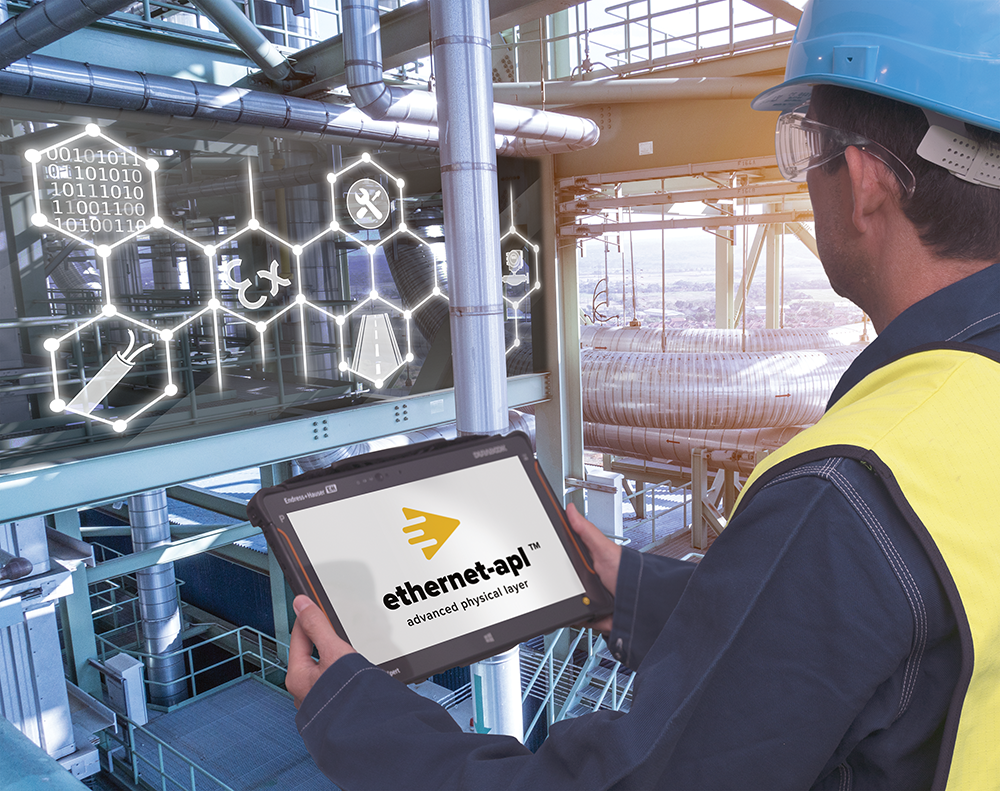
One of the key building blocks of industrial digitalisation is reliable and high performance communication infrastructure. Ethernet-based communication environments provide the foundation for seamless data exchange from the field level to higher level systems.
Industrial Ethernet enables faster data transmission, standardised communication and improved interoperability between devices and systems. It supports remote access, simplifies integration and creates the basis for advanced applications such as condition monitoring, predictive maintenance and digital services.
By extending Ethernet communication into the field, including hazardous areas, companies can unlock previously inaccessible data and create a more transparent and connected production environment. This connectivity is essential for scaling digital solutions and ensuring long term flexibility in process installations
Smarter maintenance through digitalisation
Maintenance is one of the areas where digitalisation delivers particularly tangible benefits. Traditional maintenance strategies often rely on fixed intervals or reactive responses to failures. Digitalisation enables a shift toward predictive and preventive maintenance approaches based on real-time condition data and diagnostics.
By continuously monitoring asset health, maintenance teams can detect early signs of wear or malfunction and take targeted action before failures occur. This reduces unplanned downtime, extends asset lifecycles and helps optimise maintenance resources.
Digital maintenance strategies also improve planning accuracy and support better coordination between maintenance and operations. Maintenance KPIs become more transparent and actionable, enabling continuous improvement and cost control. As a result, plants achieve higher reliability and more stable production performance over time.
Cybersecurity as an integral part of digitalisation
As digitalisation increases connectivity across the plant, cybersecurity becomes a critical success factor. Protecting industrial systems against cyber threats is essential to ensure safety, availability and data integrity.
In the process industry, cybersecurity requires a balanced approach that addresses both IT and OT requirements. Digitalisation initiatives must be designed with security in mind from the outset, incorporating secure communication, access control, and system segmentation. By integrating cybersecurity into digitalisation strategies, companies can confidently leverage digital technologies while minimising risk. This creates a trusted environment in which data can be shared and used effectively across the organisation without compromising operational continuity.
Digitalisation across the asset lifecycle
Digitalisation delivers value across the entire asset lifecycle, from engineering and commissioning to operation, maintenance and modernisation. During engineering, digital tools support better planning, documentation and configuration management. In operation, they provide real-time insights and transparency. During maintenance, they enable proactive strategies and informed decision making.
Over time, digital data also supports continuous optimisation and modernisation efforts. Insights gained from operating data can be used to improve process design, reduce energy and resource consumption, and support sustainability initiatives.
By taking a lifecycle perspective, digitalisation helps companies protect their investments and adapt to changing requirements without unnecessary complexity.
Enabling digital transformation with Endress+Hauser
Endress+Hauser supports digital transformation in the process industry by combining deep application expertise with reliable instrumentation, connectivity solutions and digital services. By delivering high quality process data and making it accessible in a secure and structured way, Endress+Hauser helps customers turn information into value.
Rather than focusing on isolated technologies, the emphasis is on practical, scalable solutions that address real operational challenges. This approach ensures that digitalisation delivers measurable benefits, improving productivity, reliability and sustainability while supporting long-term business goals.
Digitalisation is not a one-time initiative, but an ongoing journey. With the right strategy, tools and partners, process industry companies can take meaningful steps toward smarter, more efficient and future-ready operations.
| Tel: | +27 11 262 8000 |
| Email: | [email protected] |
| www: | www.endress.com |
| Articles: | More information and articles about Endress+Hauser South Africa |






© Technews Publishing (Pty) Ltd | All Rights Reserved
 printer friendly version