



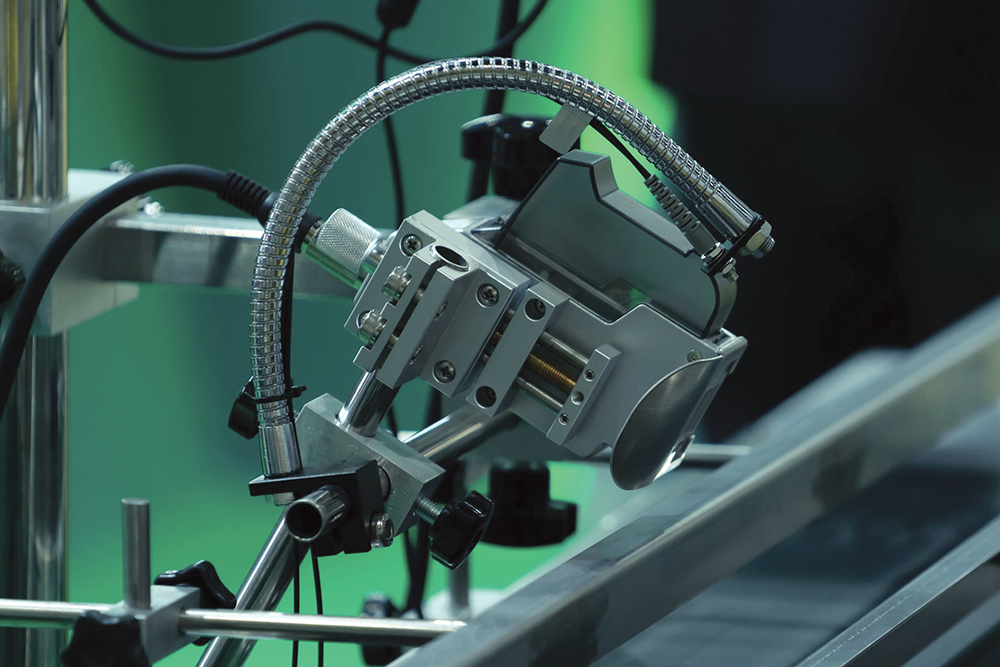
Fibre-optic sensing has revolutionised the way we monitor and measure various physical parameters. From temperature and strain to pressure and acoustic waves, fibre-optic sensors can provide accurate and real-time data in a variety of applications. But what makes fibre-optic sensing so effective? One key factor is the use of contrast. In this article, we explore the importance of contrast in fibre-optic sensing and how it contributes to the success of this powerful technology.
The role of contrast in fibre-optic sensing
Contrast is a crucial element in fibre-optic sensing, as it allows for the detection and measurement of small changes in physical parameters. In simple terms, contrast refers to the difference between the light signal that is transmitted through the fibre and the light signal that is received at the other end.
Optical sensors and contrast
Optical sensors are the key components of fibre-optic sensing systems. They are responsible for converting physical parameters into changes in light signals that can be measured and analysed. The use of contrast in optical sensors is essential, as it allows for the detection of small changes in the physical parameter being measured. Without contrast, these changes would be undetectable, and the accuracy and reliability of the sensor would be compromised.
Distributed fibre-optic sensing and contrast
Distributed fibre-optic sensing (DFOS) is a technique that allows for the measurement of physical parameters along the entire length of an optical fibre. This is achieved by using a special type of fibre known as a sensing fibre, that is capable of detecting changes in physical parameters at multiple points along its length.
Contrast plays a critical role in DFOS as it allows for the differentiation between the light signals that are transmitted and received at different points along the fibre. This enables the accurate measurement of physical parameters at specific locations, providing a detailed and comprehensive understanding of the environment being monitored.
How contrast impacts fibre-optic sensing for production lines
Contrast plays a crucial role in the effectiveness of fibre-optic sensors used on a production line. This is how contrast impacts their effectiveness:
Signal-to-noise ratio: Contrast helps in achieving a high signal-to-noise ratio, which is essential for accurate and reliable sensing. A high contrast between the transmitted and received light signals allows for better detection of changes in physical parameters. This reduces the impact of noise or interference on the sensor readings, resulting in more precise measurements.
Sensitivity and accuracy: By maintaining a high contrast, fibre-optic sensors can achieve higher sensitivity and accuracy. The ability to differentiate between different light signals enables the sensor to detect even slight changes in physical parameters. This level of sensitivity is crucial for monitoring and controlling processes on a production line, ensuring optimal performance and quality control.
Spatial resolution: Contrast also affects the spatial resolution of fibre-optic sensors. A higher contrast allows for better differentiation between signals received at different points along the fibre, enabling more precise location-specific measurements. This is particularly important in applications where it is necessary to monitor specific sections or components of the production line.
Dynamic range: Contrast influences the dynamic range of fibre-optic sensors. A wider dynamic range allows the sensors to accurately measure a broad range of physical parameters. This is especially important in production line environments where there may be significant variations in the parameters being monitored.
On a production line, contrast ensures a high signal-to-noise ratio, improves sensitivity and accuracy, enhances spatial resolution, and expands the dynamic range of the sensors. These factors contribute to reliable and accurate monitoring, control and quality assurance in production line processes.
When it comes to conquering low or difficult contrast sensing challenges, Tri-Tronics sensors are the unrivalled choice. Its extensive selection ensures you will find the ideal fibre-optic sensor tailored to your needs.
| Tel: | +27 11 454 8053 |
| Email: | sales@vepac.co.za |
| www: | www.vepac.co.za |
| Articles: | More information and articles about Vepac Electronics |






© Technews Publishing (Pty) Ltd | All Rights Reserved
 printer friendly version