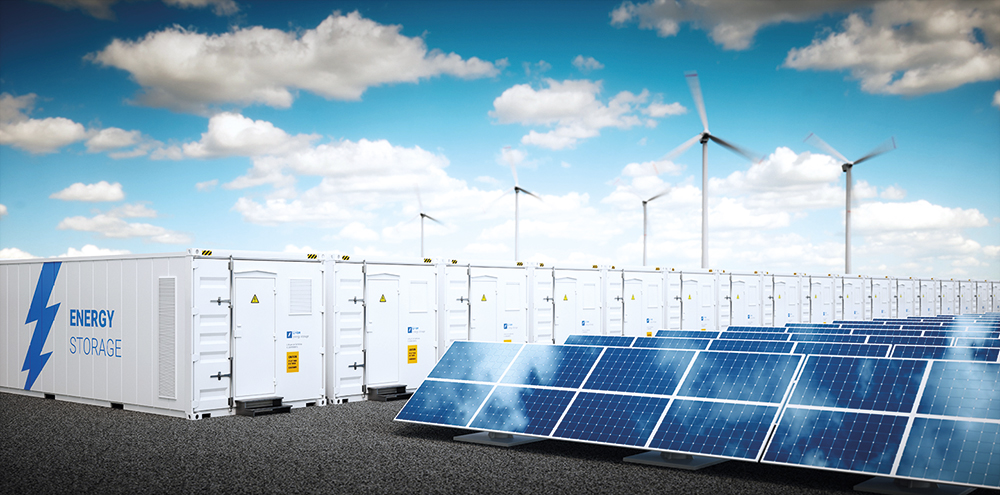
As the sun sets on coal power, we are seeing the rise of large-scale battery energy storage systems (BESS), together with a surge in renewable energy capacity. Bridging a century-long technological divide, industry pioneers are merging innovative battery storage technology with established grid systems. Optimising grid balance and ensuring smooth operation of storage devices is no small task. So what is their secret to ensuring a successful energy transition? The answer is simple: data.
Across industry, monitoring and control systems such as battery management systems (BMS) and energy management systems (EMS) are becoming as crucial to energy storage as the batteries themselves. Understanding the complex language of system data is the first step in making these systems effective. Specialist knowledge is key to collecting and interpreting the data that powers operational technology (OT).
Although data is a powerful tool, it must be leveraged effectively for reliable operation and growth. Here are four distinct data challenges that BESS must grapple with:
The insufficient data dilemma
BESS is more than just battery storage. Fire suppression systems, air conditioning, and power conservation systems can also fall under this segment. However these different types of equipment often use differing data communication protocols and interfaces. As a result, getting comprehensive status information from these critical devices can be challenging.
The unusable data puzzle
A 6/12 metre battery cabinet generates a large amount of data each minute, including temperature readings, voltage levels and current measurements. Avoiding bandwidth and processing inefficiencies, while sorting useful data from noise, can be a monumental task.
The incomplete data conundrum
BESS is important for managing grid stability, and there is great demand for real-time regulation and site information. For example, efficient use of stored wind and solar energy requires long-term monitoring and analysis of BESS system data, while grid stability requires real-time automatic frequency control. Both applications require comprehensive, high-speed data transmission, which can be facilitated by long-distance communication and rapid fallback networks.
The insecure data quandary
BESS connects power generation, transmission and distribution. This interconnectivity can result in a larger attack surface for cyberattacks. To minimise vulnerabilities and protect the power grid, robust security protocols are a must for system suppliers.
Overcoming these four data challenges is crucial for the reliable operation and growth of BESS. These systems must adapt to the changing energy market to enhance the efficiency, reliability and security of the energy supply.
Africa’s net-zero ambition must become operational Schneider Electric South Africa
Electrical Power & Protection
Schneider Electric’s Rohit Chashta argues that the biggest gap in Africa’s green transition is not ambition but execution, and outlines how advisory services, bankable project roadmaps, digital visibility and SF6-free switchgear can turn sustainability commitments into measurable progress.
Read more...High-efficiency half-brick DC-DC converters Vepac Electronics
Electrical Power & Protection
The Supreme series half-brick DC-DC converters from Vepac Electronics use synchronous rectification for high conversion efficiency, in a six-sided metal case built to withstand harsh industrial and transportation environments.
Read more...Zinc-based batteries power a more sustainable energy future
Electrical Power & Protection
Zinc-based batteries are gaining ground as a safe, recyclable and cost-effective energy storage option, from consumer electronics to grid-scale systems. The International Zinc Association’s Simon Norton explains why zinc is well placed to support the clean energy transition.
Read more...Energas introduces lower-cost German gas genset for South African market
Electrical Power & Protection
Energas Technologies will supply R Schmitt Enertec’s new Energy Line genset to the South African market, offering German-engineered gas-to-power generation of 400 to 500 kW at a lower entry cost through focused standardisation and a simpler standalone architecture.
Read more...ACTOM plays key role in large transmission substation project in Swellendam ACTOM Electrical Machines
Electrical Power & Protection
ACTOM has been appointed to engineer, procure, construct and commission the 1000 MVA main transmission substation for the Overberg Wind Farm in Swellendam, one of the largest substations of its kind in South Africa.
Read more...Reliable power conversion from high-voltage DC buses Conical Technologies
Electrical Power & Protection
The MEAN WELL DDRH-240 from Conical Technologies is a high-reliability DIN-rail DC-DC converter with a wide 250 to 1500 V DC input range, deriving stable low-voltage power directly from high-voltage DC buses in renewable energy, storage, charging, railway and industrial installations.
Read more...AES maintains a strong value and safety stance on boiler retrofits
Electrical Power & Protection
AES Commercial Director Dennis Williams explains when a boiler retrofit makes more sense than replacement, outlines the range of efficiency and emissions upgrades available, and draws the line at safety: a boiler not legally signed off is shut down, no exceptions.
Read more...The grid needs to become more intelligent Schneider Electric South Africa
Electrical Power & Protection
South Africa’s power grid is becoming bidirectional and far more dynamic as distributed energy resources proliferate. Schneider Electric’s Nishandra Bajinath explains why digitalisation, DERMS and aggregation are essential to keep this increasingly complex grid stable and efficient.
Read more...ACTOM’s integrated electrical solutions reduce project risk and accelerate delivery
Electrical Power & Protection
ACTOM has secured multiple orders across four divisions for the Naos-1 hybrid solar and battery project in the Free State, demonstrating its integrated model for supplying the full electrical chain from high-voltage equipment to distribution transformers.
Read more...Smarter energy management starts with intelligent electrification ABB South Africa ABB Electrification Products
Electrical Power & Protection
ABB Electrification specialists Adeline Maleka and Nokulunga Dube explain how the convergence of electrification, digitalisation and automation is helping South African industries gain real-time visibility, reduce energy waste and build operational resilience.
While every effort has been made to ensure the accuracy of the information contained herein, the publisher and its agents cannot be held responsible for any errors contained, or any loss incurred as a result. Articles published do not necessarily reflect the views of the publishers. The editor reserves the right to alter or cut copy. Articles submitted are deemed to have been cleared for publication. Advertisements and company contact details are published as provided by the advertiser. Technews Publishing (Pty) Ltd cannot be held responsible for the accuracy or veracity of supplied material.










 printer friendly version