



Large industrial hydrogen hubs are coming our way and will be key to decarbonisation. But storing hydrogen is hard, and existing approaches are unlikely to be a good fit in these settings. At Gravitricity, we are developing an approach to hydrogen storage that is specifically designed to deliver on what these industrial hubs will need.
The vital role of hydrogen
It is clear that hydrogen produced from renewable energy will play an important role in supporting our transition away from fossil fuels to a low-carbon energy system. But the precise nature of that role is more contentious. It is not obvious to everyone, for example, that the ‘hydrogen-ready’ domestic boilers we’re being promised will ever have these capabilities tested.
But while electrification, if practical, will often be the best route to decarbonisation, there are some applications – high-grade industrial heat, large-scale transportation and long-duration energy storage among them – where electrification will be more challenging. It is here that hydrogen will step in, providing a low-carbon option where there are few alternatives. These cases will drive the growth in global hydrogen demand, projected by the IEA to double to reach 180 Mt by 2030. It is likely that green hydrogen will be produced, stored and consumed close by at large, industrial sites with one or more significant users, often around the coast where cheap offshore wind generation can power the hydrogen electrolysers and compressors.
Hydrogen storage
The ability to store hydrogen at these sites will be critical to ensure users have reliable flows when needed. Two hydrogen storage solutions alternatives are commonly proposed. Salt caverns are very large underground spaces created by injecting water to dissolve geological rock salt. The storage potential of each cavern is large, but they can only be situated where suitable salt formations exist. In practice, storing hydrogen in salt caverns means expensive upgrades to the gas network infrastructure. There are also problems with hydrogen purity, and slow access and lead times. At the other end of the scale are pressurised metal vessels, which can be located anywhere. But hydrogen storage potential per cylinder is much smaller, and with all the metal required to contain the pressurised hydrogen, they are an expensive option which takes up valuable space on site while presenting a health and safety hazard to nearby infrastructure.
A new approach to hydrogen storage
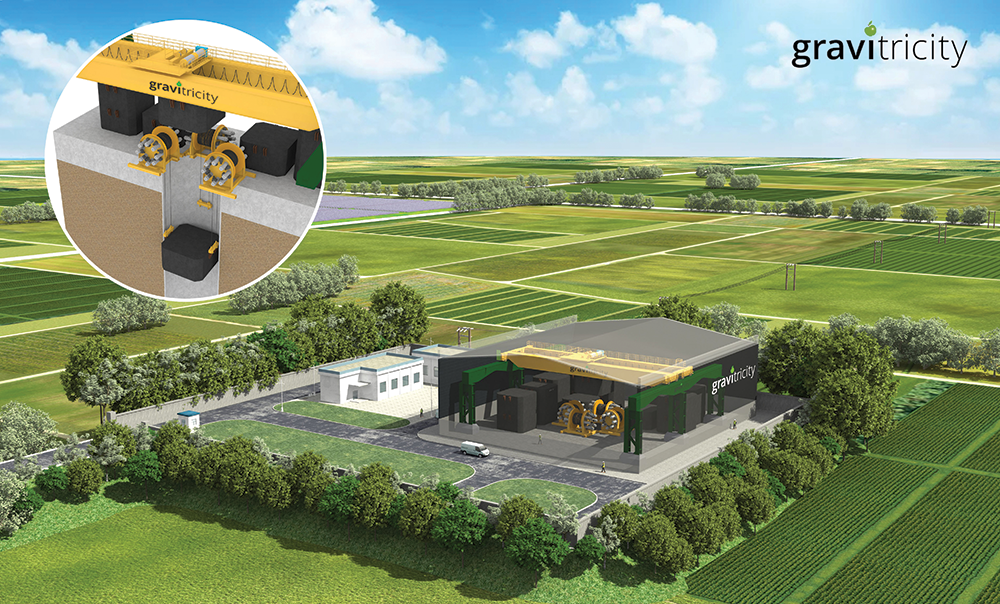
Gravitricity is best known for the gravity-based energy storage technology which we will be deploying in old mine shafts. But we’ve always believed that underground spaces have energy storage potential beyond gravity, and we’ve been focusing on how fuel gases, particularly hydrogen, can be stored safely and effectively underground.
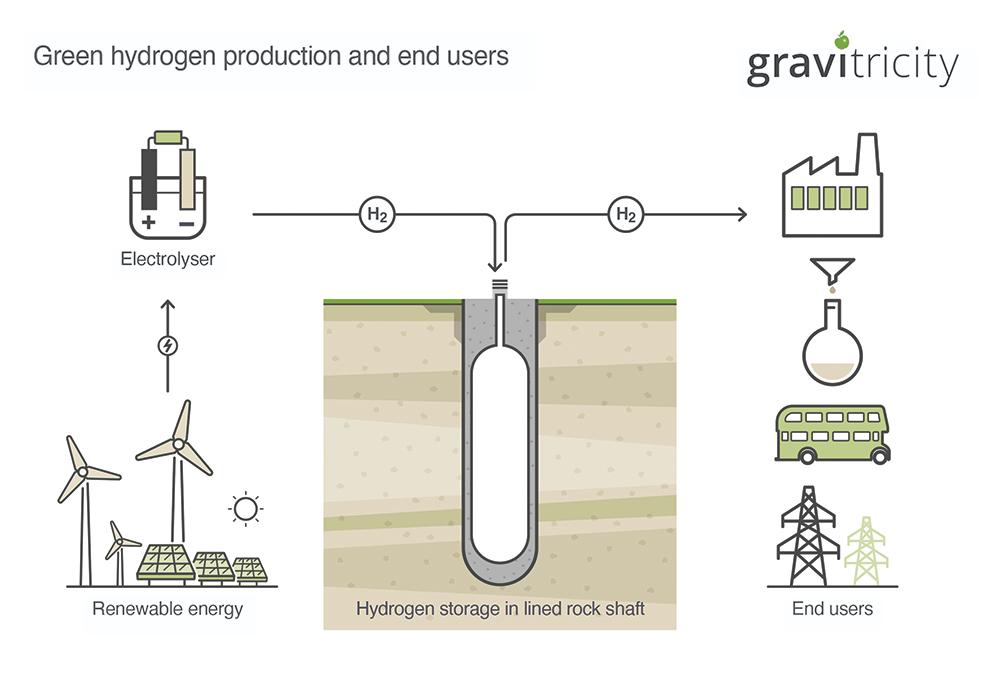
Our solution, which we call H2 FlexiStore, is based on a gas tight metal liner within an underground shaft, where the surrounding geology will exert pressure on the container, enabling higher pressures (and more hydrogen) at a lower cost. The storage capacity of around 100 tons of hydrogen per shaft offers a mid-scale solution to deliver the needs of industrial hydrogen hubs.
FlexiStore has several significant advantages over traditional approaches to hydrogen storage. It can store hydrogen in the quantities required to match supply via electrolysis with the demand from onsite industrial activities. It can be located where it is needed, and is not dependent on particular geological formations or expensive hydrogen transport infrastructure. Limited transportation infrastructure and lower metal requirements make the H2 FlexiStore solution highly competitive in cost per unit of hydrogen stored. H2 FlexiStore is also inherently safer than above ground storage, as no oxygen is present to create an explosive mix. H2 FlexiStore’s steel lining means that hydrogen can be stored underground, while maintaining purity. Alternative underground options will require expensive scrubbing equipment to remove contaminants. To put it into perspective, 100 tons of hydrogen yield about 3 GWh of energy, and if the system was fully charged and discharged each day it could absorb the average energy from a 500 MW offshore wind farm.
We have recently concluded a feasibility study which confirms the viability of this approach and are now building upon this work with an accelerated technology development project. At the same time, we are actively building partnerships with people and organisations who, like us, see the vital role which hydrogen will play in our decarbonised energy system, and who understand that the infrastructure to support this new hydrogen economy will need to fit the specific requirements of green hydrogen producers and consumers.






© Technews Publishing (Pty) Ltd | All Rights Reserved
 printer friendly version