



In a landmark achievement that signals a new era in energy research, a team of physicists in China has carried out the first successful test of a quantum engine powered by particle entanglement. This technological breakthrough represents a fundamental shift in our approach to energy production.
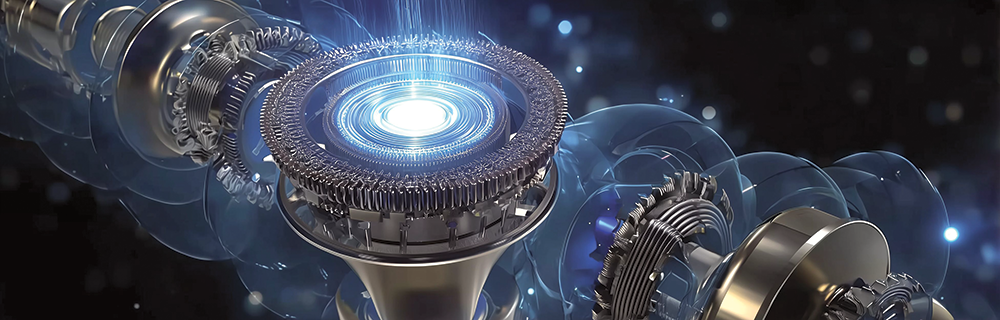
The project’s lead scientist, Dr Li Wei says the results show that quantum mechanical behaviour, long regarded to be in the domain of pure theory, can be used to produce real, measurable mechanical work. “We now have experimental evidence that quantum principles can directly support energy conversion,” he notes. At the core of the device is a mechanism that manipulates ions with tightly controlled laser pulses, causing shifts in their quantum states that can be translated into motion.
A new approach to energy conversion
Conventional combustion engines burn fossil fuels, and hydrogen cells require specialised storage. The quantum engine operates on a completely different principle. It generates motion through the correlations between entangled particles. These correlations are not limited by classical thermodynamic boundaries, and engineers believe this could lead to efficiencies beyond those possible in current energy systems.
In the prototype system, calcium ions are cooled to temperatures just above absolute zero. In these extreme conditions, thermal vibrations vanish, allowing researchers to isolate and control the quantum state of the ions. They are held in place by electromagnetic ‘traps’ engineered to maintain spatial stability with nanometre precision. When the researchers shine lasers in specific sequences, the quantum states of the ions shift, and this transition generates a minute, but measurable, mechanical force.
Across more than 10 000 repeated trials, researchers found a consistent pattern. The stronger the entanglement between the ions, the greater the mechanical output. This link between entanglement quality and performance is one of the clearest experimental indications yet that entanglement can be exploited for energy generation.
Key engineering components inside the engine
The quantum engine has broad engineering relevance, integrating mature technologies such as ion traps, femtosecond laser control, cryogenic refrigeration and quantum-grade sensors into something quite new − a functional device capable of harnessing entanglement for mechanical work.
Towards practical quantum energy devices
The ongoing work goes well beyond proof-of-concept testing. The Chinese team and international collaborators are developing a roadmap that charts the major engineering milestones required for real-world deployment. These include increasing the degree of particle entanglement, raising operating temperatures so engines can function without extreme cooling, and scaling designs so that multiple quantum engines can operate together in a single system.
One of the most promising directions is the search for alternative particles and trapping materials that might maintain stable quantum behaviour at higher temperatures. Early experiments have suggested that certain ion species and solid-state quantum systems could reduce the need for cryogenic cooling, making quantum engines more feasible for commercial and industrial applications.
The research community is also investigating how such engines could support other emerging technologies. Quantum computers, for instance, require enormous amounts of energy to maintain low temperatures and secure qubit stability. A compact engine based on quantum behaviour could supplement these systems.
Societal shifts and technical challenges
The possibility of quantum-based energy raises complex engineering and societal questions. Maintaining entanglement over larger distances and for longer durations remains one of the major scientific obstacles. Materials must also be developed that shield quantum systems from environmental noise, vibration and electromagnetic disturbances.
Beyond the technical hurdles lie broader concerns. As quantum engines advance, policymakers and industry leaders will need to grapple with questions about manufacturing requirements, resource distribution, access to quantum infrastructure and the potential disruption of existing energy markets.
Nevertheless, the outlook remains optimistic. Unlike conventional engines, which rely on the consumption of fuel, quantum engines derive their power from their physical structure. This suggests a future where the generation of energy is less dependent on natural resources and more on technological capacity.
The next technological frontier
Efforts in China and other research centres around the world are steadily pushing quantum engines from theoretical curiosity toward practical innovation. The recent success of the entanglement-driven engine proves that quantum effects can be controlled and harnessed with increasing reliability.
If these developments continue, the coming decades may see quantum-powered devices integrated into high-precision computing, advanced sensing technologies and specialised industrial systems. Could this be the early stage of a technological revolution in how energy is generated?
For more information visit www.arxiv.org/html/2404.15835v1?utm






© Technews Publishing (Pty) Ltd | All Rights Reserved
 printer friendly version