Risk assessments accelerate Booyco PDS adoption
June 2022
Editor's Choice
System Integration & Control Systems Design
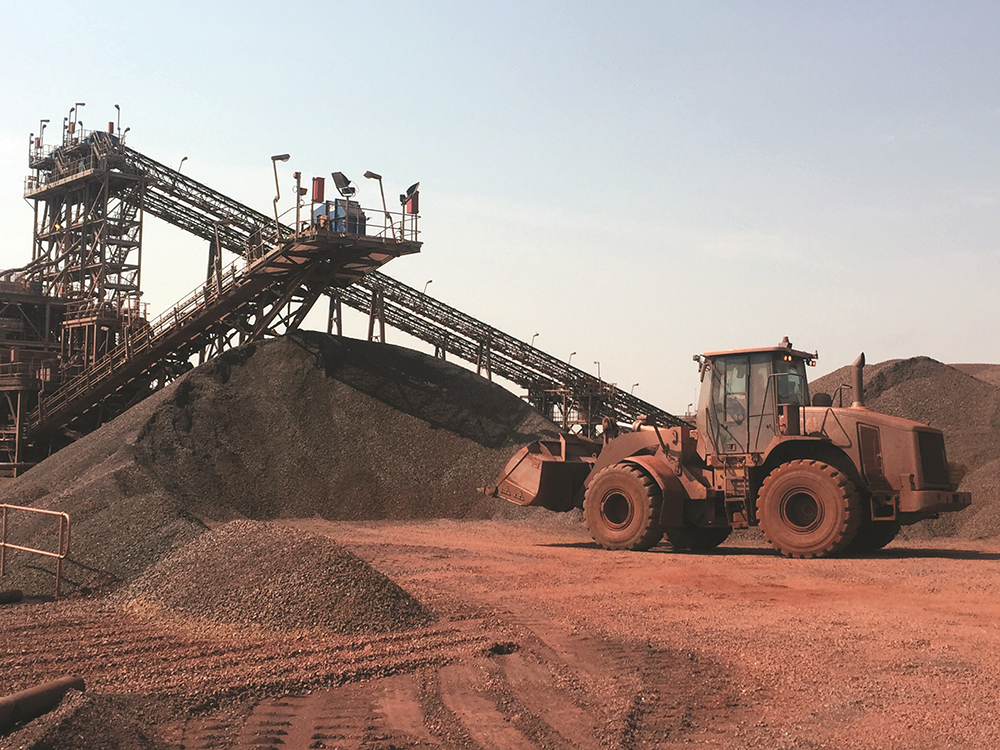
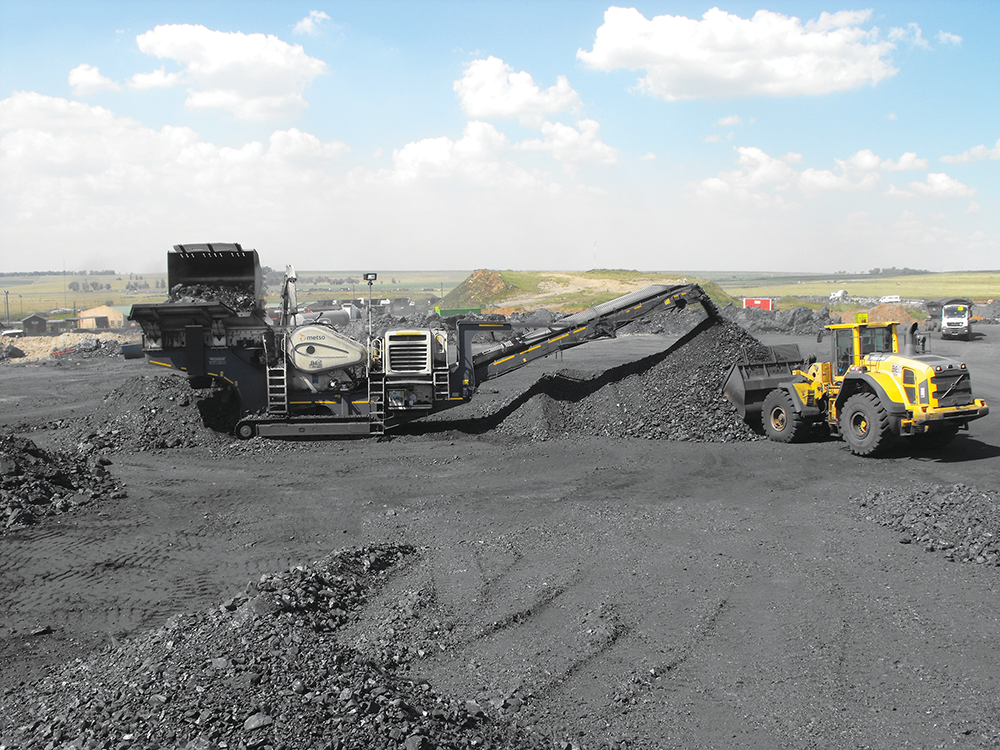
Risk assessments by surface mines are a vital part of operating trackless mining machines (TMMs) safely, and are also required by the Mine Health and Safety Act. “It is therefore significant that we see mines continuously conducting risk assessments on their mobile vehicles and traffic management systems,” says Anton Lourens, CEO of Booyco Electronics, a leading South African proximity detection system (PDS) and collision prevention system (CPS) developer. “These risk evaluations are essential in identifying appropriate risk mitigation responses and technology for each site.”
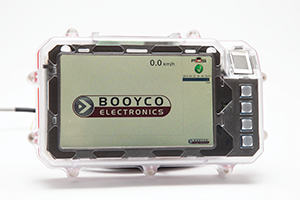
From his extensive industry experience, Lourens says that surface mines have largely implemented Level 7 PDS and CPS systems, which can warn of possible collisions. They have also embraced Level 8 systems, which can identify and advise on corrective actions. Further testing is being conducted on Level 9 systems, which come with a controlled ‘slow-down and stop’ engineering control intervention.
“The groundwork for this progress has been laid by years of collaboration between the Minerals Council South Africa, mining companies, PDS suppliers and original equipment manufacturers (OEMs),” he says. “This process has allowed the available technologies to be carefully reviewed, with the necessary recommendations being made to the regulator, the Department of Mineral Resources and Energy.”
Industry has also made significant headway in the testing of PDS technology, he says. Simulation testing has been conducted by the Vehicles Dynamic Group at the University of Pretoria, in a process developed by the Minerals Council. This testing is able to demonstrate the capabilities of PDS solutions so that these can be submitted to the stakeholders.
Booyco Electronics has conducted multiple tests as part of continuously improving the performance of its systems. This has allowed the company to progress to single and multiple machine tests on mine sites. The tests are ongoing at some surface mines, with positive results.
Another important step forward has been the integration of these CPS systems with OEM equipment, says Lourens. “Industry recently adopted the ISO 21815-2 (2021) standard, which deals specifically with how a CPS solution should integrate with OEM offerings. This allowed for a common interface between all CPS suppliers and the different OEMs.”
As mines conduct their risk assessments in preparation for applying PDS, he points out that the risk of both vehicle-to-vehicle and vehicle-to-pedestrian collisions should be fully considered. It would appear, he notes, that many surface operations place more focus on using PDS to mitigate vehicle-to-vehicle risk. This may be due to mines applying mitigation strategies such as traffic management, fixed barriers or pedestrian walkways to address vehicle-to-pedestrian risk. “By creating a separation of people from moving machinery, part of the risk can certainly be mitigated,” he explains. “However, with the development of our systems from Level 7 to Level 9, today’s CPS offerings make them a more comprehensive solution.”
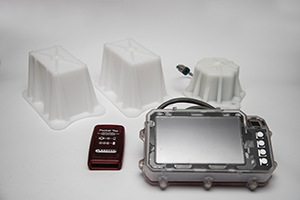
To ensure that mines around the world can make the most of CPS solutions, Booyco Electronics collaborates with a number of system integrators in various regions. Lourens points out that rapid technological advancement within the mining sector makes it difficult for mines to develop and retain specialised skillsets in CPS and related technologies. These system integrators help mines to effectively apply CPS, bridging the gaps between different areas of expertise to promote safety and efficiency.
“There has been a great deal of work on PDS and CPS going on in the background in recent years, paving the way for mines to install the optimal solutions,” Lourens says. “This is undoubtedly achieving ongoing progress towards the industry’s goal of zero harm.”
Further reading:
SEW-EURODRIVE’s expanded local engineering capability
SEW-EURODRIVE
Editor's Choice Motion Control & Drives
At Electra Mining Africa, SEW-EURODRIVE demonstrated how its expanded local engineering capability, digital technologies and lifecycle support strategy help customers improve reliability, energy efficiency and total cost of ownership across the full life of their drive assets.
Read more...
Calcamite partners with Schneider Electric and 4Sight for smart water management
Schneider Electric South Africa
Editor's Choice
Schneider Electric, AVEVA and 4Sight OT Automation are helping South African wastewater specialist, Calcamite, digitalise its modular treatment plants through a scalable edge-to-cloud automation platform, with the award-winning Gourikwa pilot now scaling to hundreds of remote sites.
Read more...
Paper might carry the message but pressure carries the process
VEGA Controls SA
Editor's Choice
Accurate pressure measurement is critical throughout pulp and paper production, from chemical pulping to steam drying and wastewater treatment. VEGA’s VEGABAR transmitter range offers South African mills robust, precise monitoring for these demanding conditions.
Read more...
BMG integrates conveyor drive technology to improve mining reliability and availability
Bearing Man Group t/a BMG
Editor's Choice
BMG supplies engineered turnkey drive packages for belt conveyors and feeders in mining and bulk materials handling, bringing the motor, drive, couplings, gearbox, lubrication and condition monitoring together as one integrated system to protect conveyor availability.
Read more...
Economy drive system closes the drive gap in the entry-level segment
Beckhoff Automation
Editor's Choice Motion Control & Drives
Beckhoff has launched an economy drive system pairing its new AX1000 servo drive and AM1000 servomotor with the AF1000 dual-axis variable frequency drive on a shared EtherCAT platform, targeting series machines and price-sensitive markets without sacrificing TwinCAT integration or functional safety.
Read more...
South Africa’s space balls
Editor's Choice News
South African engineers are preparing to take low-frequency radio astronomy to the Moon with three locally developed B.A.L.L.S. spheres aboard China’s Chang’e-8 mission. This could pave the way for a 55-antenna lunar array and marks another step in the country’s growing space engineering capability.
Read more...
Practical tips to build a successful engineering career
Editor's Choice
Award-winning civil engineer, Tinashe Mukalela of AvenirHoldings shares ten practical tips for young engineers navigating a competitive job market, from professional registration and mentorship to emotional intelligence and leadership development.
Read more...
Why mining operations need local lightning early warning
Senseca
Editor's Choice Electrical Power & Protection
Lightning can develop into a serious mining hazard before the first local strike, leaving crews little time to stop work and reach safety. Local early-warning technology can provide valuable lead time, allowing mines to connect developing storm conditions to defined trigger actions that protect people, explosives and equipment.
Read more...
XPlanar aids innovation in laser processing
Beckhoff Automation
Editor's Choice Motion Control & Drives
Aalborg University is among the first in the world to test Beckhoff’s XPlanar intelligent transport system in advanced laser processes, achieving micrometer-precise workpiece positioning and dramatically shorter lead times compared with traditional tool-based manufacturing.
Read more...
The wireless route to safer, more efficient mining operations
Emerson Automation Solutions
Editor's Choice Sensors & Transducers
Modern wireless level measurement technologies are helping mining operations improve process control, increase safety and reduce installation costs. Emerson’s Rosemount 3408 wireless non-contacting radar level transmitter uses 80 GHz frequency-modulated continuous wave radar with HART communication to reach remote assets where cabling is impractical.
Read more...










 printer friendly version