


System Integration & Control Systems Design


Safe and reliable steel production

January 2021 System Integration & Control Systems Design

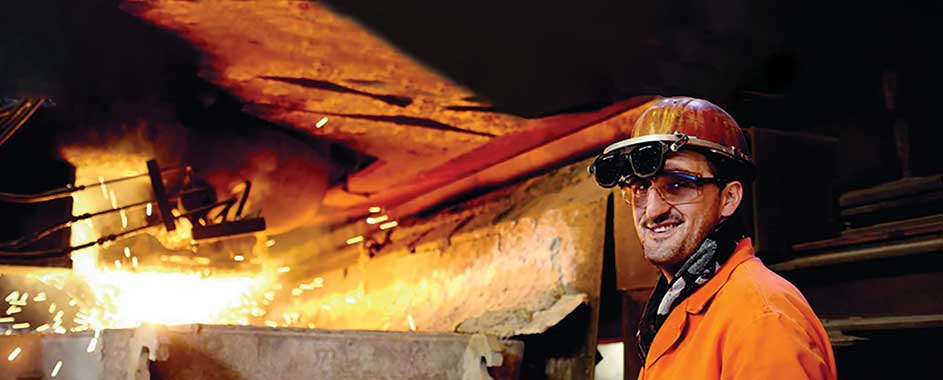
High temperatures, molten metals and heavy loads are some of the challenges faced during steel production. These extreme conditions place much stress on both man and machines, making safety and availability the top priorities for steel plant managers. Over the years, the importance of safety has grown substantially. Laws and regulations governing the smelter and metals sector have become stricter. Now, the questions arise: “Are all aspects of safety being looked at? What about critical cooling water circuits?”

The impact of small leaks or expanding cracks in cooling systems is a definite safety hazard and, depending on the application, may result in production downtime, damage to the plant, or even loss of life. The detection of leaks in cooling systems is not only an essential part of a safety system, but an integral part of a safety policy.

Endress+Hauser’s highly accurate leakage detection solution is designed to IEC 61511 and EN ISO 13849-1 standards. It is a ready-to-use and verified solution package that detects the smallest signs of a leak, allowing for action to be taken before the situation becomes critical or a catastrophe occurs.

What the system offers

• Process experts who guide you every step of the way in selecting the best-fit, industry-optimised instrumentation, service and solution package from the complete portfolio.

• Safe monitoring of critical cooling water circuits.

• Wireless solutions providing more information about the process.

• Comprehensive tools and solutions for plant asset management.

• Compliance with functional safety standards IEC/EN 61508 (process hazard categorisation known as SIL – Safety Integrity Level) and IEC/EN 61511 (process safety using instrumentation known as Safety Instrumented Systems) in accordance with EN 13849.

Safe, robust and precise cooling water leakage monitoring

Malfunctions in water circuits can be dangerous to both equipment and personnel. Regardless of the cooling circuit type, principles for leakage detection are as follows:

• The inlet and outlet flow rates of a cooling circuit are measured by means of suitable meters (electromagnetic or ultrasonic flowmeters).

• The inlet and outlet temperatures are also acquired from sensors mounted in close proximity to the flowmeters. (The system uses separate temperature sensors to achieve maximum accuracy).

In a furnace leakage detection application, there is added value in using the temperature measurements to support the control velocity and compensate density changes. This can serve as an additional temperature in the line to confirm if the independent temperatures are correct because temperature is such a critical measurement in this application.

In addition, hardness and silica are water quality measurements that can be related to concentration and possible scaling in the line. If lines become restricted because of blockage or calcification, the cooling system will not work optimally and can cause serious plant shutdowns and production loss.

Should there be any incidents inline, Heartbeat Technology helps with verification. This technology is designed to help increase plant availability and reduce costs. Heartbeat Technology guarantees permanent diagnostics and verification without process interruptions. It ensures a cost-efficient and safe plant operation during the entire life cycle. A broad range of Endress+Hauser devices with Heartbeat Technology is available, which combine diagnostic, verification and monitoring functions for process optimisation.

Conclusion

Safety and plant availability are sensitive topics that demand a trustworthy partner. Look no further. Endress+Hauser has been a reliable partner to steel companies in over 100 countries for more than 60 years. All instruments and solutions are designed to meet industry-specific requirements, and relied upon all over the world.


Credit(s)


Share this article:
Share via emailShare via LinkedInPrint this page

Further reading:

Seamless underground-to-surface truck automation
System Integration & Control Systems Design
Epiroc has extended its autonomous underground mine trucks to operate in surface environments, using 3D lidar for localisation, mapping and obstacle detection. A single Deep Automation system can now manage the full hauling cycle, from underground production areas to surface dumping locations.

Read more...
The Eplan Platform 2027 has arrived
System Integration & Control Systems Design
The Eplan Platform 2027 is now live, bringing more than 500 enhancements across pre-planning, electrical engineering and control cabinet design, along with the new Eplan Copilot AI assistant and cloud-based, bidirectionally synchronised device management.

Read more...
Extending the life of a Milacron 500 through control system modernisation
Abacus Automation System Integration & Control Systems Design
A complex control system modernisation has given a mechanically sound Milacron 500 injection moulding machine a new lease of life. By replacing obsolete SCADA and hydraulic motion control technology, the project improved reliability and maintainability while minimising downtime and avoiding the cost of a new machine.

Read more...
Grid connection design for solar IPP in De Aar
System Integration & Control Systems Design
   De Aar Grid Connection Design Grid Connection Design for De Aar Solar IPP    Project & Industry NewFields was engaged to provide the concept and detailed design for the grid connection of a solar Independent ...

Read more...
How certified industrial automation channels become co-creators in the AI era
Schneider Electric South Africa System Integration & Control Systems Design
As industrial automation becomes software-driven and AI-enabled, the role of channel partners is shifting from equipment supply to outcome-based consulting, software integration and lifecycle services that require continuous certification and capability development.

Read more...
Why integration defines the next competitive edge in pulp and paper
System Integration & Control Systems Design
ABB’s Arvin Ramjee argues that fragmented automation, assembled from different suppliers at different stages of a plant’s lifecycle has become one of the pulp and paper industry’s most overlooked commercial risks, and that true integration, rather than surface-level connectivity, is what delivers measurable business value.

Read more...
Integrated automation enhances water treatment at dairy facility
Process Dynamics System Integration & Control Systems Design
Process Dynamics delivered the electrical, instrumentation, control and automation integration for an advanced water treatment and reverse osmosis system at a major South African dairy processing facility, achieving a 50% reduction in the client’s water utility costs.

Read more...
Intelligent process control is reshaping cement production in Africa
System Integration & Control Systems Design
Advanced process control, predictive analytics and automation are helping African cement producers cut energy use and stabilise output as they contend with rising electricity costs and tighter margins.

Read more...
Why measurement matters in smelting
Endress+Hauser South Africa Analytical Instrumentation & Environmental Monitoring
South African smelters returning to operation after energy constraints face new demands for tighter control, better visibility and environmental compliance. Endress+Hauser explains how modern measurement technology supports safer, more efficient furnace operation and local beneficiation.

Read more...
Schneider Electric’s Alliance Programme turns system integrators into trusted technology partners
Schneider Electric South Africa System Integration & Control Systems Design
: Schneider Electric’s Alliance Partner Programme is helping system integrators across Africa move beyond one-off projects and build the skills and service models needed to become long-term industrial technology partners.

Read more...


While every effort has been made to ensure the accuracy of the information contained herein, the publisher and its agents cannot be held responsible for any errors contained, or any loss incurred as a result. Articles published do not necessarily reflect the views of the publishers. The editor reserves the right to alter or cut copy. Articles submitted are deemed to have been cleared for publication. Advertisements and company contact details are published as provided by the advertiser. Technews Publishing (Pty) Ltd cannot be held responsible for the accuracy or veracity of supplied material.


© Technews Publishing (Pty) Ltd | All Rights Reserved

