One of the more ethereal ideas introduced by Industry 4.0 is that of the digital twin. Actually, the idea of the twin is not new and has been around since NASA introduced the first virtual environment as a way to optimise the performance of assets physically too far away to manage by conventional methods. For instance, when Apollo 13 ran into trouble on its journey to the moon, it was the innovation of mirrored systems here on earth that allowed ground-based engineers and flight controllers to figure out how best to salvage the mission.
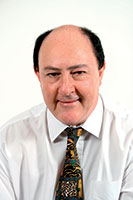
Steven Meyer.
However, it is only recently through the digital technologies of the Industrial Internet of Things that the idea became cost effective to implement in commercial applications. The digital twin is a virtual (computerised) representation of a physical object. In the case of manufacturing, this would usually be a process, but could even be an entire production facility. The twin then acts as a connection between the virtual and physical worlds.
The physical plant is linked to its virtual foil through sensors equipped with digital communication capability, which means that the digital model experiences the same process-related conditions that its physical counterpart is subject to in real-time. A common use of the twin technology is digital prototyping, which allows equipment to be designed and tested in a virtual environment before anything physical is ever built. Another powerful application is the use in equipment monitoring and failure simulation to implement predictive maintenance strategies.
The twin is a mixed reality solution that allows engineers to bring new machines (or even entire plants) to life digitally, before any physical assets actually exist. It allows new designs or plant modifications to be tested and debugged before any capital expenditure is incurred. It also finds applications in training, and the possibilities for new product development are endless.
By extending beyond a 3D CAD model to incorporate engineering and operating data, the digital twin is able to represent increasingly greater dimensions of the physical asset in terms of its past, present and future. As a result, the concept encapsulates a broader set of dynamic interactions occurring within the physical asset, such as fluid flow, heat and material balances, yield, energy input, and human operator behaviours. These interactions are critical for asset performance management and maintaining facilities within optimum operating windows for safety, reliability and profitability.
What one has to remember though is that the digital twin is purely a means to an end, and not the end in itself. The end-game has not changed; the strategy to achieve it has simply evolved. Industry must continue to strive for optimally efficient business outcomes in terms of operation with no safety incidents, no unplanned outages, nimble response to change, a well-trained and motivated and workforce, and a culture of profitability through customer satisfaction. The digital twin is simply a vehicle to achieve superior results through simulation in these areas, and to achieve them in a sustainable manner in the shortest possible time.
Helping mines get results from water improvements
News
South African mines operate under constrained, water-scarce conditions where every investment must be justified. Xylem’s Chetan Mistry explains how the right water technology partner helps mines prioritise high-value water systems across the mining lifecycle.
Read more...From the editor's desk: Pushing engineering to the limit Technews Publishing
News
Among the many things robots can do, it’s a lot of fun to follow how fast they are. They go from the Boston Dynamics cheetah, which first reached a record-breaking speed of 45,5 km/h, to the robot Charlie ...
Read more...Schneider Electric concludes Innovation Summit Middle East and Africa Schneider Electric South Africa
News
Schneider Electric's Innovation Summit Middle East and Africa, held in Abu Dhabi with more than 2500 attendees, explored the convergence of energy, AI and industrial software, launched an Industrial AI study and announced the NEST Accelerator Programme for energy and industrial tech startups.
Read more...VEGA brings measurement expertise beyond mining to Electra Mining Africa 2026 VEGA Controls SA
News
VEGA used its Electra Mining Africa 2026 stand to demonstrate that its level and pressure measurement instruments extend well beyond mining, covering water, food and beverage, pharmaceuticals, chemicals, and oil and gas applications across the continent.
Read more...Sustainable solutions for sugar Bearing Man Group t/a BMG
News
BMG received a Special Commendation Exhibition Stand Award at the South African Sugar Technologists’ Association Congress, where it showcased an integrated turnkey drive solution designed to simplify the upgrading of ageing crushing-mill drive systems.
Read more...Measure, Manage, Maintain: The operating model behind SA’s water resilience Siemens South Africa
News
South Africa’s growing water crisis is putting pressure on infrastructure, municipalities and the economy. Siemens highlights how digital technologies, smarter operations and safe water reuse could help shift the country from crisis response towards a more resilient and sustainable water future.
Read more...VEGA brings measurement expertise beyond mining to Electra Mining Africa 2026 VEGA Controls SA
News
VEGA used its Electra Mining Africa 2026 stand to demonstrate that its level and pressure measurement instruments extend well beyond mining, covering water, food and beverage, pharmaceuticals, chemicals, and oil and gas applications across the continent.
Read more...Schneider Electric concludes Innovation Summit Middle East and Africa Schneider Electric South Africa
News
Schneider Electric’s Innovation Summit Middle East and Africa, held in Abu Dhabi with more than 2500 attendees, explored the convergence of energy, AI and industrial software, launched an Industrial AI study and announced the NEST Accelerator Programme.
While every effort has been made to ensure the accuracy of the information contained herein, the publisher and its agents cannot be held responsible for any errors contained, or any loss incurred as a result. Articles published do not necessarily reflect the views of the publishers. The editor reserves the right to alter or cut copy. Articles submitted are deemed to have been cleared for publication. Advertisements and company contact details are published as provided by the advertiser. Technews Publishing (Pty) Ltd cannot be held responsible for the accuracy or veracity of supplied material.










 printer friendly version